mirror of
https://github.com/krahets/LeetCode-Book.git
synced 2026-01-12 00:19:02 +08:00

5.7 KiB
Executable File
5.7 KiB
Executable File
解题思路:
请注意,数学中众数的定义为 “数组中出现次数最多的数字” ,与本文定义不同。本文将 “数组中出现次数超过一半的数字” 称为 “众数”。
本题常见的三种解法:
- 哈希表统计法: 遍历数组
stock,用 HashMap 统计各数字的数量,即可找出 众数 。此方法时间和空间复杂度均为O(N)。 - 数组排序法: 将数组
stock排序,数组中点的元素 一定为众数。 - 摩尔投票法: 核心理念为 票数正负抵消 。此方法时间和空间复杂度分别为
O(N)和O(1),为本题的最佳解法。
摩尔投票法:
设输入数组
stock的众数为x,数组长度为n。
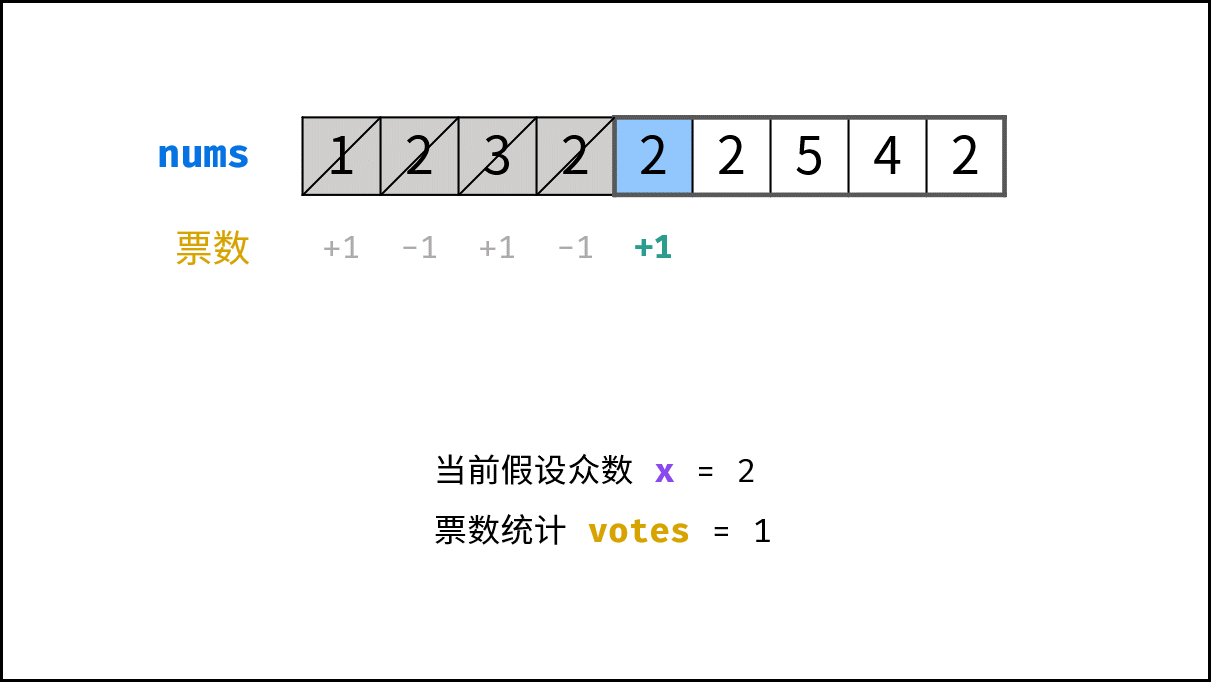
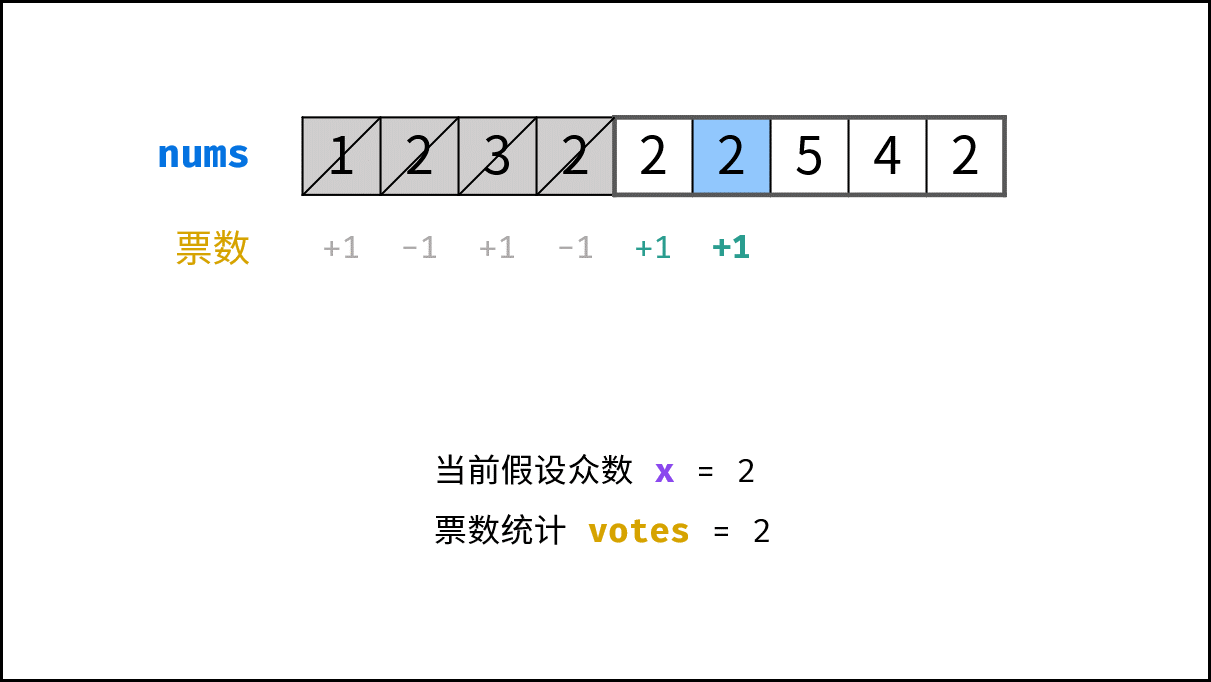
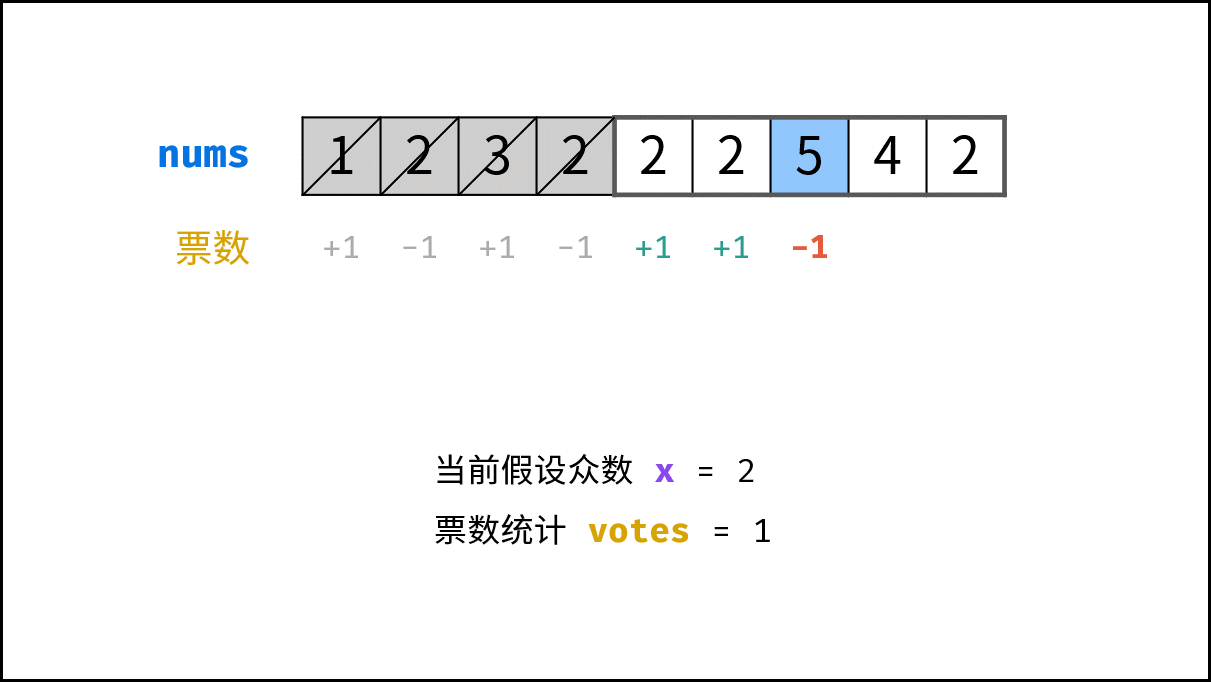
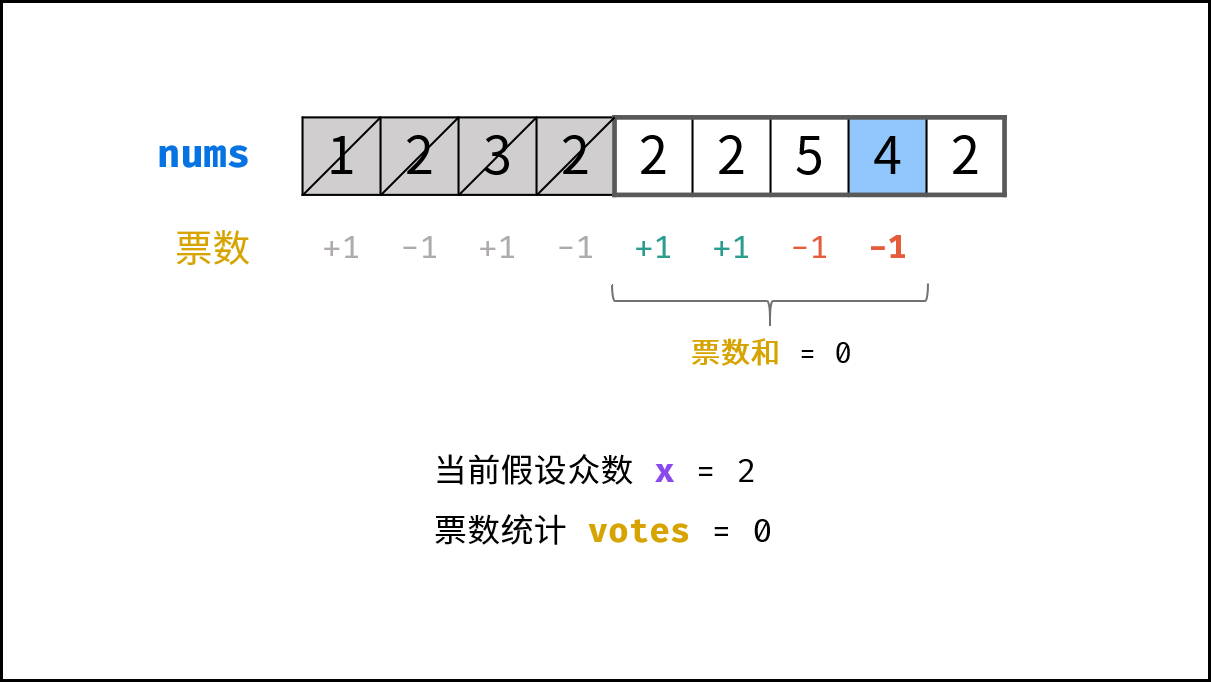
推论一: 若记 众数 的票数为 +1 ,非众数 的票数为 -1 ,则一定有所有数字的 票数和 $> 0$ 。
推论二: 若数组的前 a 个数字的 票数和 $= 0$ ,则 数组剩余 (n-a) 个数字的 票数和一定仍 $>0$ ,即后 (n-a) 个数字的 众数仍为 $x$ 。
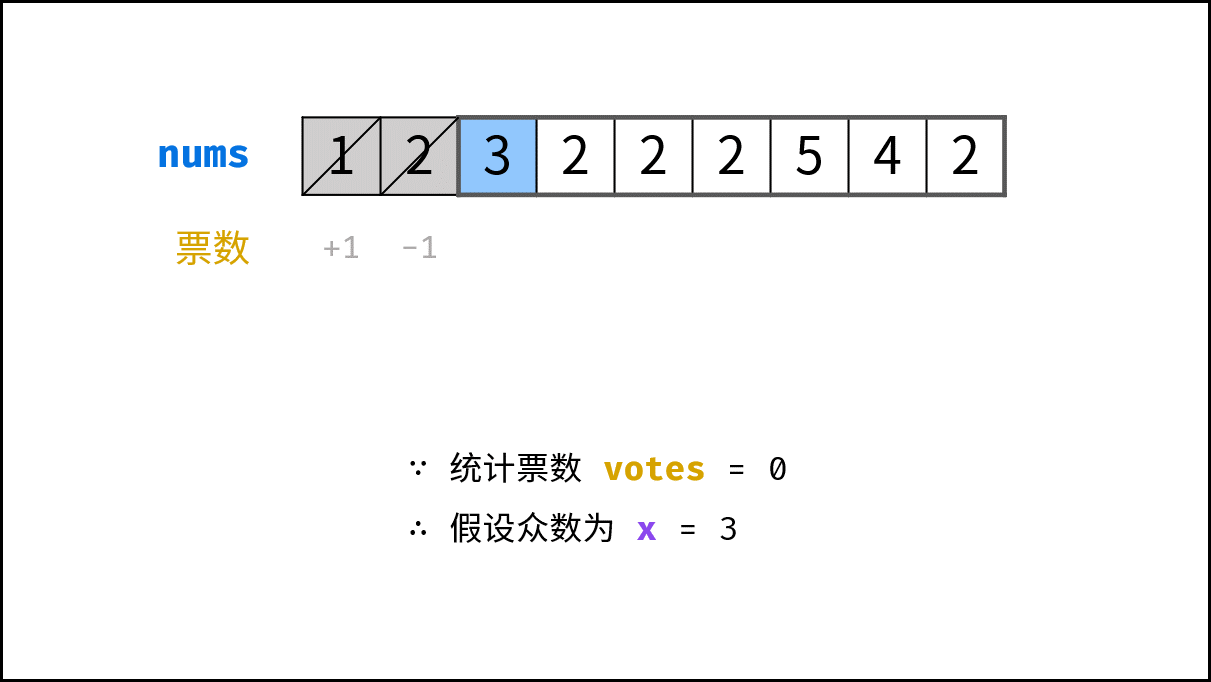
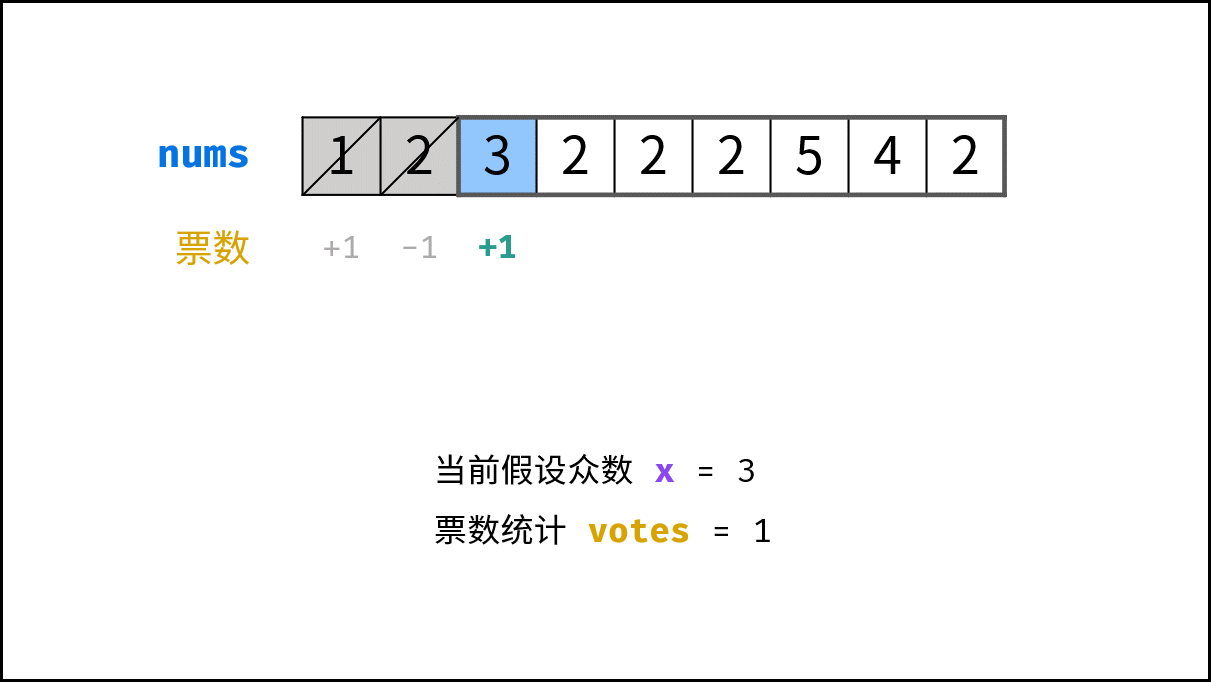
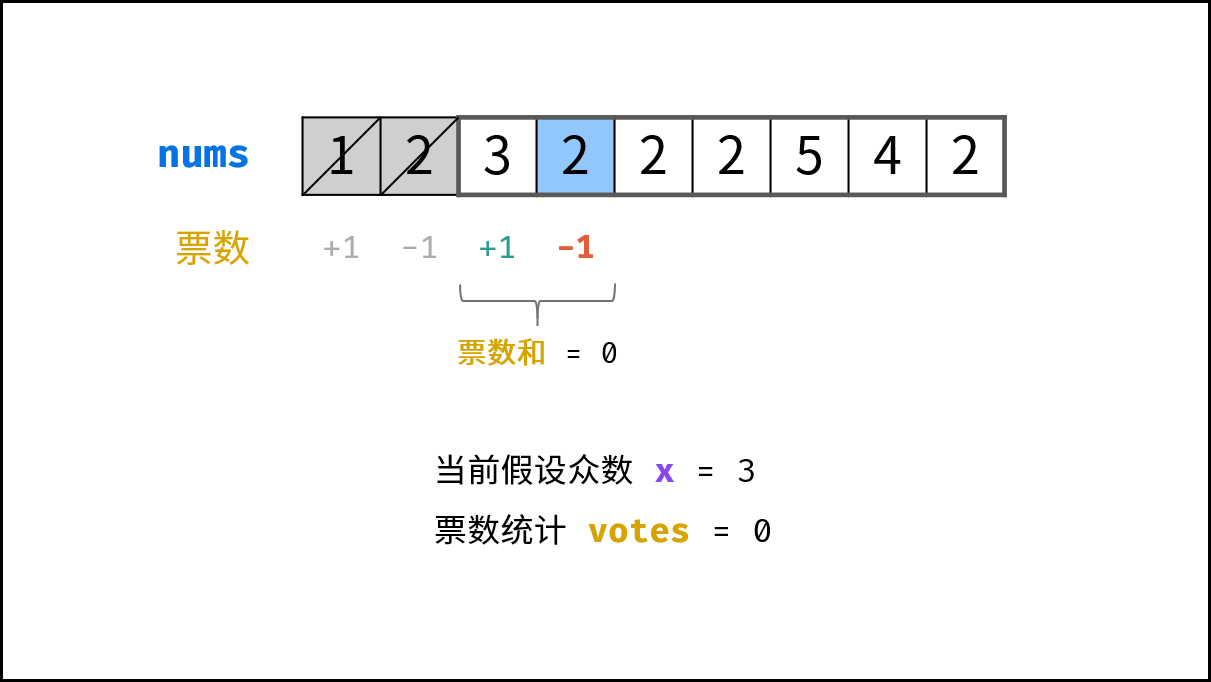
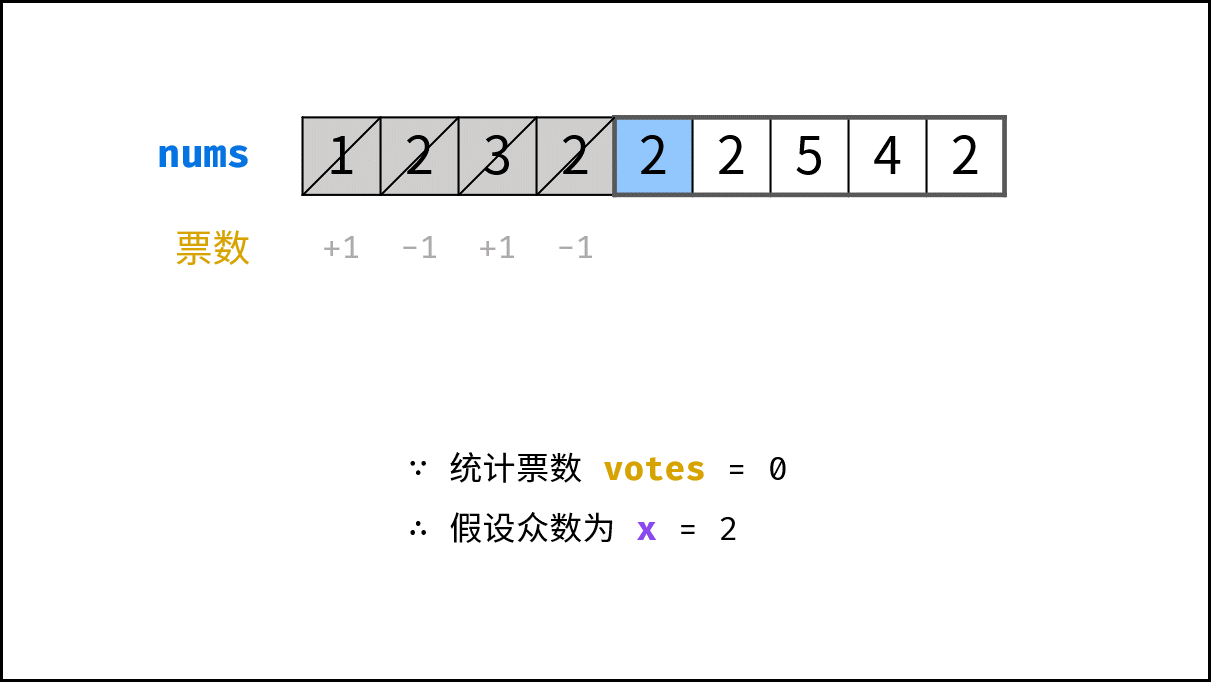
下图中的
nums对应本题的stock。
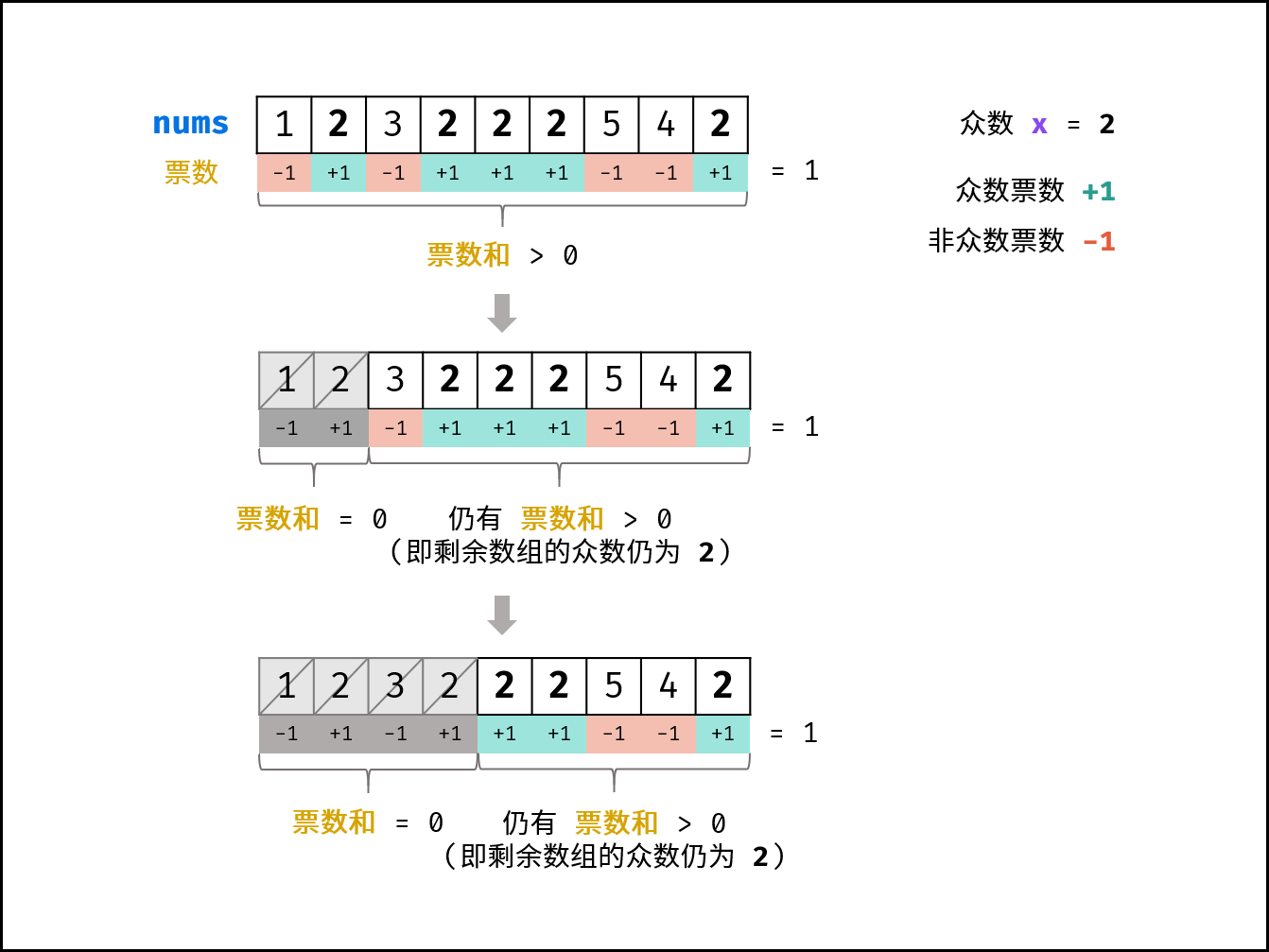 {:align=center width=500}
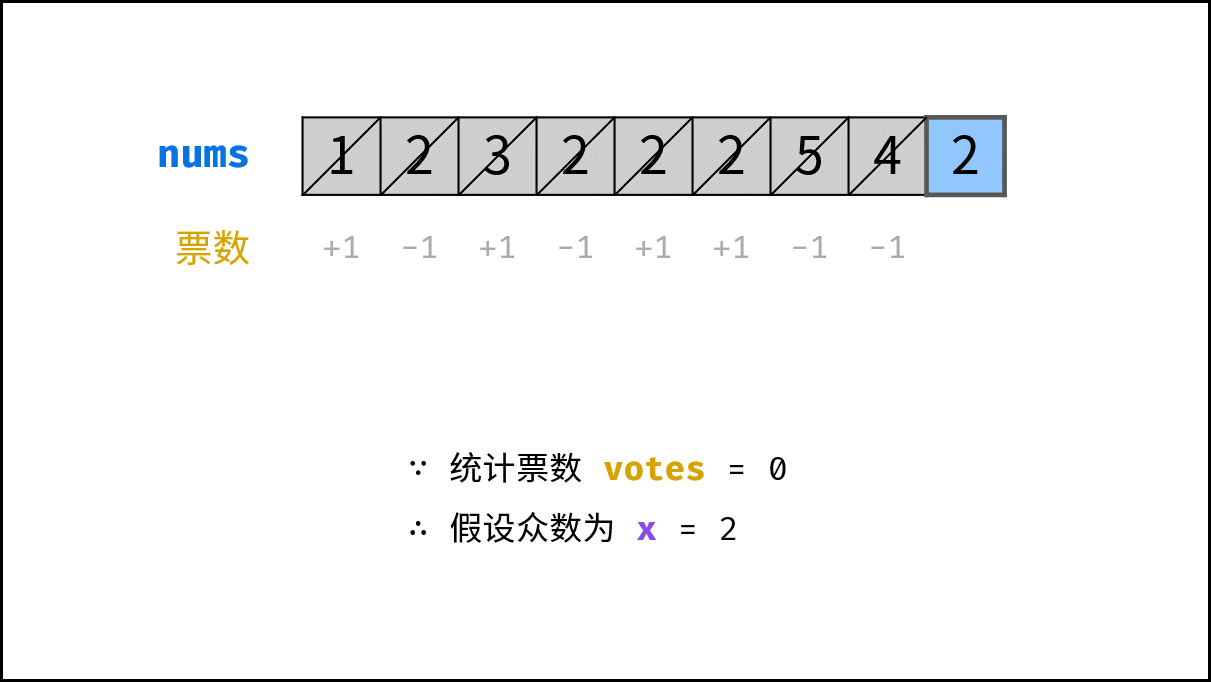
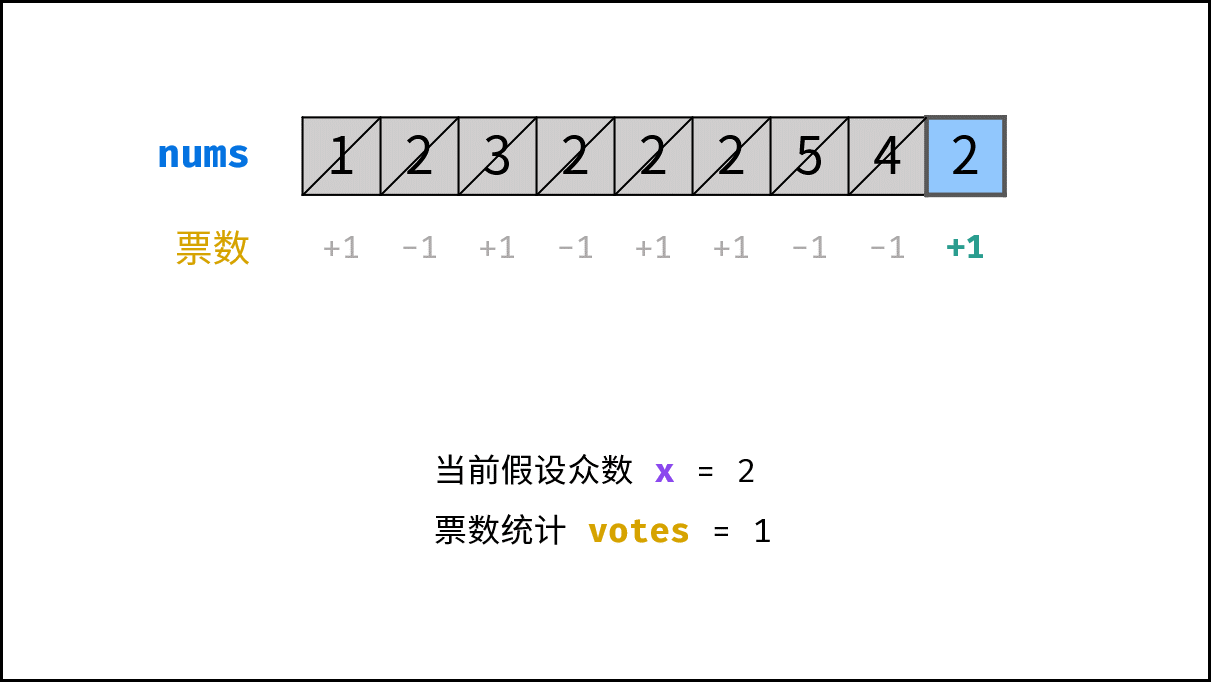
根据以上推论,记数组首个元素为 n_1 ,众数为 x ,遍历并统计票数。当发生 票数和 $= 0$ 时,剩余数组的众数一定不变 ,这是由于:
- 当
n_1 = x: 抵消的所有数字中,有一半是众数x。 - 当
n_1 \neq x: 抵消的所有数字中,众数x的数量最少为 0 个,最多为一半。
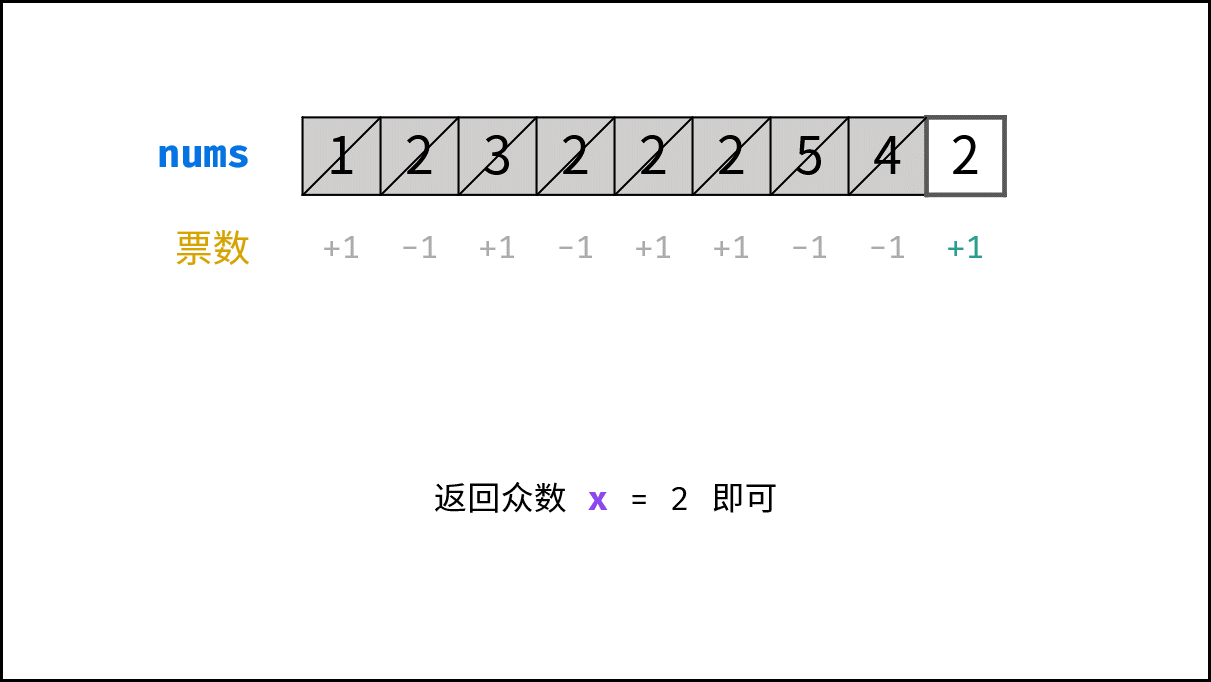
利用此特性,每轮假设发生 票数和 $= 0$ 都可以 缩小剩余数组区间 。当遍历完成时,最后一轮假设的数字即为众数。
算法流程:
- 初始化: 票数统计
votes = 0, 众数x; - 循环: 遍历数组
stock中的每个数字num;- 当 票数
votes等于 0 ,则假设当前数字num是众数; - 当
num = x时,票数votes自增 1 ;当num != x时,票数votes自减 1 ;
- 当 票数
- 返回值: 返回
x即可;
<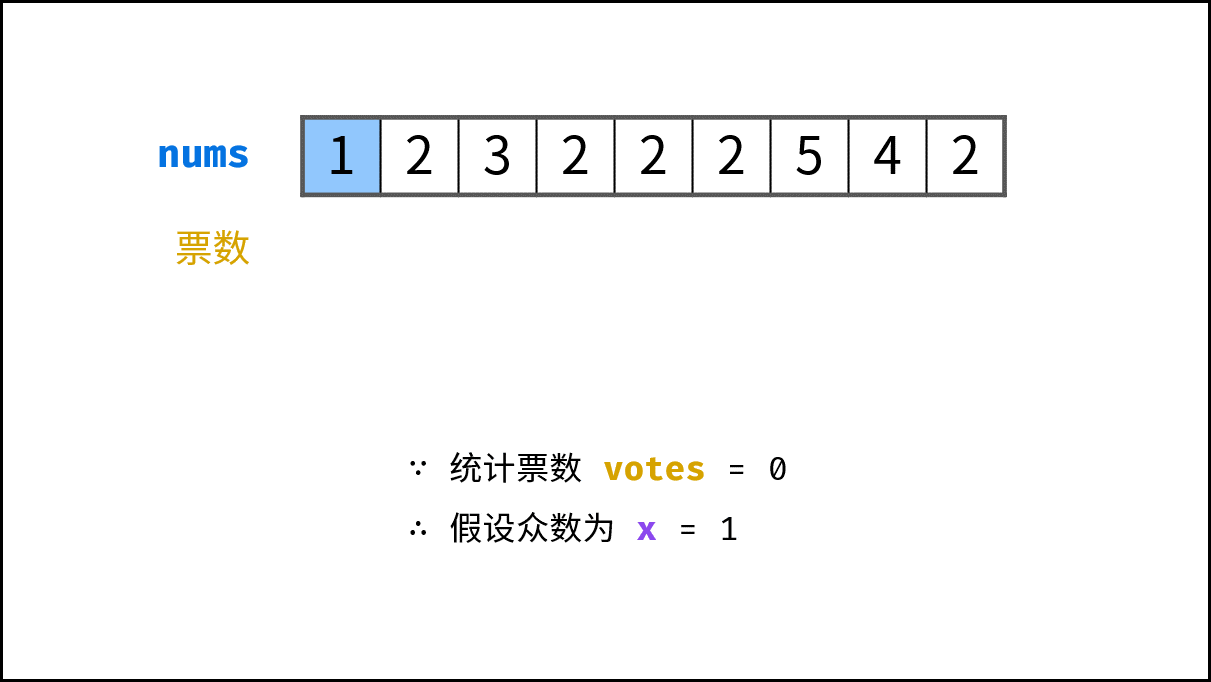 ,
,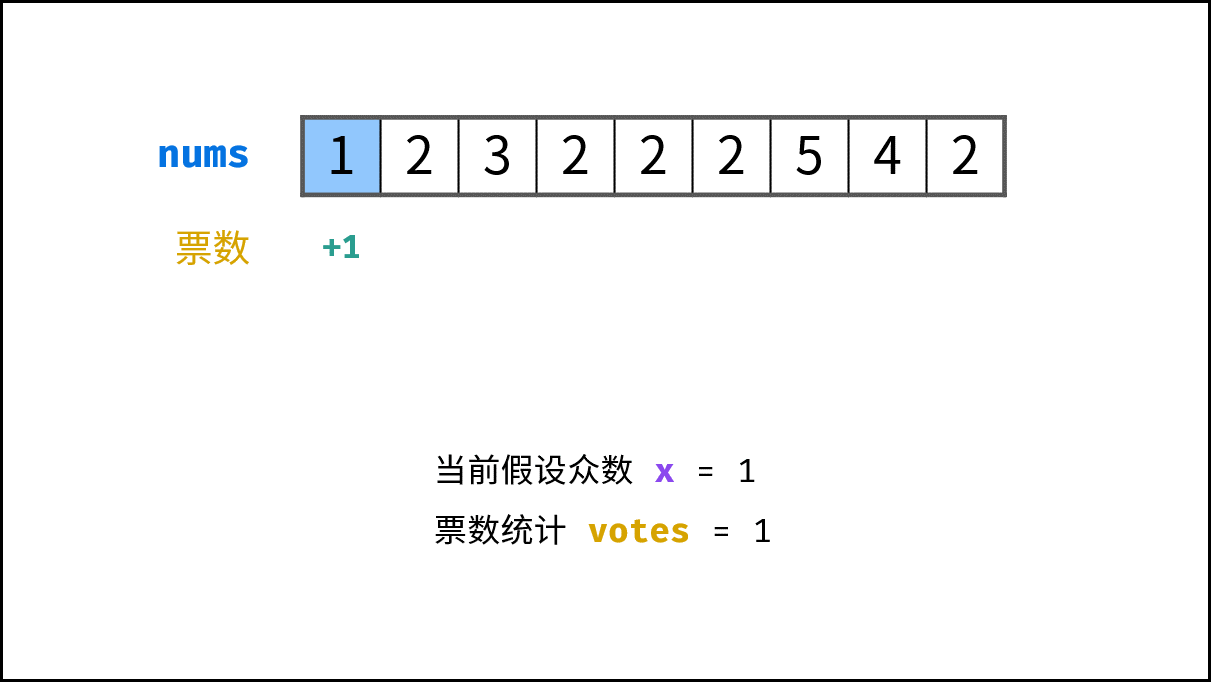 ,
,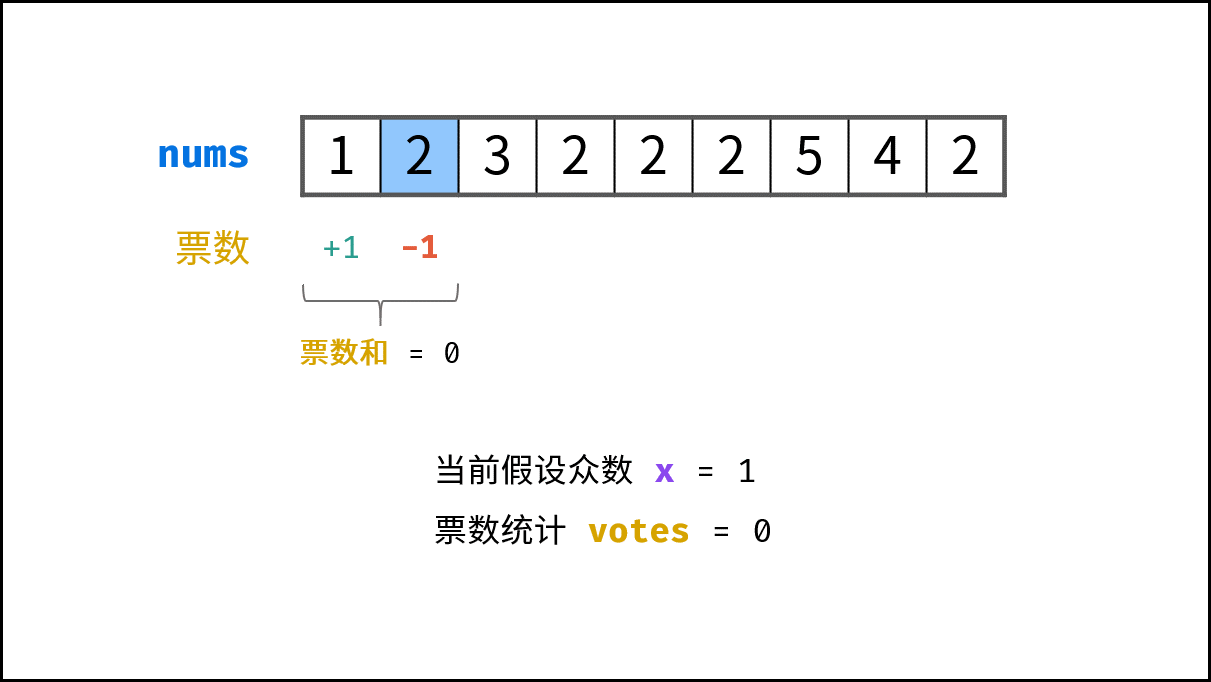 ,
, ,
, ,
, ,
, ,
, ,
, ,
, ,
, ,
, ,
, ,
, >
>
代码:
class Solution:
    def inventoryManagement(self, stock: List[int]) -> int:
        votes = 0
        for num in stock:
            if votes == 0: x = num
            votes += 1 if num == x else -1
        return x
class Solution {
    public int inventoryManagement(int[] stock) {
        int x = 0, votes = 0;
        for(int num : stock){
            if(votes == 0) x = num;
            votes += num == x ? 1 : -1;
        }
        return x;
    }
}
class Solution {
public:
    int inventoryManagement(vector<int>& stock) {
        int x = 0, votes = 0;
        for(int num : stock){
            if(votes == 0) x = num;
            votes += num == x ? 1 : -1;
        }
        return x;
    }
};
拓展: 由于题目说明 “给定的数组总是存在多数元素” ,因此本题不用考虑 数组不存在众数 的情况。若考虑,需要加入一个 “验证环节” ,遍历数组 stock 统计 x 的数量。
- 若
x的数量超过数组长度一半,则返回x; - 否则,返回未找到众数;
时间和空间复杂度不变,仍为 O(N) 和 O(1) 。
class Solution:
    def inventoryManagement(self, stock: List[int]) -> int:
        votes, count = 0, 0
        for num in stock:
            if votes == 0: x = num
            votes += 1 if num == x else -1
        # 验证 x 是否为众数
        for num in stock:
            if num == x: count += 1
        return x if count > len(stock) // 2 else 0 # 当无众数时返回 0
class Solution {
    public int inventoryManagement(int[] stock) {
        int x = 0, votes = 0, count = 0;
        for(int num : stock){
            if(votes == 0) x = num;
            votes += num == x ? 1 : -1;
        }
        // 验证 x 是否为众数
        for(int num : stock)
            if(num == x) count++;
        return count > stock.length / 2 ? x : 0; // 当无众数时返回 0
    }
}
class Solution {
public:
    int inventoryManagement(vector<int>& stock) {
        int x = 0, votes = 0, count = 0;
        for(int num : stock){
            if(votes == 0) x = num;
            votes += num == x ? 1 : -1;
        }
        // 验证 x 是否为众数
        for(int num : stock)
            if(num == x) count++;
        return count > stock.size() / 2 ? x : 0; // 当无众数时返回 0
    }
};
复杂度分析:
- 时间复杂度
O(N):N为数组stock长度。 - 空间复杂度
O(1):votes变量使用常数大小的额外空间。