mirror of
https://github.com/krahets/LeetCode-Book.git
synced 2026-01-12 00:19:02 +08:00

3.5 KiB
Executable File
3.5 KiB
Executable File
解题思路:
根据题意,每个丑数都可以由其他较小的丑数通过乘以 2 或 3 或 5 得到。
所以,可以考虑使用一个优先队列保存所有的丑数,每次取出最小的那个,然后乘以 2 , 3 , 5 后放回队列。然而,这样做会出现重复的丑数。例如:
初始化丑数列表 [1]
第一轮: 1 -> 2, 3, 5 ,丑数列表变为 [1, 2, 3, 5]
第二轮: 2 -> 4, 6, 10 ,丑数列表变为 [1, 2, 3, 4, 6, 10]
第三轮: 3 -> 6, 9, 15 ,出现重复的丑数 6
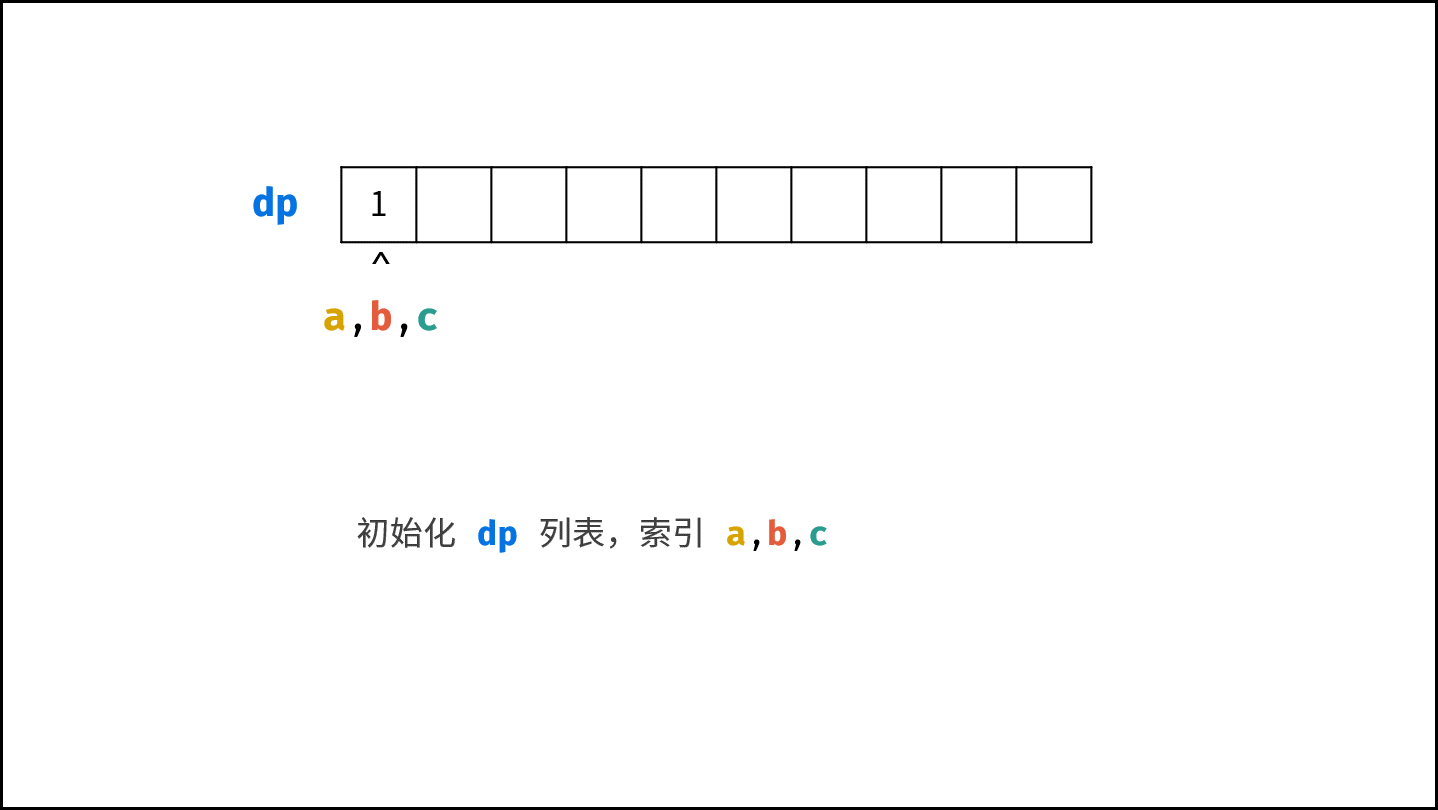
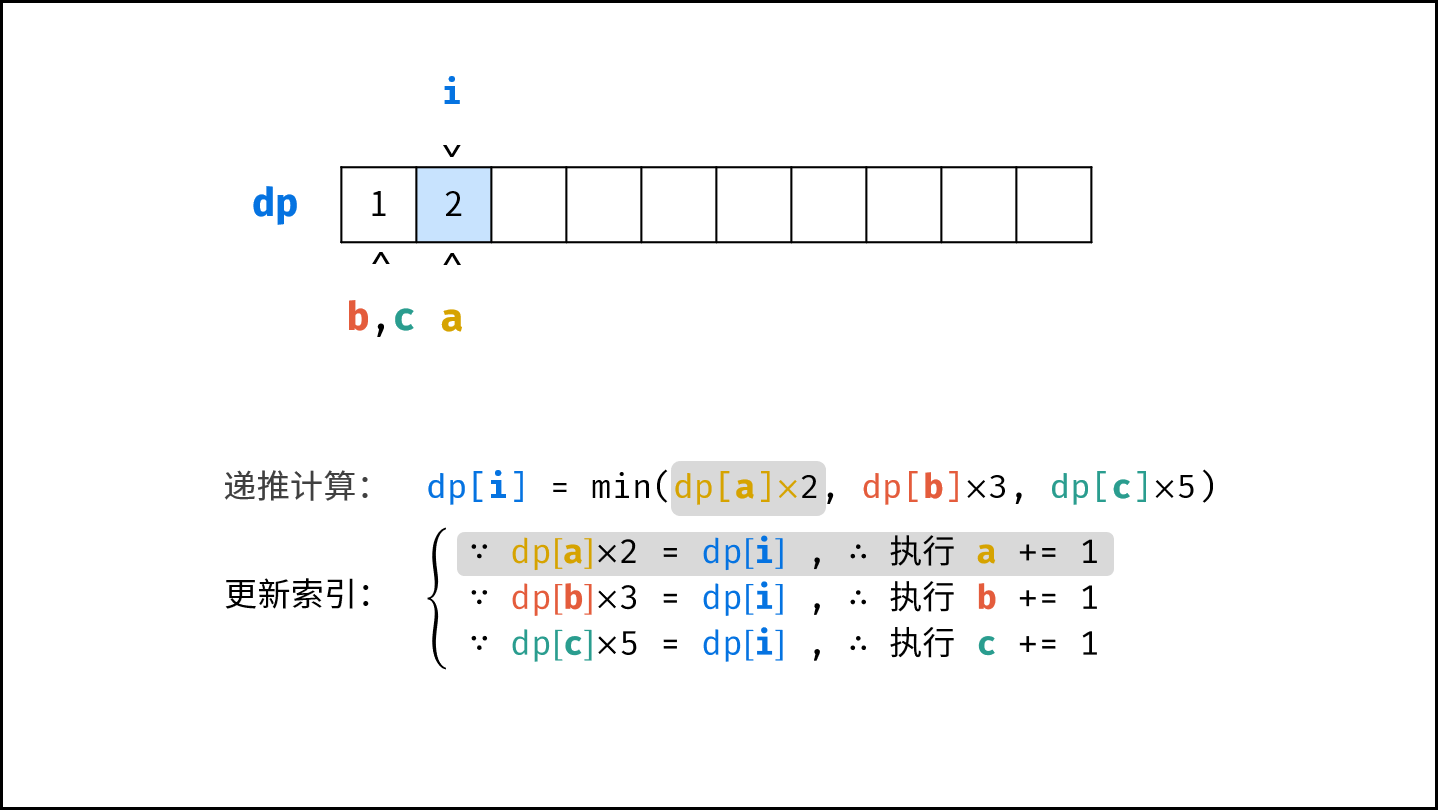
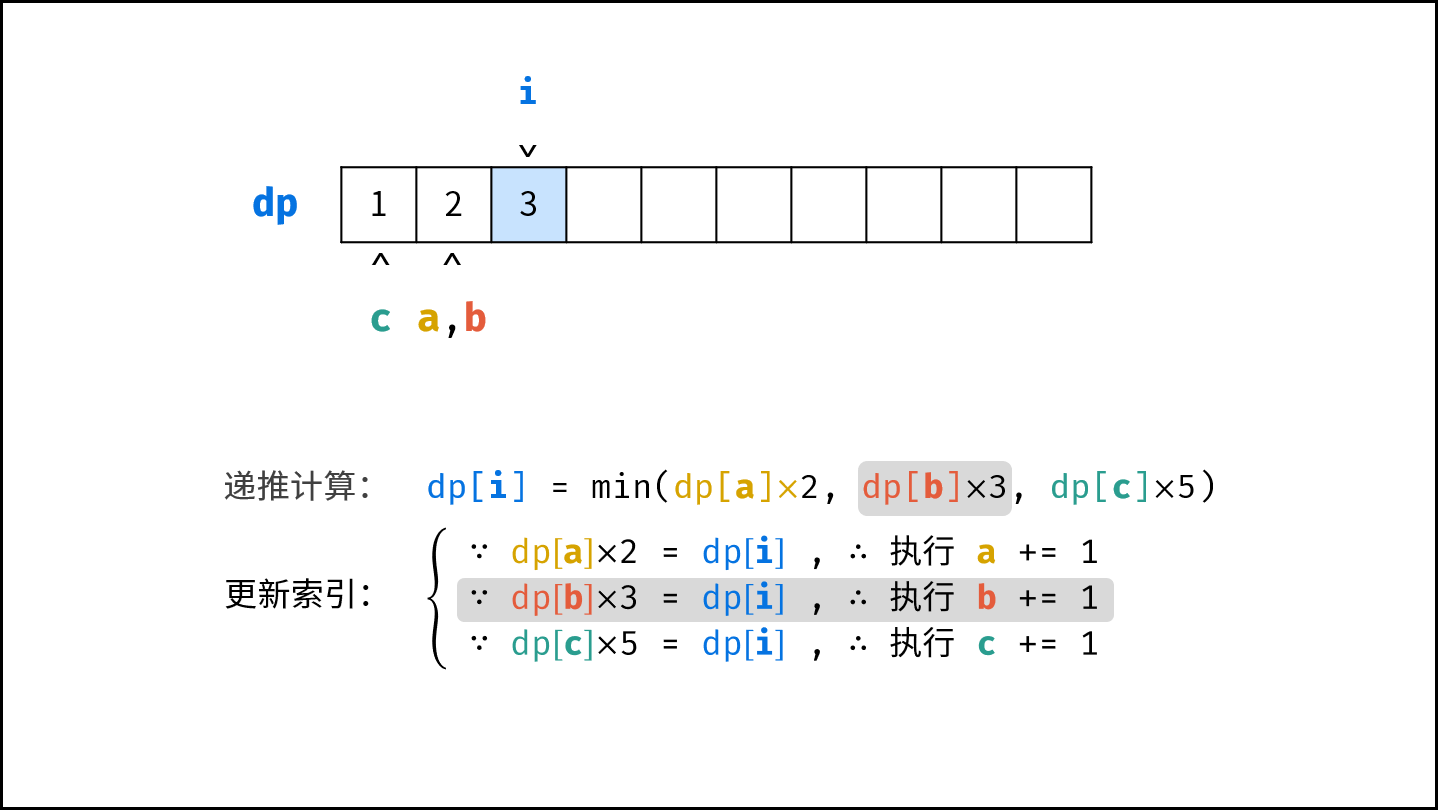
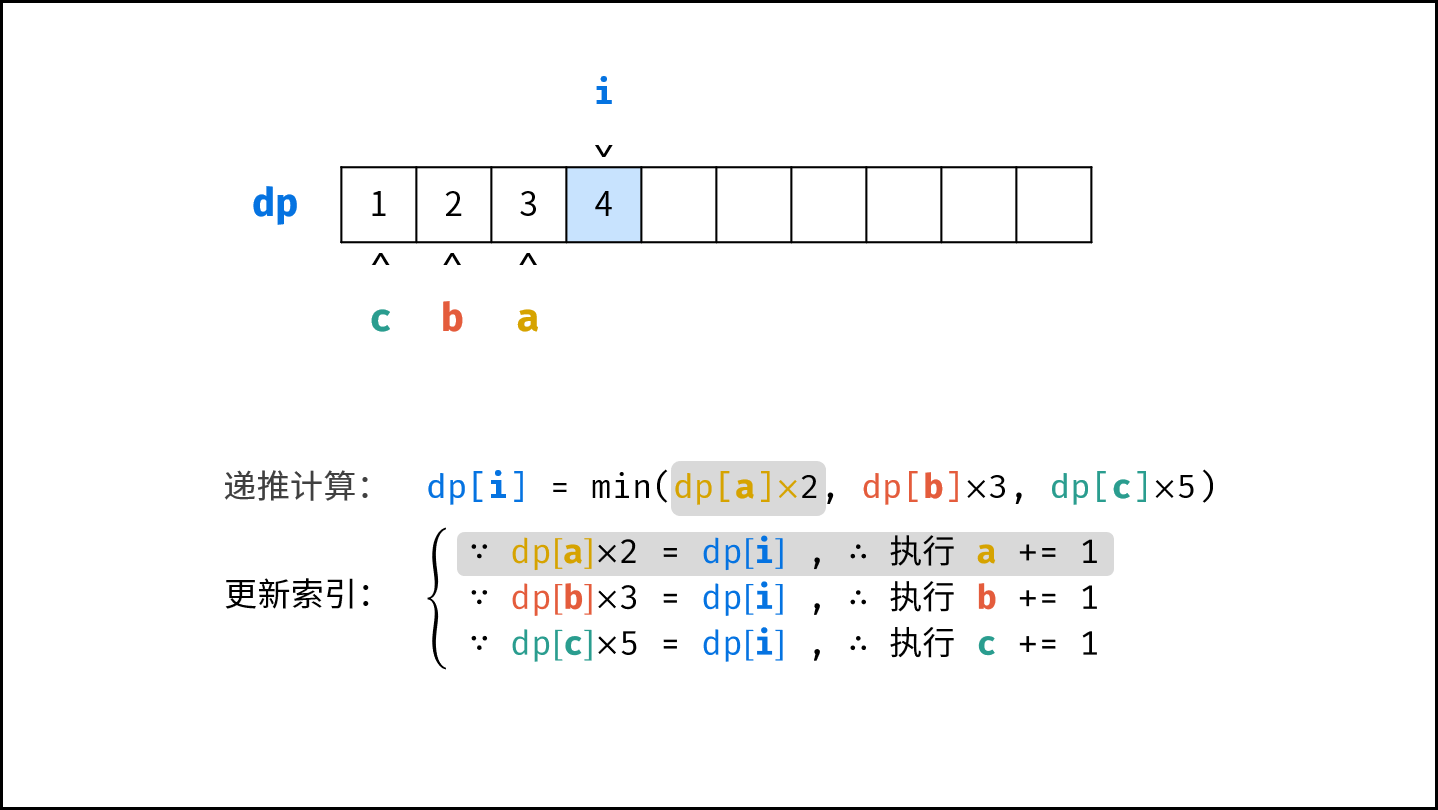
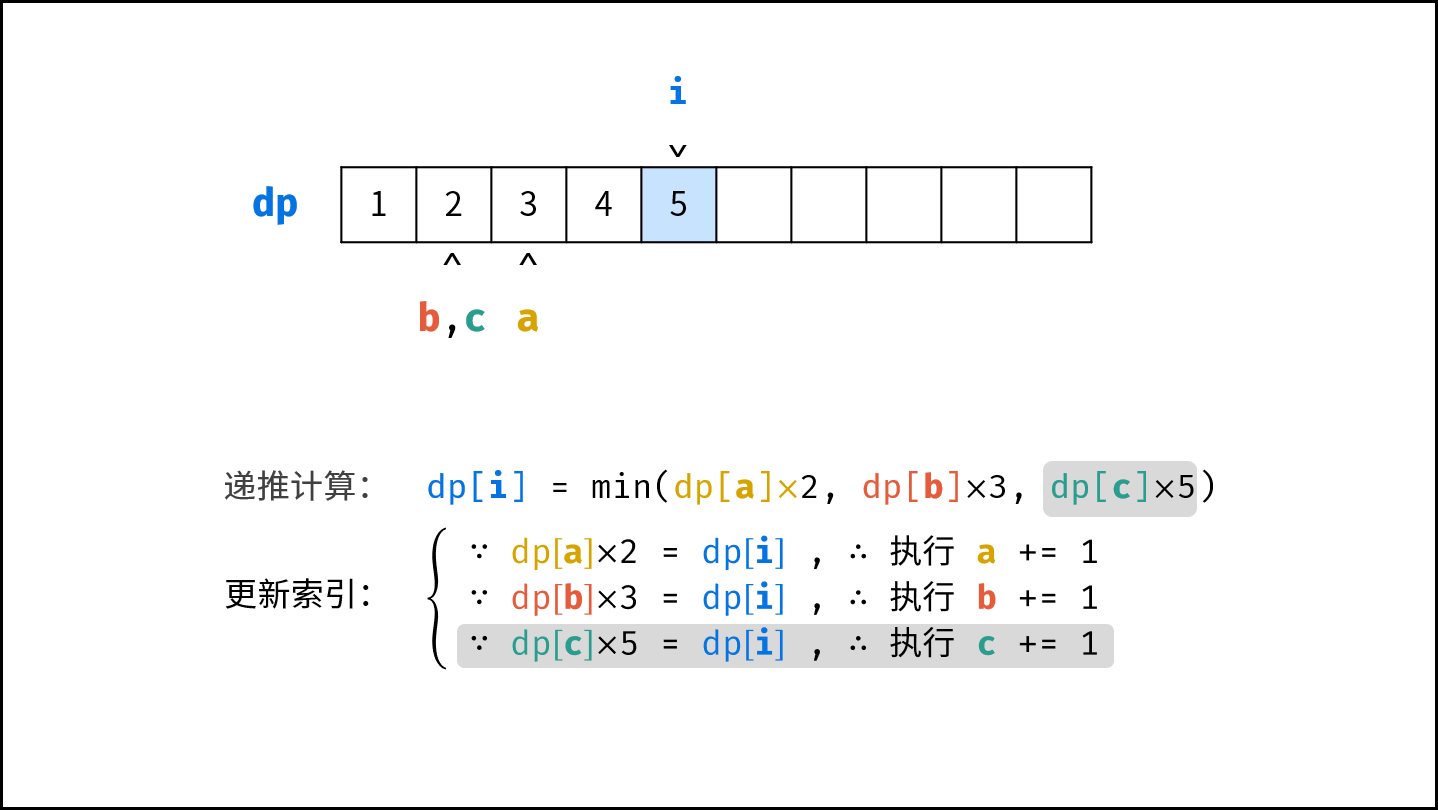
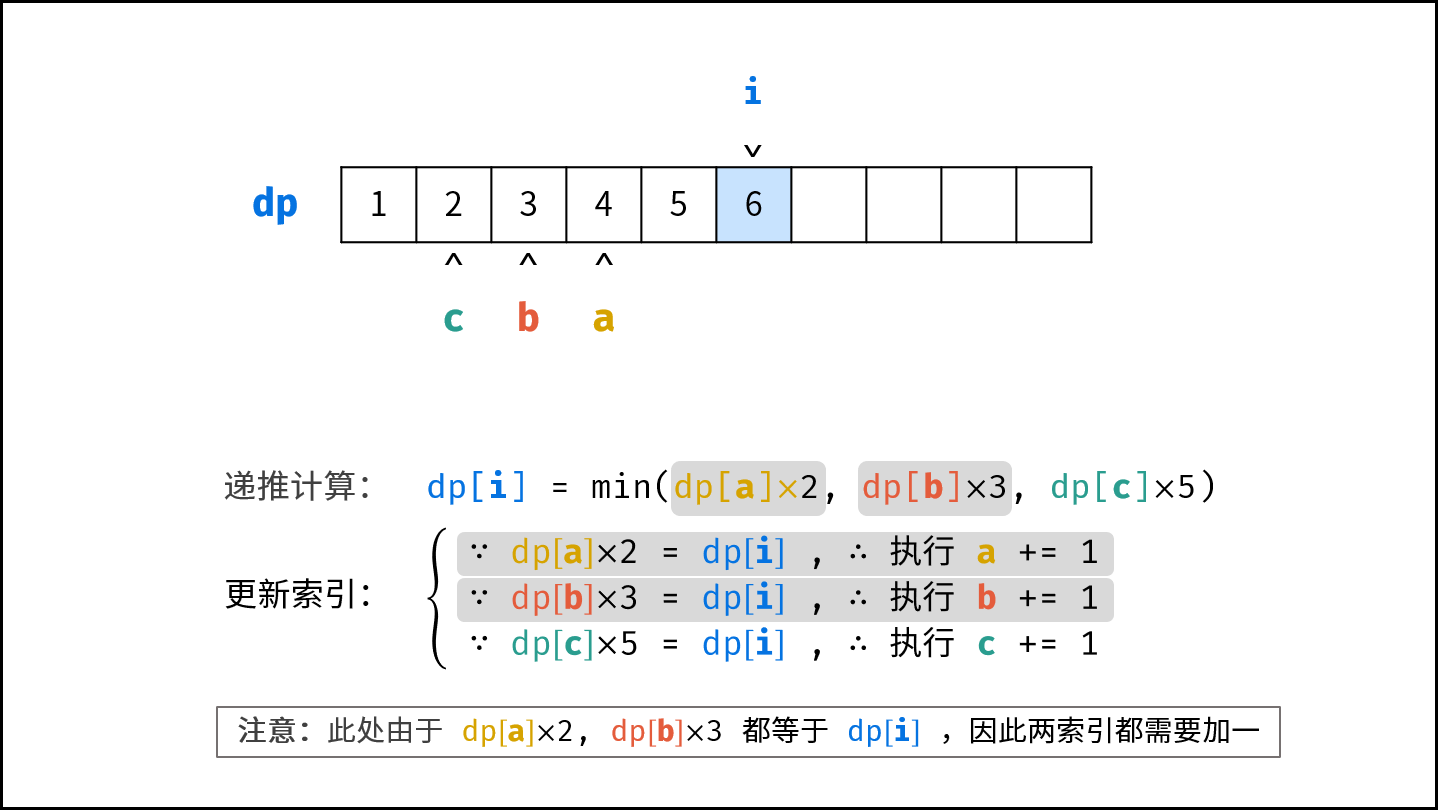
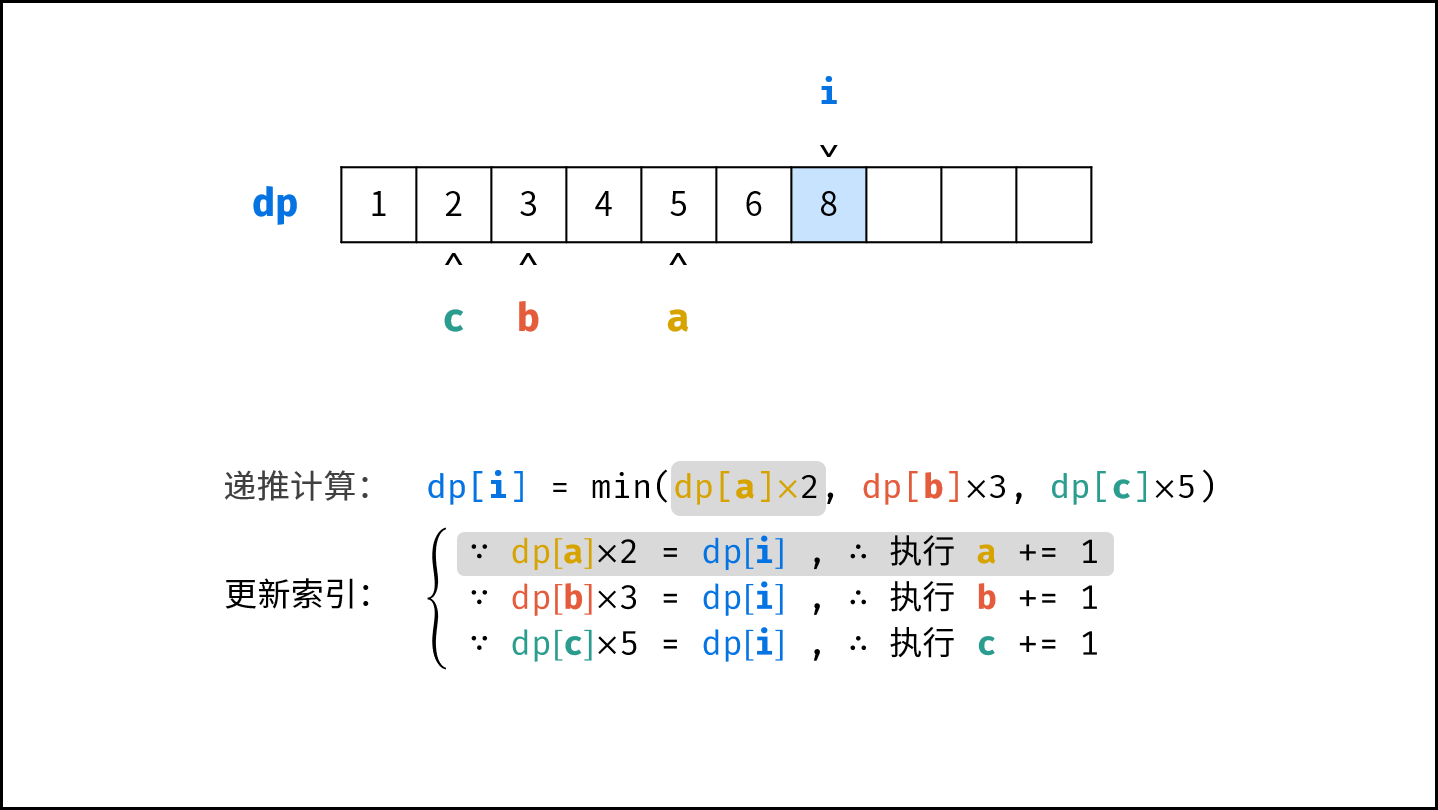
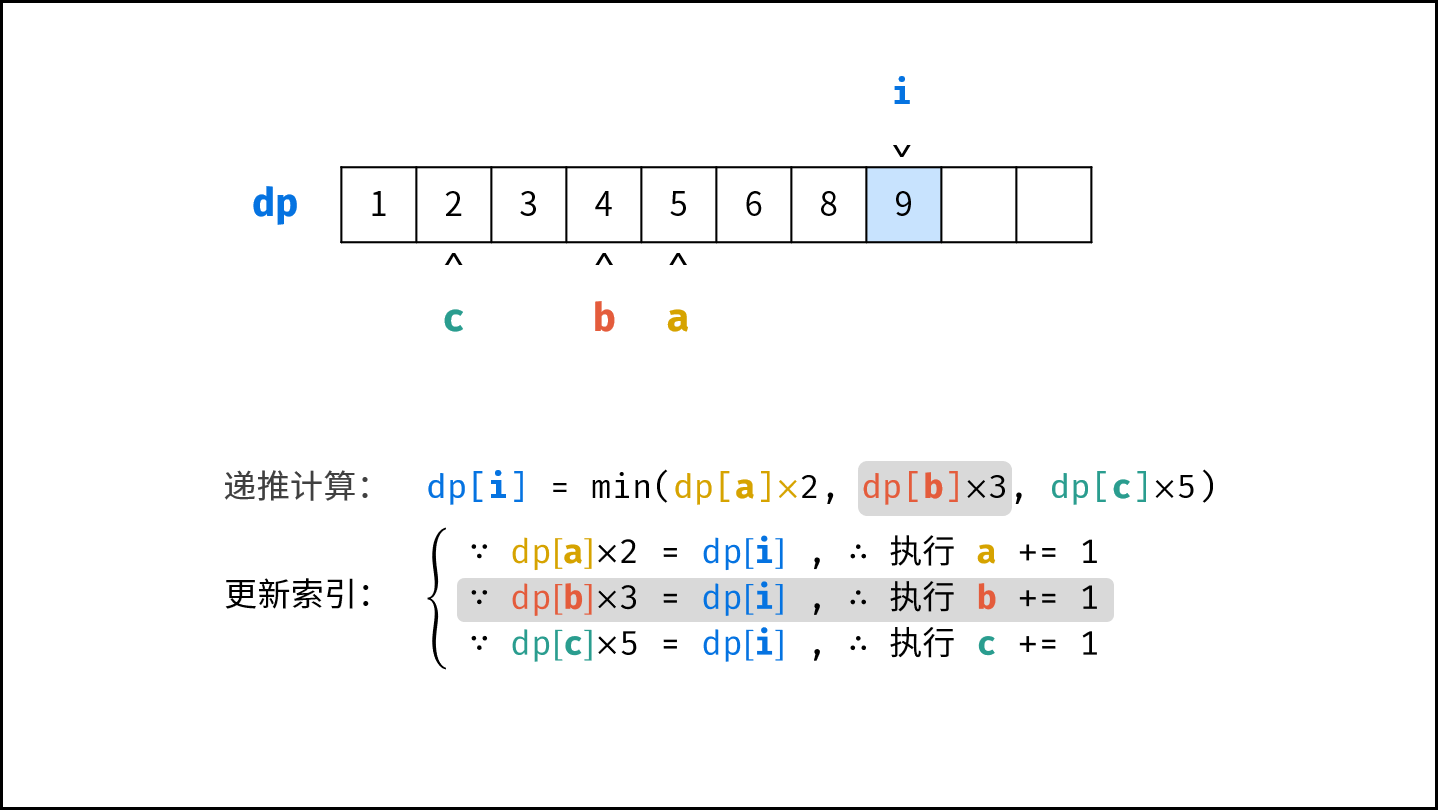
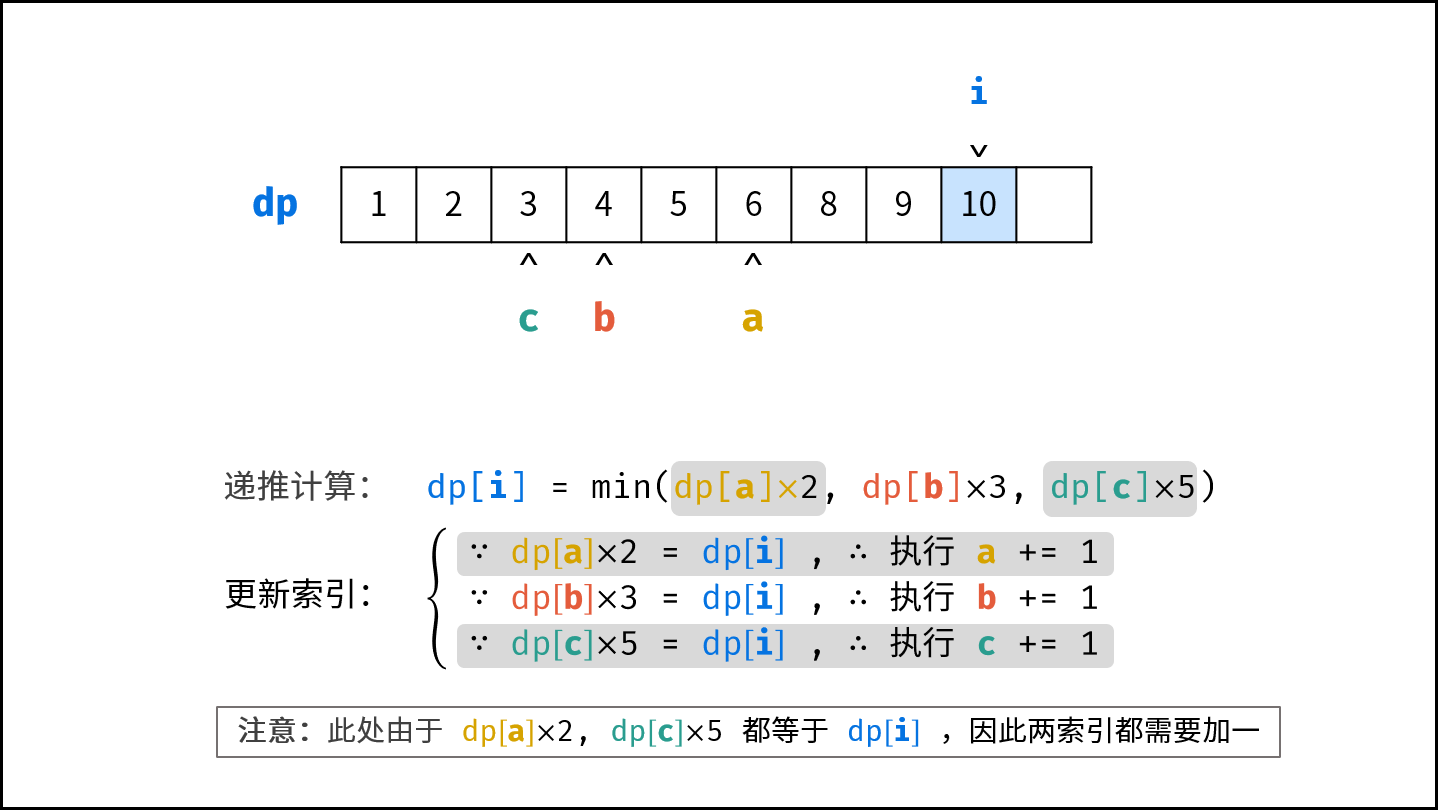
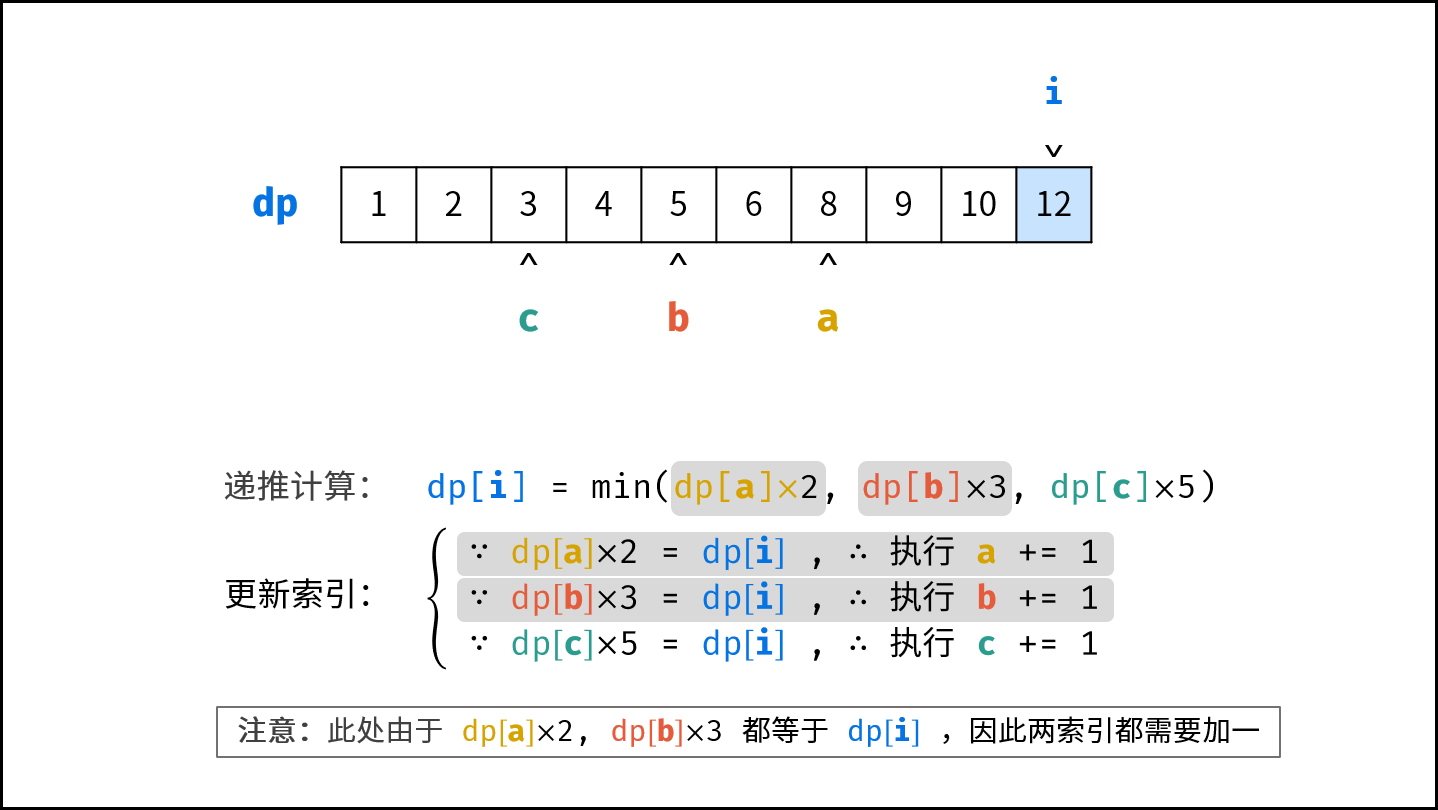
为了避免重复,我们可以用三个指针 a , b, c ,分别表示下一个丑数是当前指针指向的丑数乘以 2 , 3 , 5 。
利用三个指针生成丑数的算法流程:
- 初始化丑数列表
res,首个丑数为1,三个指针a,b,c都指向首个丑数。 - 开启循环生成丑数:
- 计算下一个丑数的候选集
res[a] \cdot 2,res[b] \cdot 3,res[c] \cdot 5。 - 选择丑数候选集中最小的那个作为下一个丑数,填入
res。 - 将被选中的丑数对应的指针向右移动一格。
- 计算下一个丑数的候选集
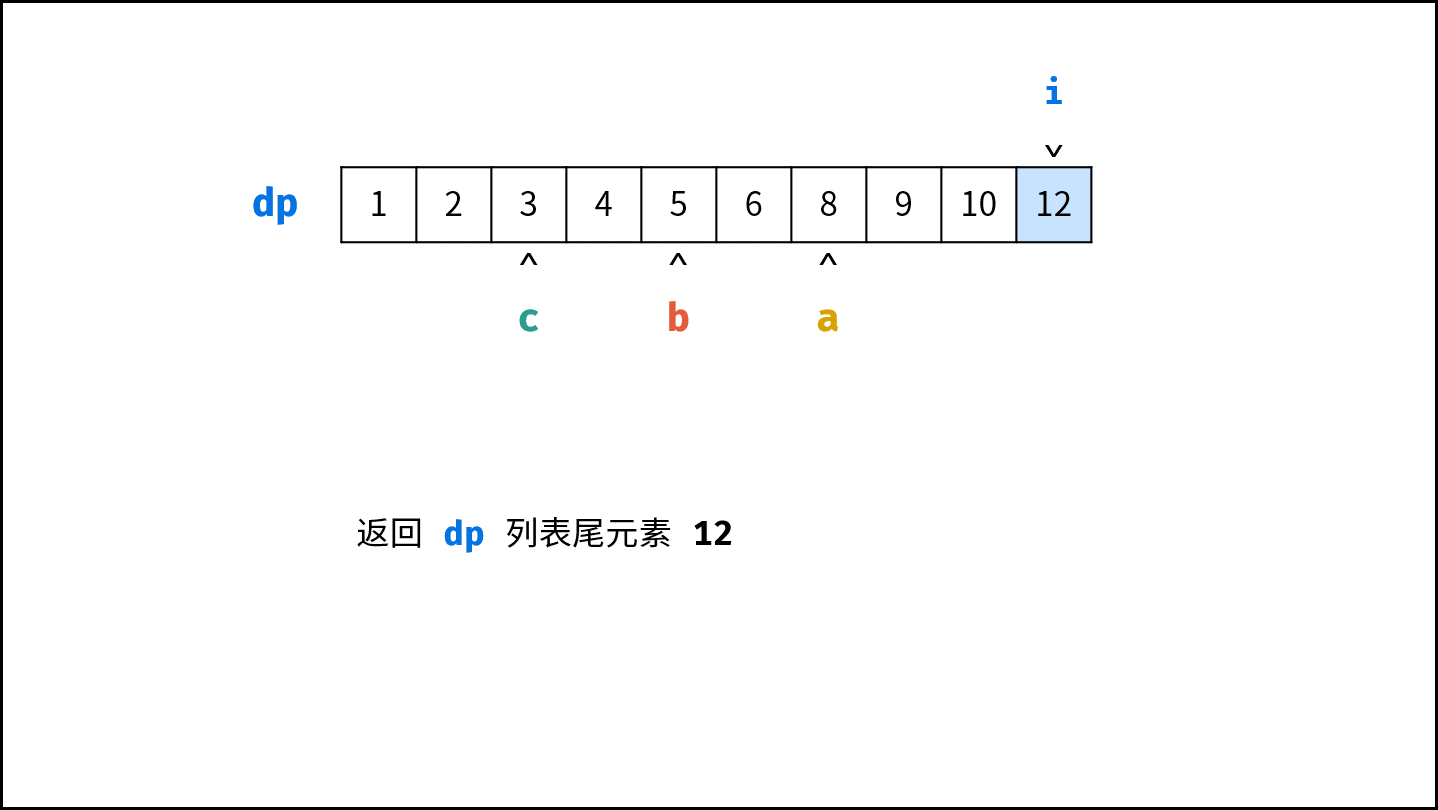
- 返回
res的最后一个元素即可。
< ,
, ,
, ,
, ,
, ,
, ,
, ,
, ,
, ,
, ,
, >
>
代码:
class Solution:
    def nthUglyNumber(self, n: int) -> int:
        res, a, b, c = [1] * n, 0, 0, 0
        for i in range(1, n):
            n2, n3, n5 = res[a] * 2, res[b] * 3, res[c] * 5
            res[i] = min(n2, n3, n5)
            if res[i] == n2: a += 1
            if res[i] == n3: b += 1
            if res[i] == n5: c += 1
        return res[-1]
class Solution {
    public int nthUglyNumber(int n) {
        int a = 0, b = 0, c = 0;
        int[] res = new int[n];
        res[0] = 1;
        for(int i = 1; i < n; i++) {
            int n2 = res[a] * 2, n3 = res[b] * 3, n5 = res[c] * 5;
            res[i] = Math.min(Math.min(n2, n3), n5);
            if (res[i] == n2) a++;
            if (res[i] == n3) b++;
            if (res[i] == n5) c++;
        }
        return res[n - 1];
    }
}
class Solution {
public:
    int nthUglyNumber(int n) {
        int a = 0, b = 0, c = 0;
        int res[n];
        res[0] = 1;
        for(int i = 1; i < n; i++) {
            int n2 = res[a] * 2, n3 = res[b] * 3, n5 = res[c] * 5;
            res[i] = min(min(n2, n3), n5);
            if (res[i] == n2) a++;
            if (res[i] == n3) b++;
            if (res[i] == n5) c++;
        }
        return res[n - 1];
    }
};
复杂度分析:
- 时间复杂度
O(n): 计算res列表需遍历n-1轮。 - 空间复杂度
O(n): 长度为n的res列表使用O(n)的额外空间。