mirror of
https://github.com/krahets/LeetCode-Book.git
synced 2026-01-12 00:19:02 +08:00

6.5 KiB
Executable File
6.5 KiB
Executable File
解题思路:
排序数组中的搜索问题,首先想到 二分法 解决。
排序数组 scores 中的所有数字 target 形成一个窗口,记窗口的 左 / 右边界 索引分别为 left 和 right ,分别对应窗口左边 / 右边的首个元素。
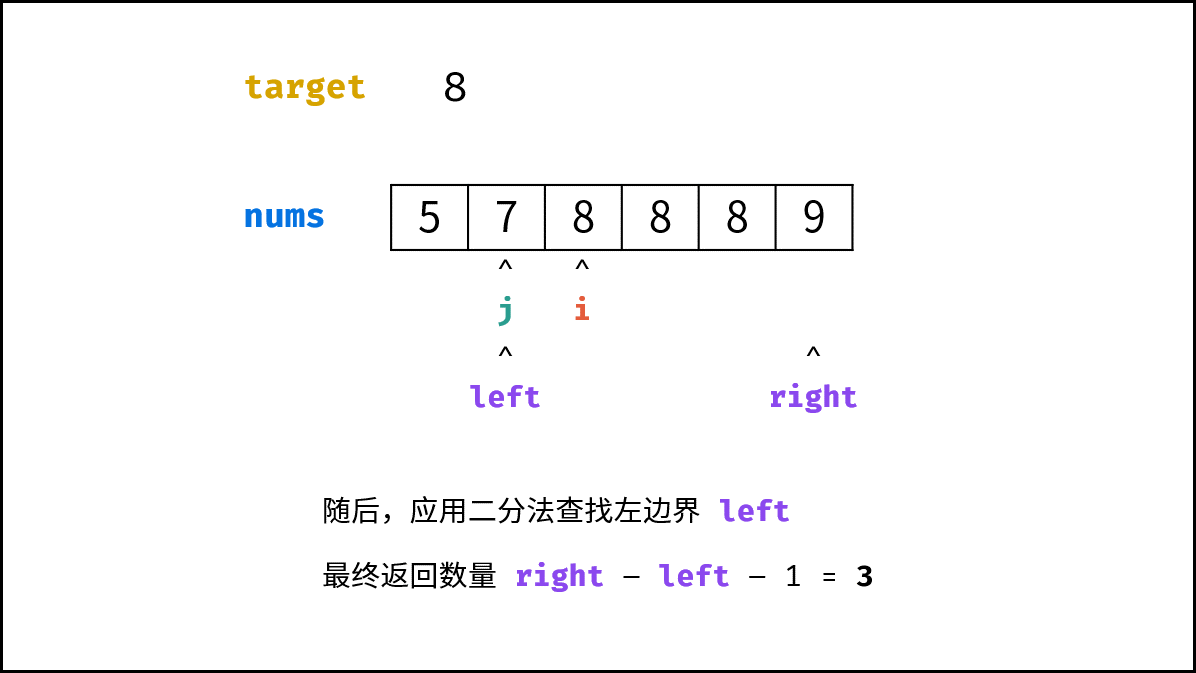
本题要求统计数字 target 的出现次数,可转化为:使用二分法分别找到 左边界 $left$ 和 右边界 $right$ ,易得数字 target 的数量为 right - left - 1 。
下图中的
nums对应本题的scores。
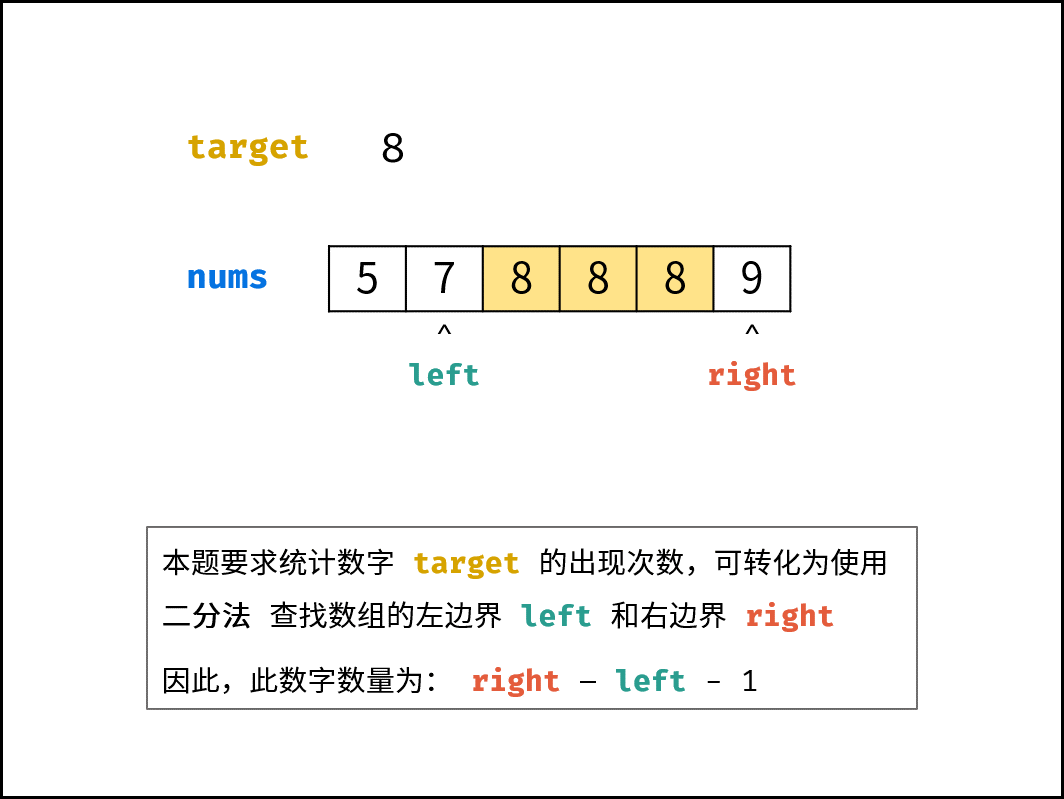 {:align=center width=500}
算法解析:
- 初始化: 左边界
i = 0,右边界j = len(scores) - 1。 - 循环二分: 当闭区间
[i, j]无元素时跳出;- 计算中点
m = (i + j) / 2(向下取整); - 若
scores[m] < target,则target在闭区间[m + 1, j]中,因此执行 $i = m + 1$; - 若
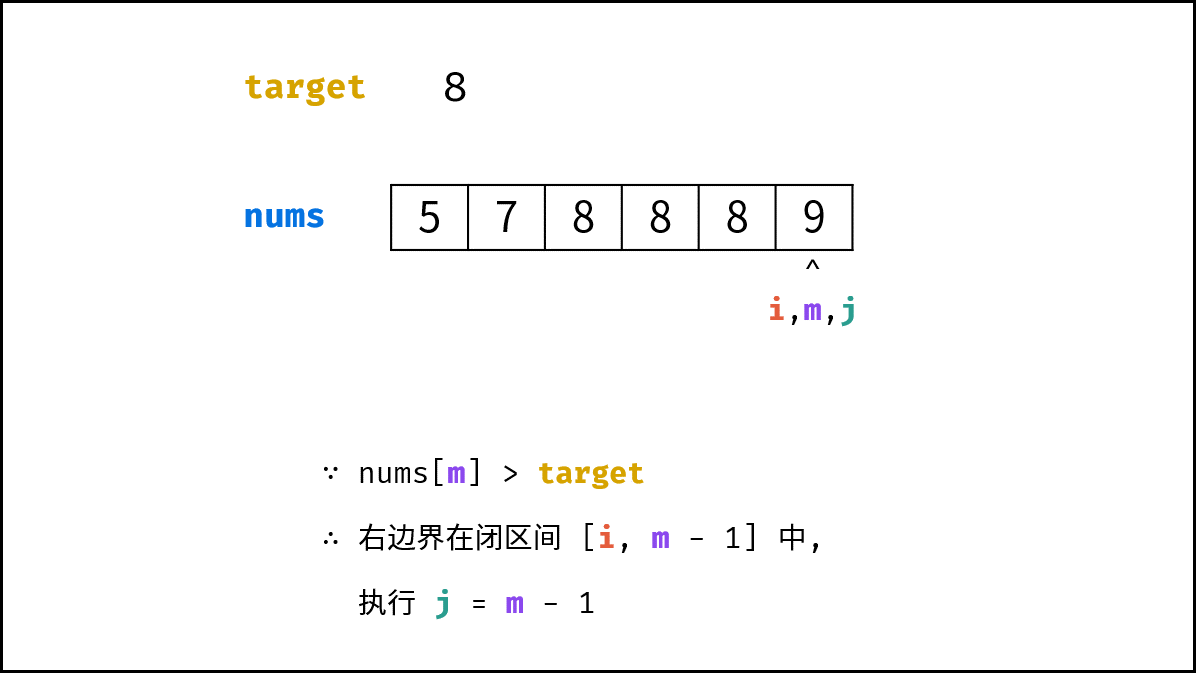
scores[m] > target,则target在闭区间[i, m - 1]中,因此执行 $j = m - 1$; - 若
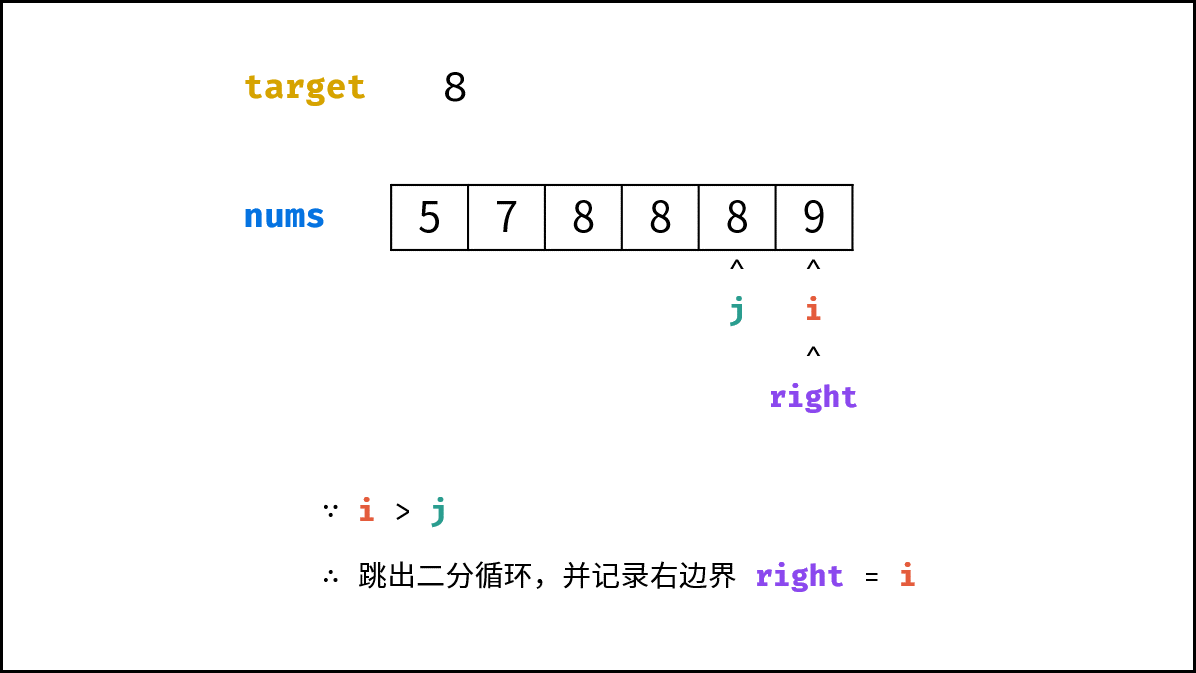
scores[m] = target,则右边界right在闭区间[m+1, j]中;左边界left在闭区间[i, m-1]中。因此分为以下两种情况:- 若查找 右边界 $right$ ,则执行
i = m + 1;(跳出时i指向右边界) - 若查找 左边界 $left$ ,则执行
j = m - 1;(跳出时j指向左边界)
- 若查找 右边界 $right$ ,则执行
- 计算中点
- 返回值: 应用两次二分,分别查找
right和left,最终返回right - left - 1即可。
效率优化:
以下优化基于:查找完右边界
right = i后,则scores[j]指向最右边的target(若存在)。
- 查找完右边界后,可用
scores[j] = target判断数组中是否包含target,若不包含则直接提前返回0,无需后续查找左边界。 - 查找完右边界后,左边界
left一定在闭区间[0, j]中,因此直接从此区间开始二分查找即可。
<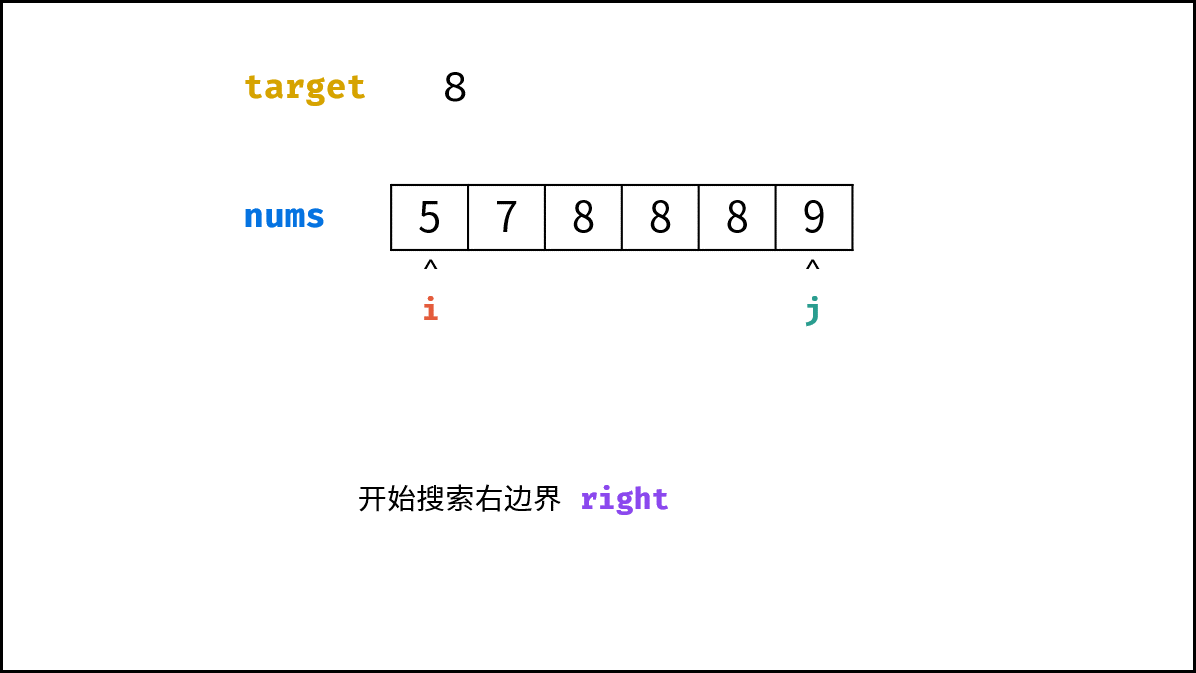 ,
,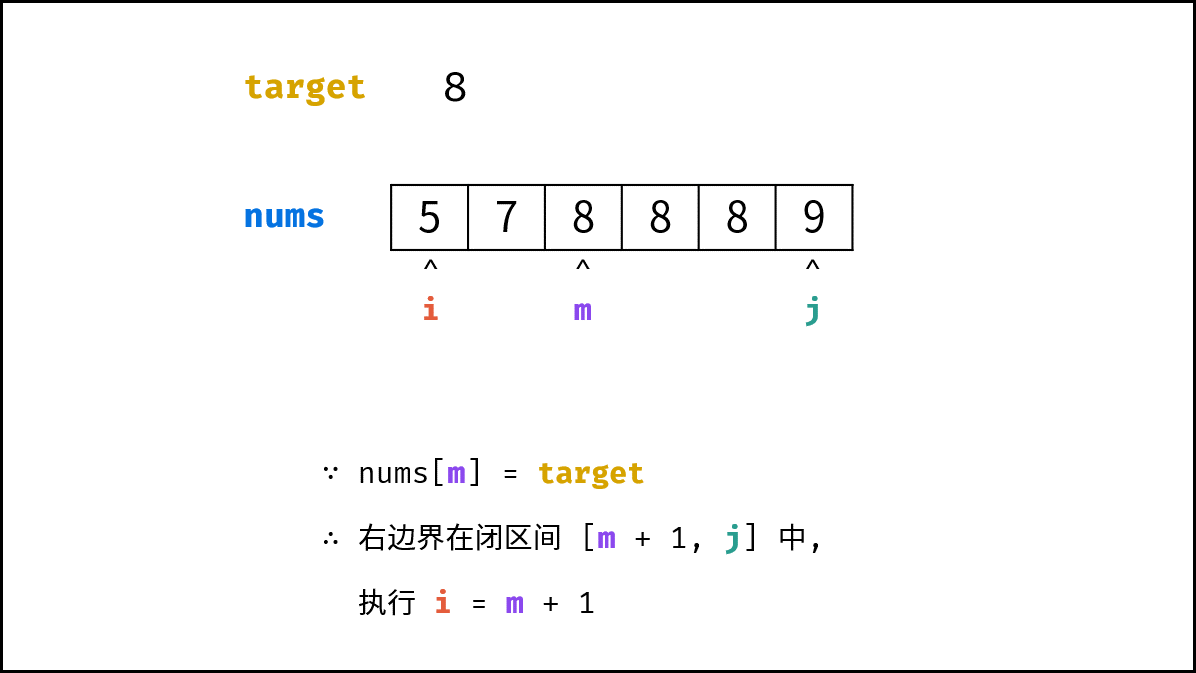 ,
,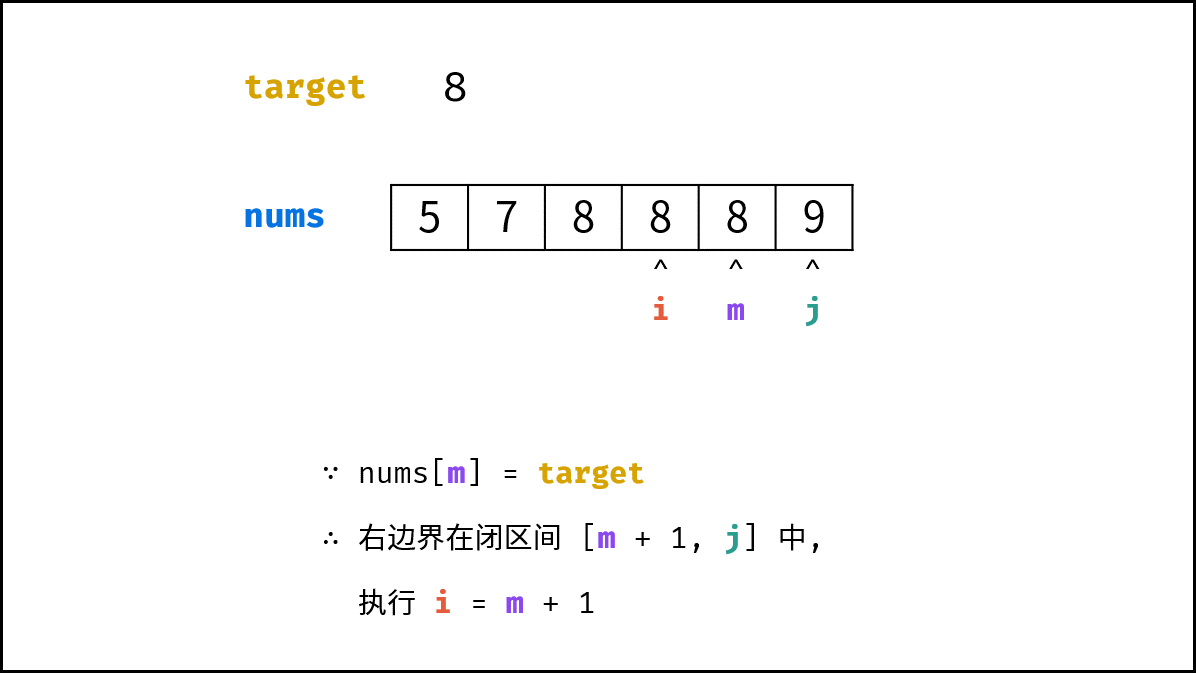 ,
, ,
, ,
, >
>
代码:
可将 scores[m] = target 情况合并至其他两种情况中。
class Solution:
    def countTarget(self, scores: List[int], target: int) -> int:
        # 搜索右边界 right
        i, j = 0, len(scores) - 1
        while i <= j:
            m = (i + j) // 2
            if scores[m] <= target: i = m + 1
            else: j = m - 1
        right = i
        # 若数组中无 target ,则提前返回
        if j >= 0 and scores[j] != target: return 0
        # 搜索左边界 left
        i = 0
        while i <= j:
            m = (i + j) // 2
            if scores[m] < target: i = m + 1
            else: j = m - 1
        left = j
        return right - left - 1
class Solution {
    public int countTarget(int[] scores, int target) {
        // 搜索右边界 right
        int i = 0, j = scores.length - 1;
        while(i <= j) {
            int m = (i + j) / 2;
            if(scores[m] <= target) i = m + 1;
            else j = m - 1;
        }
        int right = i;
        // 若数组中无 target ,则提前返回
        if(j >= 0 && scores[j] != target) return 0;
        // 搜索左边界 right
        i = 0; j = scores.length - 1;
        while(i <= j) {
            int m = (i + j) / 2;
            if(scores[m] < target) i = m + 1;
            else j = m - 1;
        }
        int left = j;
        return right - left - 1;
    }
}
class Solution {
public:
    int countTarget(vector<int>& scores, int target) {
        // 搜索右边界 right
        int i = 0, j = scores.size() - 1;
        while(i <= j) {
            int m = (i + j) / 2;
            if(scores[m] <= target) i = m + 1;
            else j = m - 1;
        }
        int right = i;
        // 若数组中无 target ,则提前返回
        if(j >= 0 && scores[j] != target) return 0;
        // 搜索左边界 right
        i = 0; j = scores.size() - 1;
        while(i <= j) {
            int m = (i + j) / 2;
            if(scores[m] < target) i = m + 1;
            else j = m - 1;
        }
        int left = j;
        return right - left - 1;
    }
};
以上代码显得比较臃肿(两轮二分查找代码冗余)。为简化代码,可将二分查找右边界 right 的代码 封装至函数 helper() 。
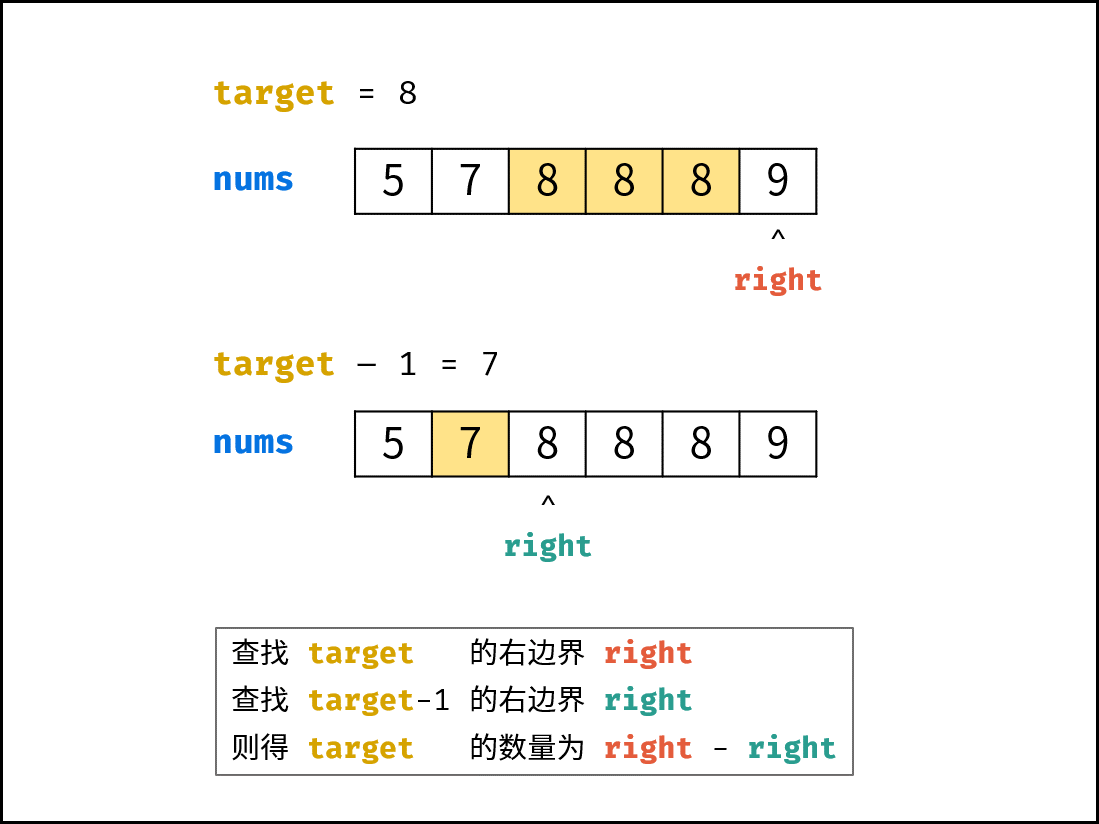
如下图所示,由于数组 scores 中元素都为整数,因此可以分别二分查找 target 和 target - 1 的右边界,将两结果相减并返回即可。
 {:align=center width=450}
本质上看,helper() 函数旨在查找数字 tar 在数组 scores 中的 插入点 ,且若数组中存在值相同的元素,则插入到这些元素的右边。
class Solution:
    def countTarget(self, scores: List[int], target: int) -> int:
        def helper(tar):
            i, j = 0, len(scores) - 1
            while i <= j:
                m = (i + j) // 2
                if scores[m] <= tar: i = m + 1
                else: j = m - 1
            return i
        return helper(target) - helper(target - 1)
class Solution {
    public int countTarget(int[] scores, int target) {
        return helper(scores, target) - helper(scores, target - 1);
    }
    int helper(int[] scores, int tar) {
        int i = 0, j = scores.length - 1;
        while(i <= j) {
            int m = (i + j) / 2;
            if(scores[m] <= tar) i = m + 1;
            else j = m - 1;
        }
        return i;
    }
}
class Solution {
public:
    int countTarget(vector<int>& scores, int target) {
        return helper(scores, target) - helper(scores, target - 1);
    }
private:
    int helper(vector<int>& scores, int tar) {
        int i = 0, j = scores.size() - 1;
        while(i <= j) {
            int m = (i + j) / 2;
            if(scores[m] <= tar) i = m + 1;
            else j = m - 1;
        }
        return i;
    }
};
复杂度分析:
- 时间复杂度
O(\log N): 二分法为对数级别复杂度。 - 空间复杂度
O(1): 几个变量使用常数大小的额外空间。