mirror of
https://github.com/krahets/LeetCode-Book.git
synced 2026-01-12 00:19:02 +08:00

8.0 KiB
Executable File
8.0 KiB
Executable File
解题思路:
以下两种方法均基于以下性质推出: 此树的深度 等于 左子树的深度 与 右子树的深度 中的 最大值 +1 。
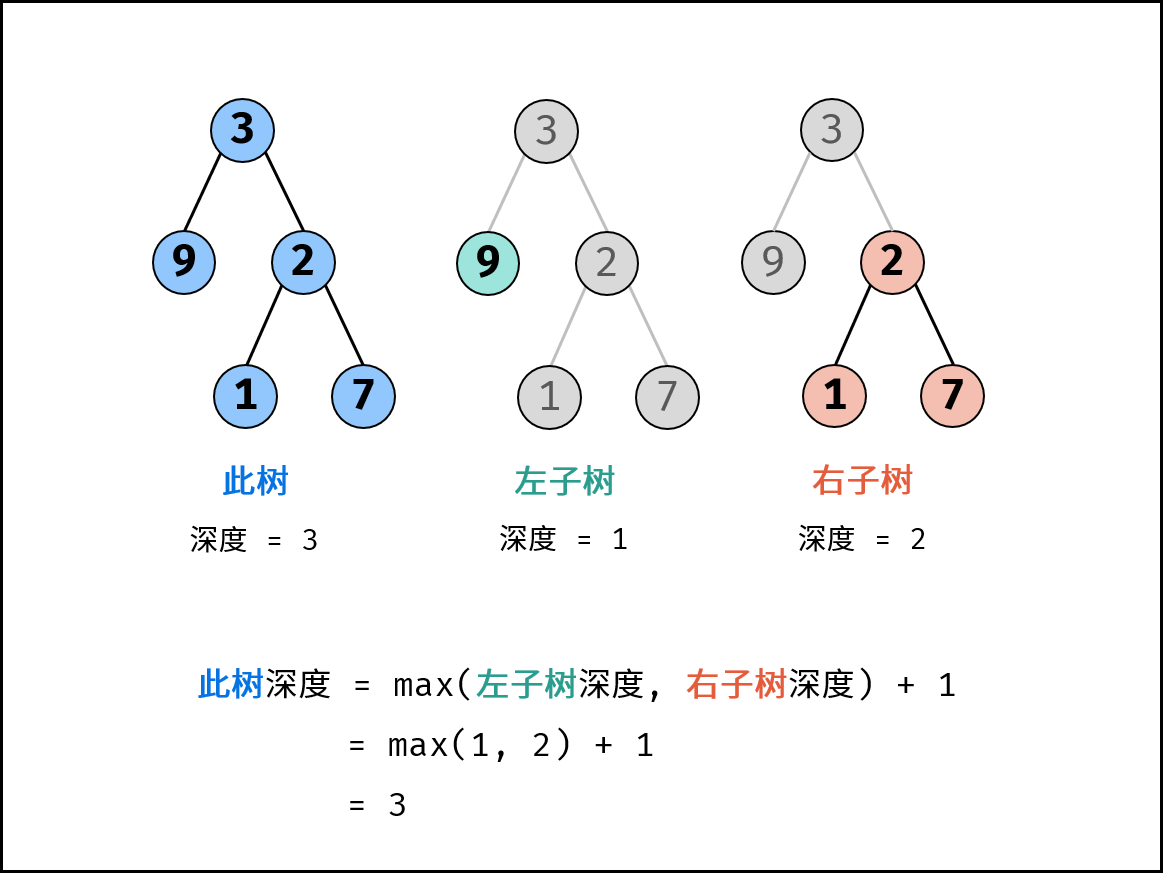 {:align=center width=450}
方法一:后序遍历 + 剪枝 (从底至顶)
此方法为本题的最优解法,但剪枝的方法不易第一时间想到。
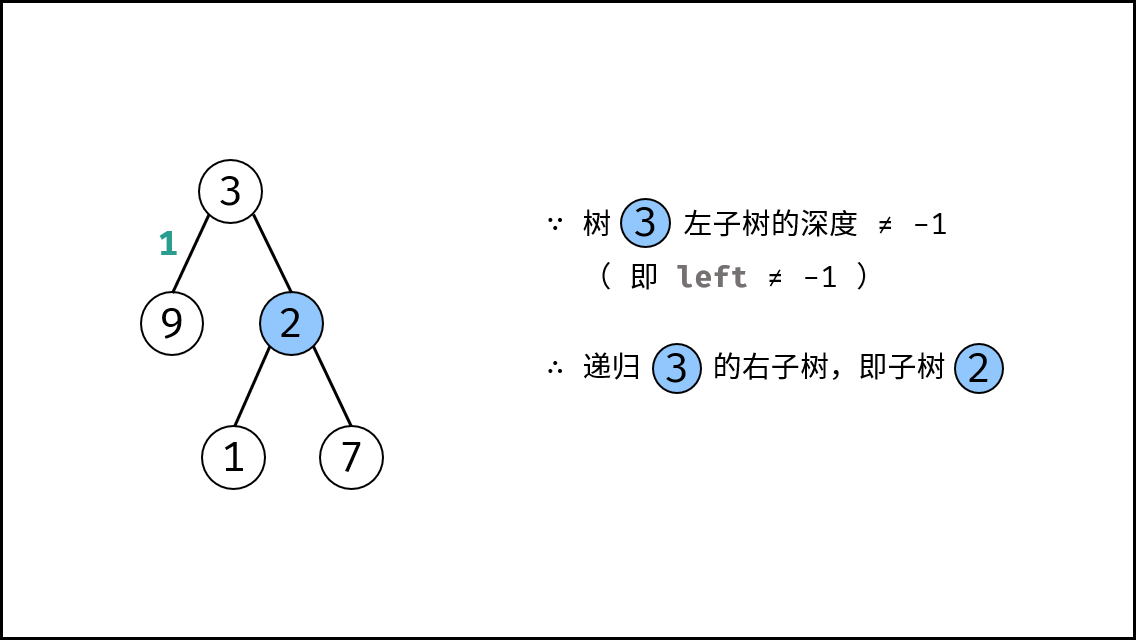
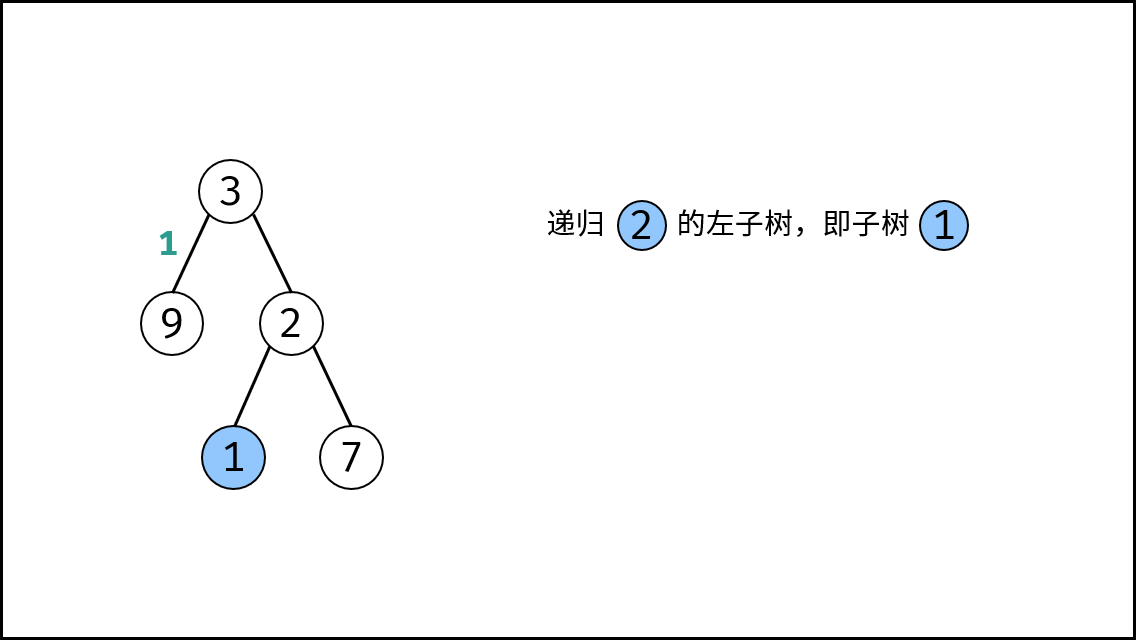
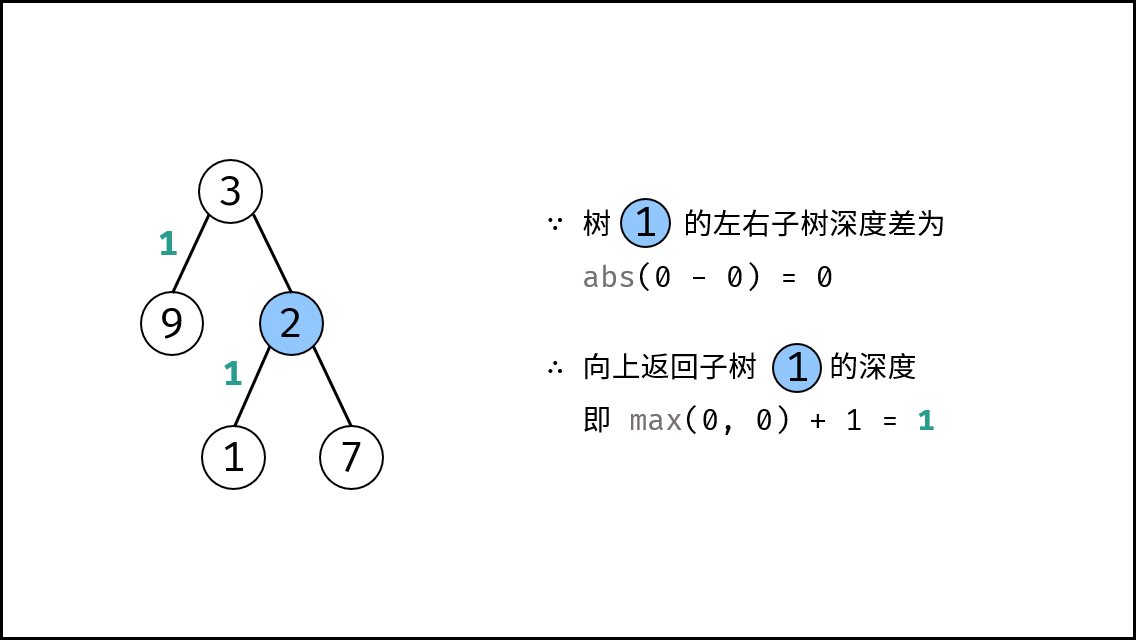
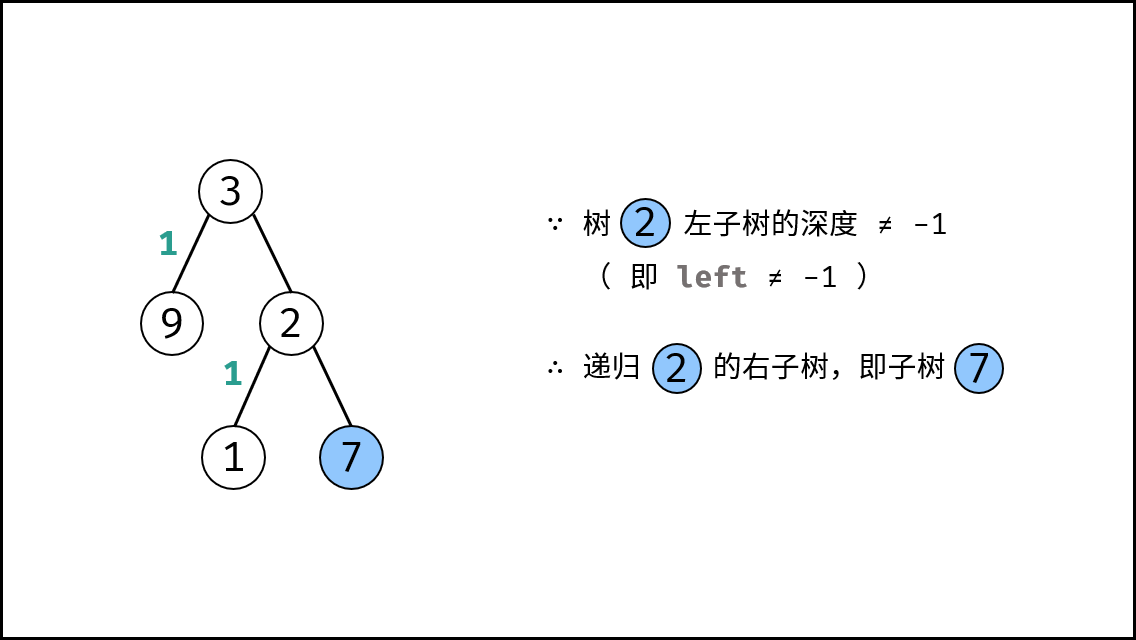
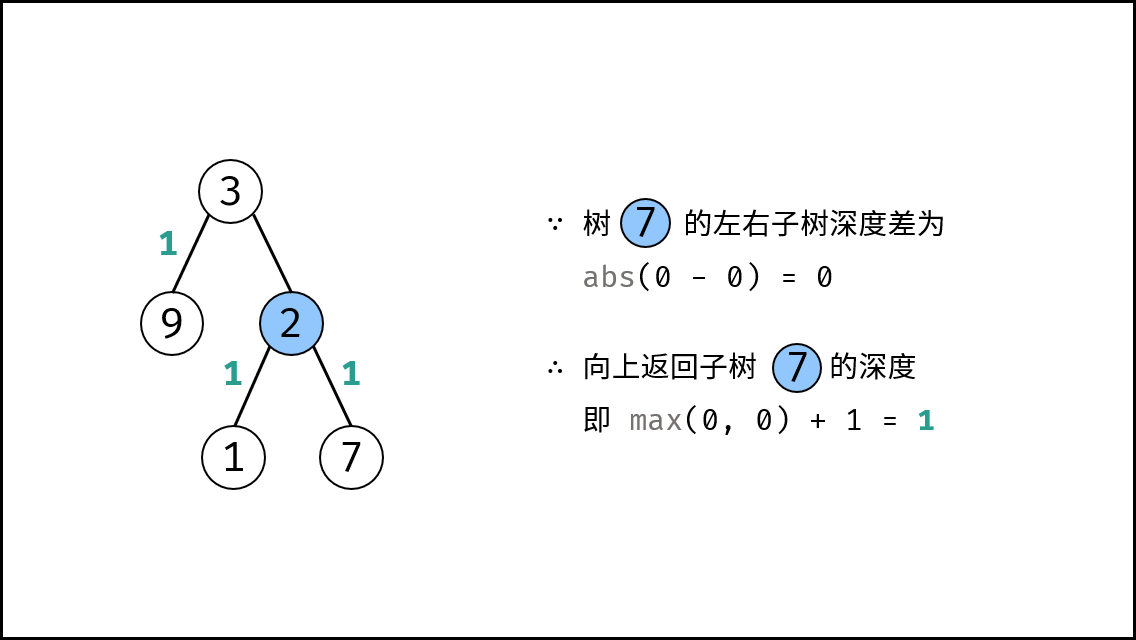
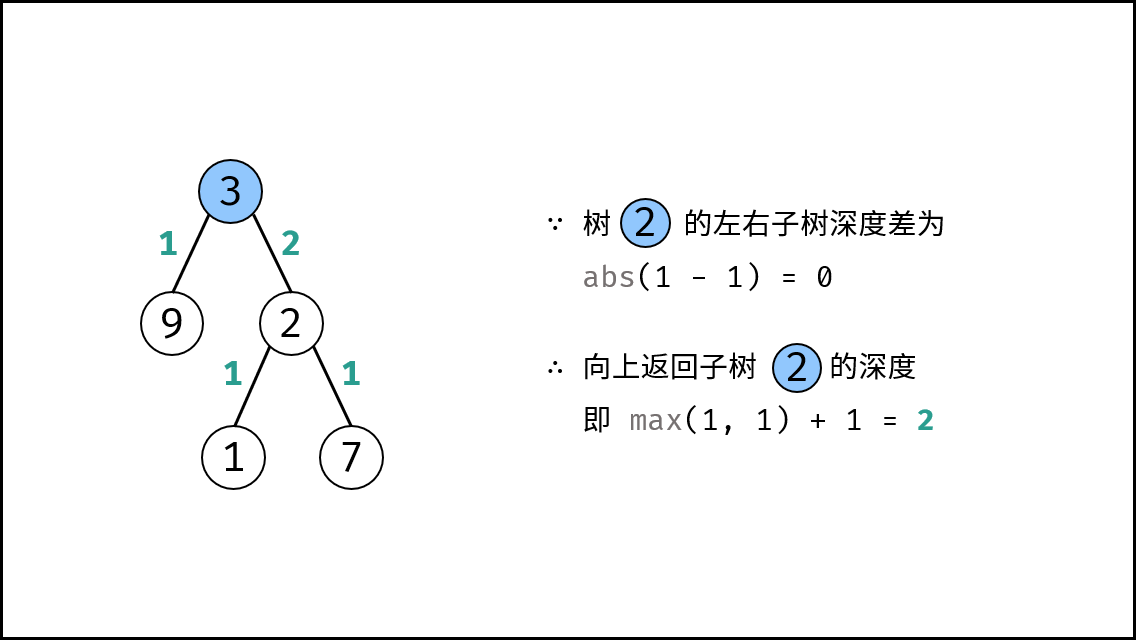
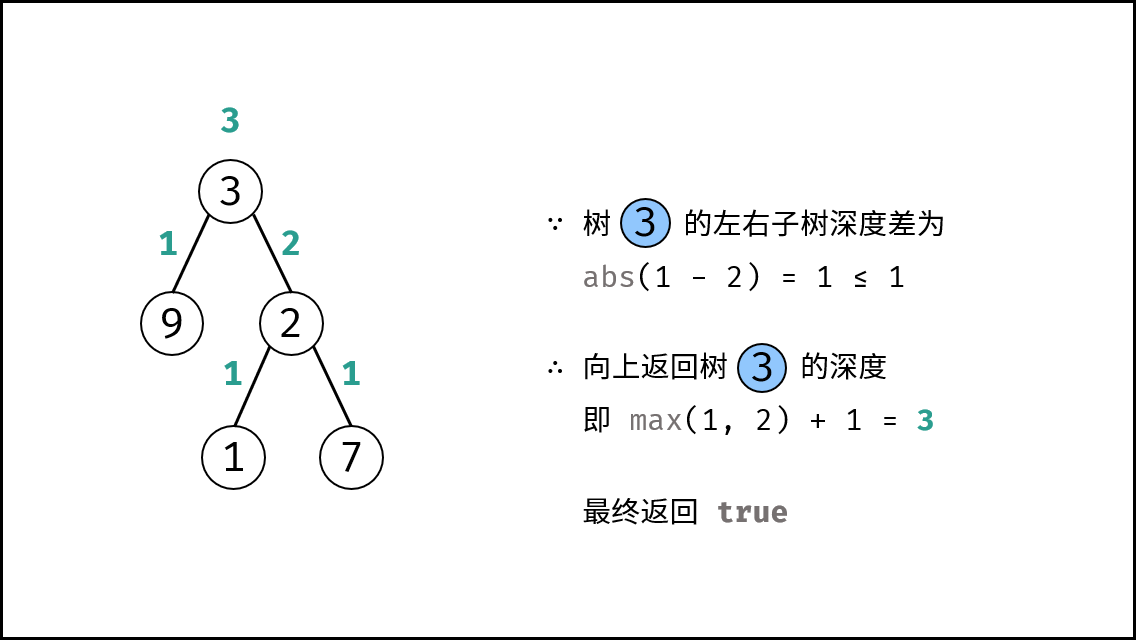
思路是对二叉树做后序遍历,从底至顶返回子树深度,若判定某子树不是平衡树则 “剪枝” ,直接向上返回。
算法流程:
recur(root) 函数:
- 返回值:
- 当节点
root左 / 右子树的深度差\leq 1:则返回当前子树的深度,即节点root的左 / 右子树的深度最大值+1(max(left, right) + 1); - 当节点
root左 / 右子树的深度差> 1:则返回-1,代表 此子树不是平衡树 。
- 当节点
- 终止条件:
- 当
root为空:说明越过叶节点,因此返回高度0; - 当左(右)子树深度为
-1:代表此树的 左(右)子树 不是平衡树,因此剪枝,直接返回-1;
- 当
isBalanced(root) 函数:
- 返回值: 若
recur(root) != -1,则说明此树平衡,返回\text{true}; 否则返回\text{false}。
<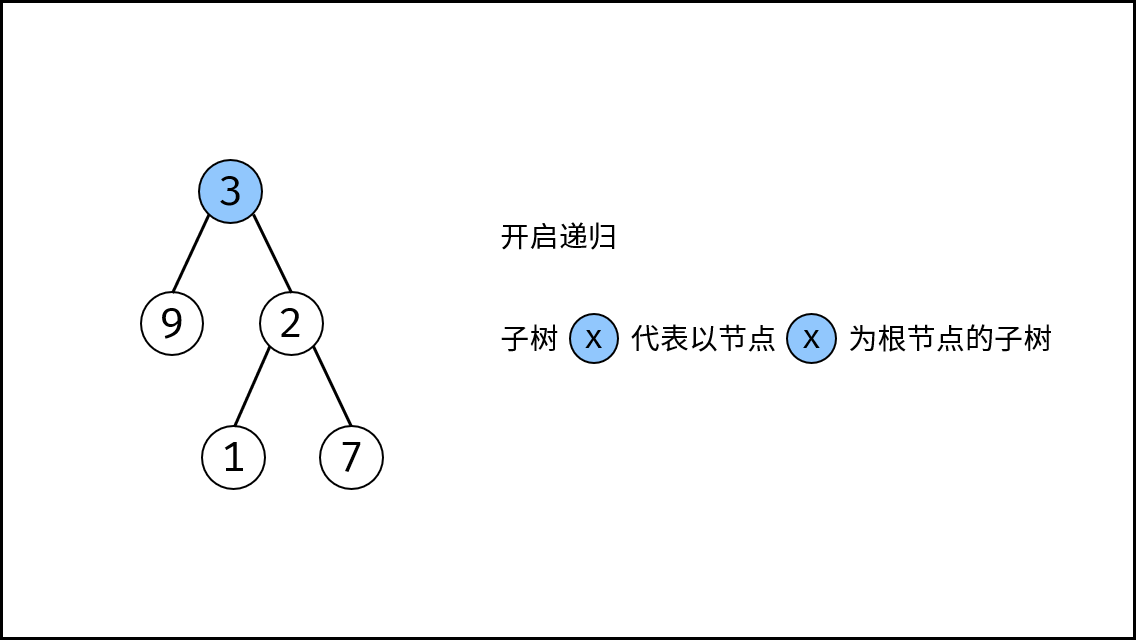 ,
,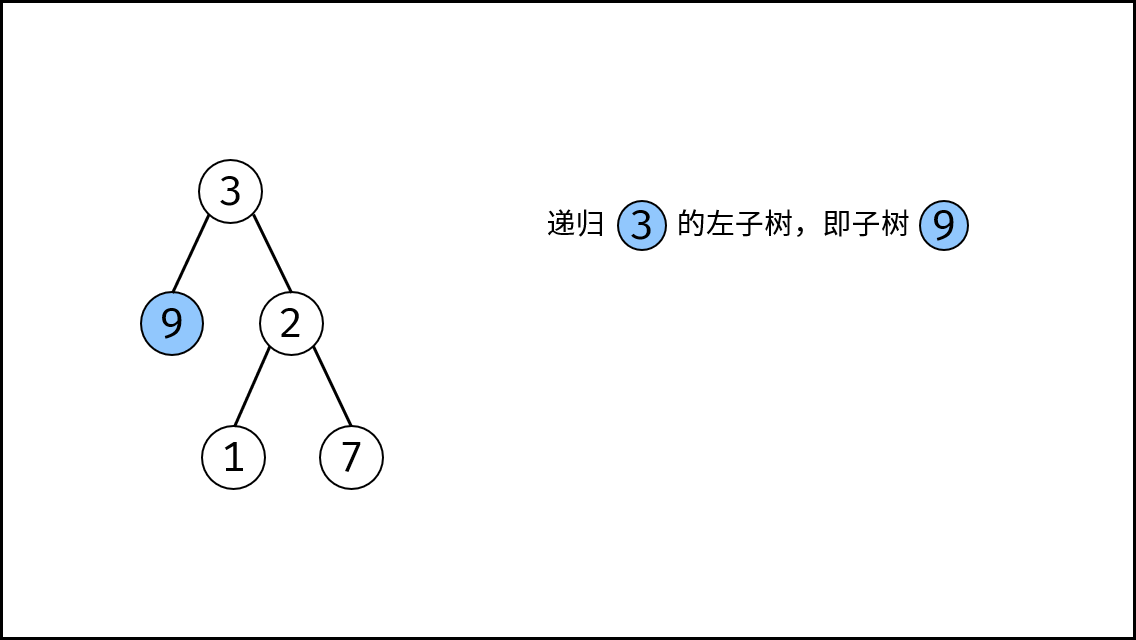 ,
,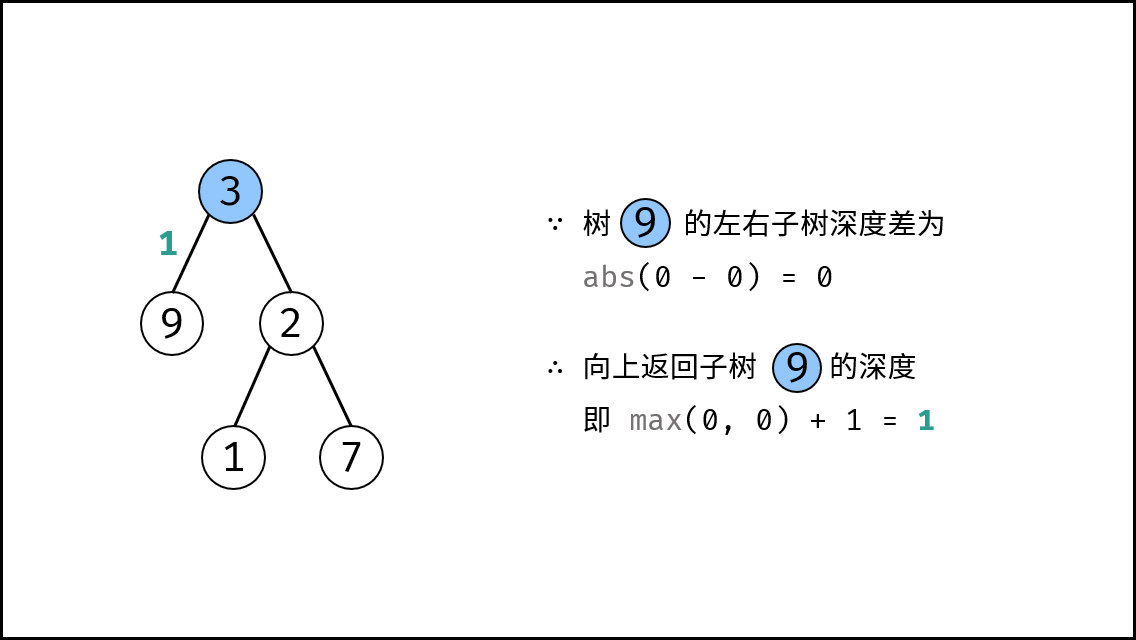 ,
, ,
, ,
, ,
, ,
, ,
, ,
, >
>
代码:
class Solution:
    def isBalanced(self, root: Optional[TreeNode]) -> bool:
        def recur(root):
            if not root: return 0
            left = recur(root.left)
            if left == -1: return -1
            right = recur(root.right)
            if right == -1: return -1
            return max(left, right) + 1 if abs(left - right) <= 1 else -1

        return recur(root) != -1
class Solution {
    public boolean isBalanced(TreeNode root) {
        return recur(root) != -1;
    }

    private int recur(TreeNode root) {
        if (root == null) return 0;
        int left = recur(root.left);
        if(left == -1) return -1;
        int right = recur(root.right);
        if(right == -1) return -1;
        return Math.abs(left - right) < 2 ? Math.max(left, right) + 1 : -1;
    }
}
class Solution {
public:
    bool isBalanced(TreeNode* root) {
        return recur(root) != -1;
    }
private:
    int recur(TreeNode* root) {
        if (root == nullptr) return 0;
        int left = recur(root->left);
        if(left == -1) return -1;
        int right = recur(root->right);
        if(right == -1) return -1;
        return abs(left - right) < 2 ? max(left, right) + 1 : -1;
    }
};
复杂度分析:
- 时间复杂度 $O(N)$:
N为树的节点数;最差情况下,需要递归遍历树的所有节点。 - 空间复杂度 $O(N)$: 最差情况下(树退化为链表时),系统递归需要使用
O(N)的栈空间。
方法二:先序遍历 + 判断深度 (从顶至底)
此方法容易想到,但会产生大量重复计算,时间复杂度较高。
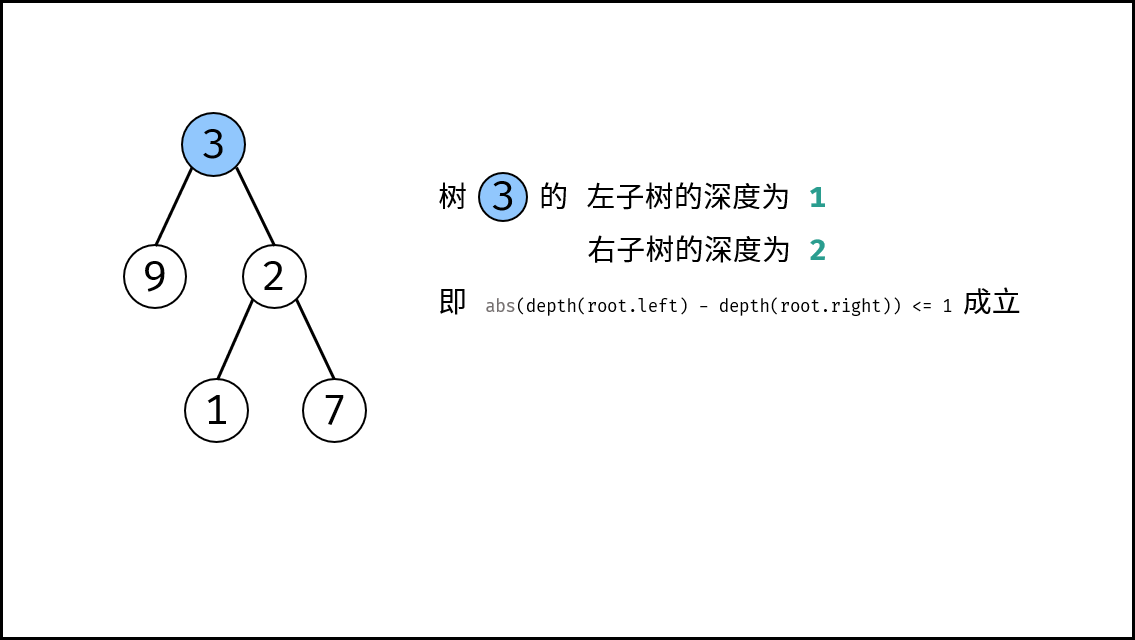
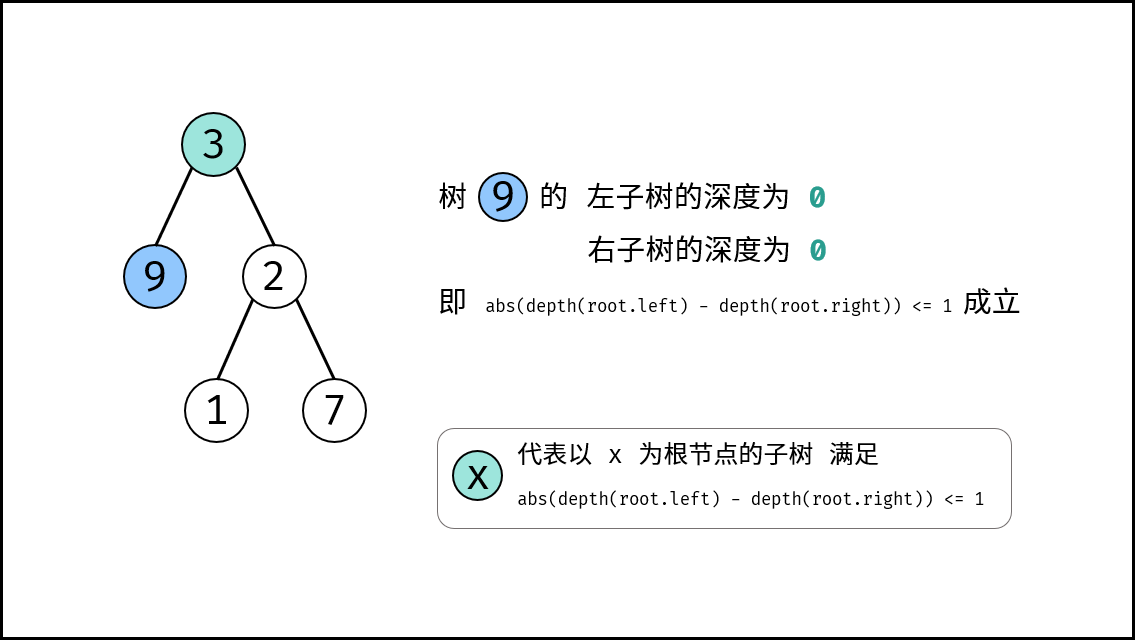
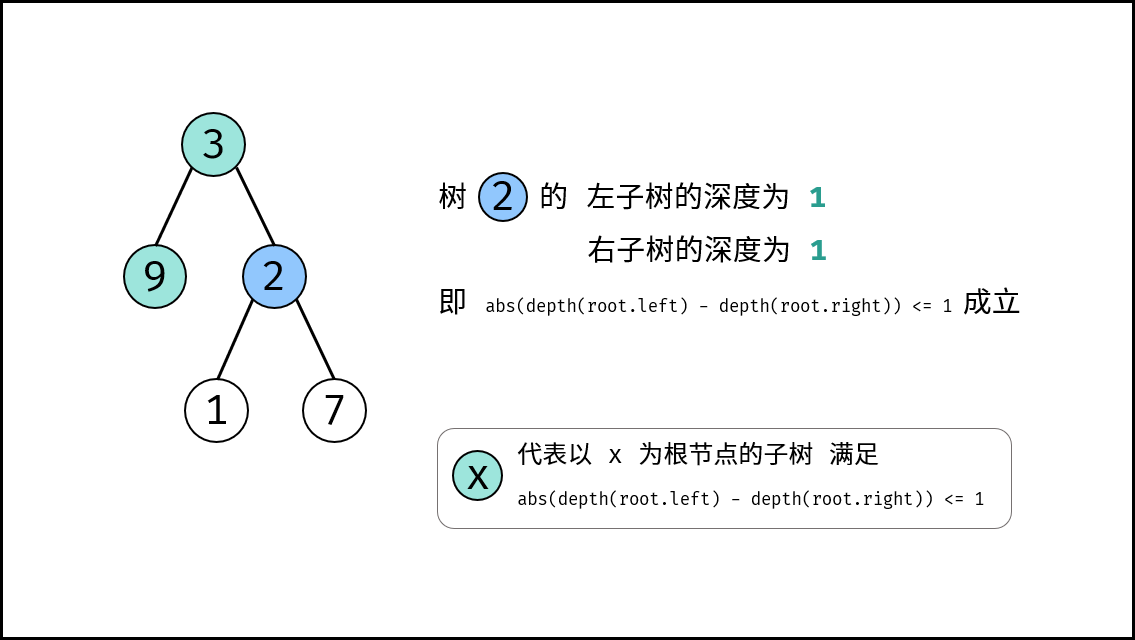
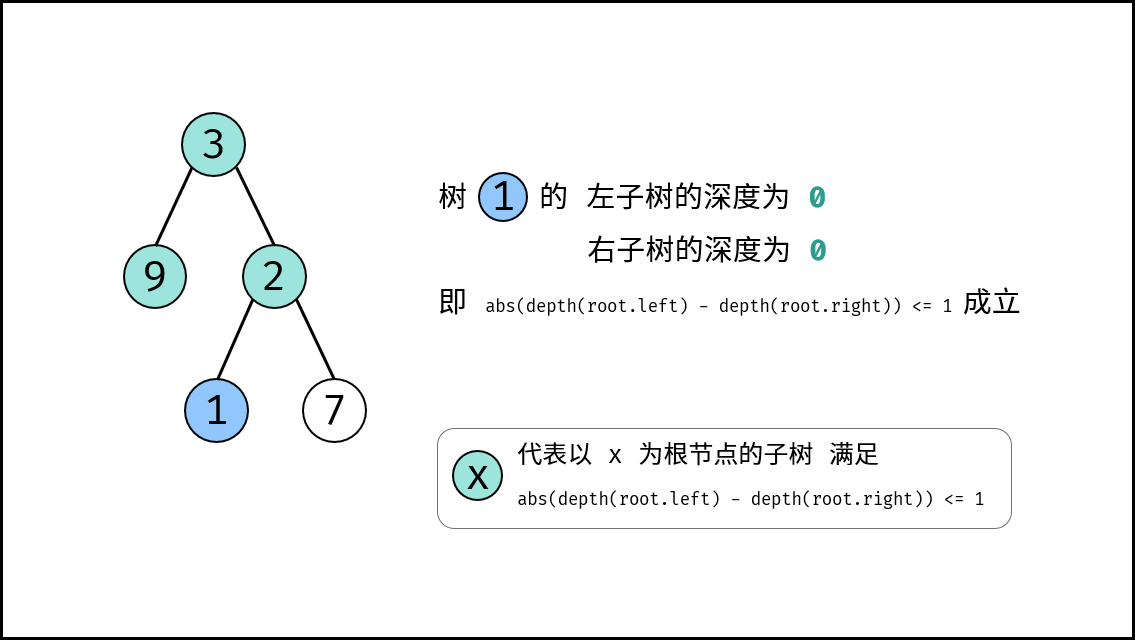
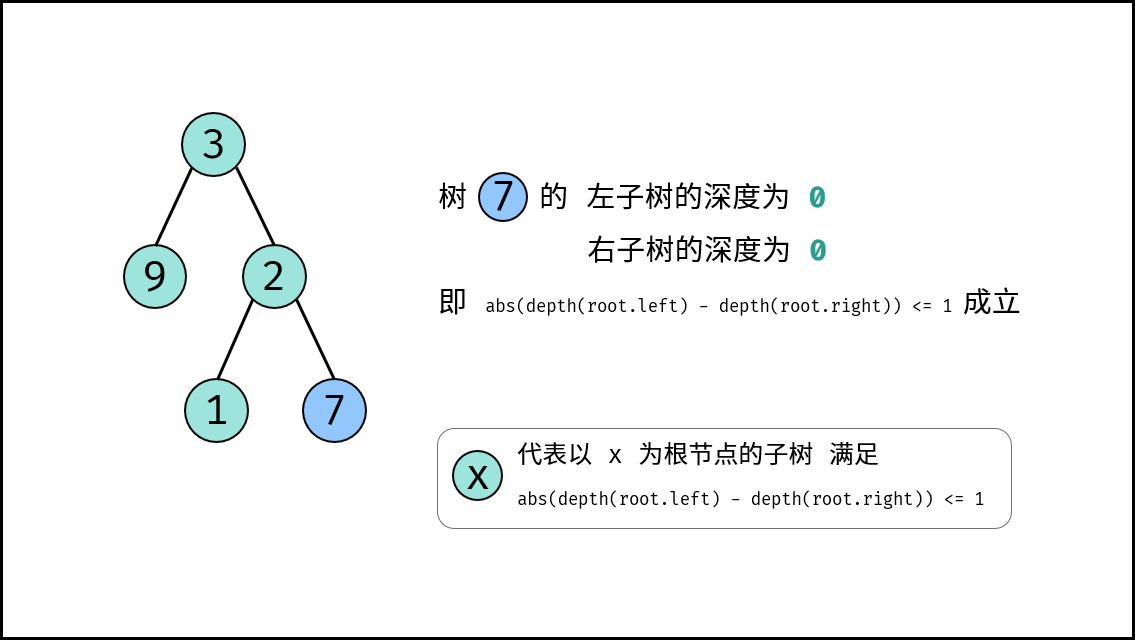
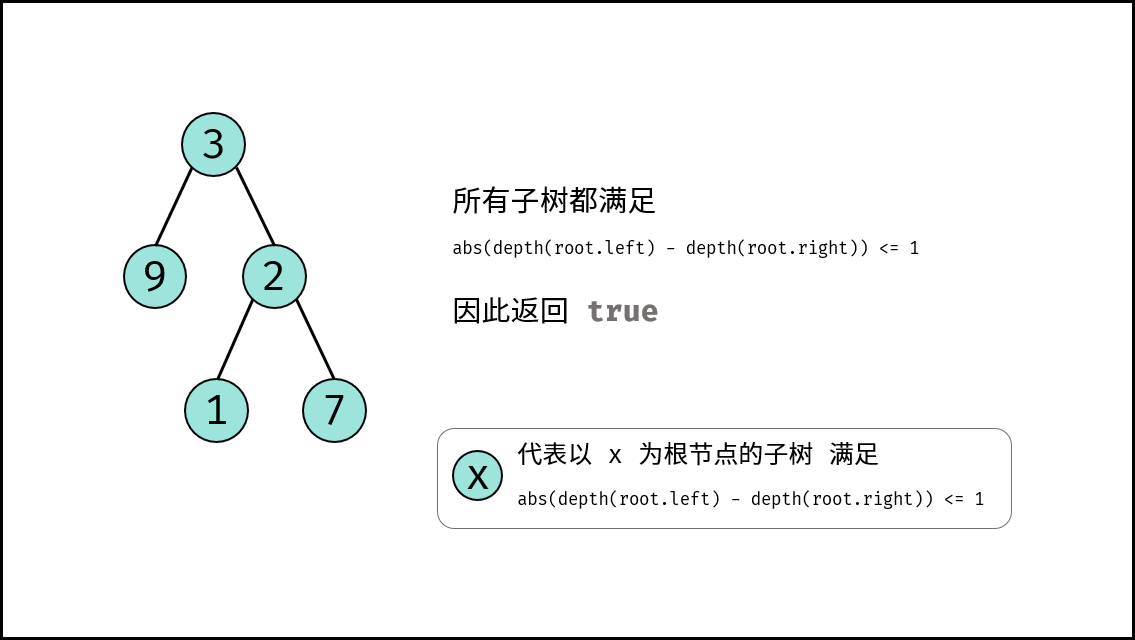
思路是构造一个获取当前子树的深度的函数 depth(root) (即 面试题55 - I. 二叉树的深度 ),通过比较某子树的左右子树的深度差 abs(depth(root.left) - depth(root.right)) <= 1 是否成立,来判断某子树是否是二叉平衡树。若所有子树都平衡,则此树平衡。
算法流程:
isBalanced(root) 函数: 判断树 root 是否平衡
- 特例处理: 若树根节点
root为空,则直接返回\text{true}; - 返回值: 所有子树都需要满足平衡树性质,因此以下三者使用与逻辑
\&\&连接;abs(self.depth(root.left) - self.depth(root.right)) <= 1:判断 当前子树 是否是平衡树;self.isBalanced(root.left): 先序遍历递归,判断 当前子树的左子树 是否是平衡树;self.isBalanced(root.right): 先序遍历递归,判断 当前子树的右子树 是否是平衡树;
depth(root) 函数: 计算树 root 的深度
- 终止条件: 当
root为空,即越过叶子节点,则返回高度0; - 返回值: 返回左 / 右子树的深度的最大值
+1。
< ,
, ,
, ,
, ,
, ,
, >
>
代码:
class Solution:
    def isBalanced(self, root: Optional[TreeNode]) -> bool:
        if not root: return True
        return abs(self.depth(root.left) - self.depth(root.right)) <= 1 and \
            self.isBalanced(root.left) and self.isBalanced(root.right)

    def depth(self, root):
        if not root: return 0
        return max(self.depth(root.left), self.depth(root.right)) + 1
class Solution {
    public boolean isBalanced(TreeNode root) {
        if (root == null) return true;
        return Math.abs(depth(root.left) - depth(root.right)) <= 1 && isBalanced(root.left) && isBalanced(root.right);
    }

    private int depth(TreeNode root) {
        if (root == null) return 0;
        return Math.max(depth(root.left), depth(root.right)) + 1;
    }
}
class Solution {
public:
    bool isBalanced(TreeNode* root) {
        if (root == nullptr) return true;
        return abs(depth(root->left) - depth(root->right)) <= 1 && isBalanced(root->left) && isBalanced(root->right);
    }
private:
    int depth(TreeNode* root) {
        if (root == nullptr) return 0;
        return max(depth(root->left), depth(root->right)) + 1;
    }
};
复杂度分析:
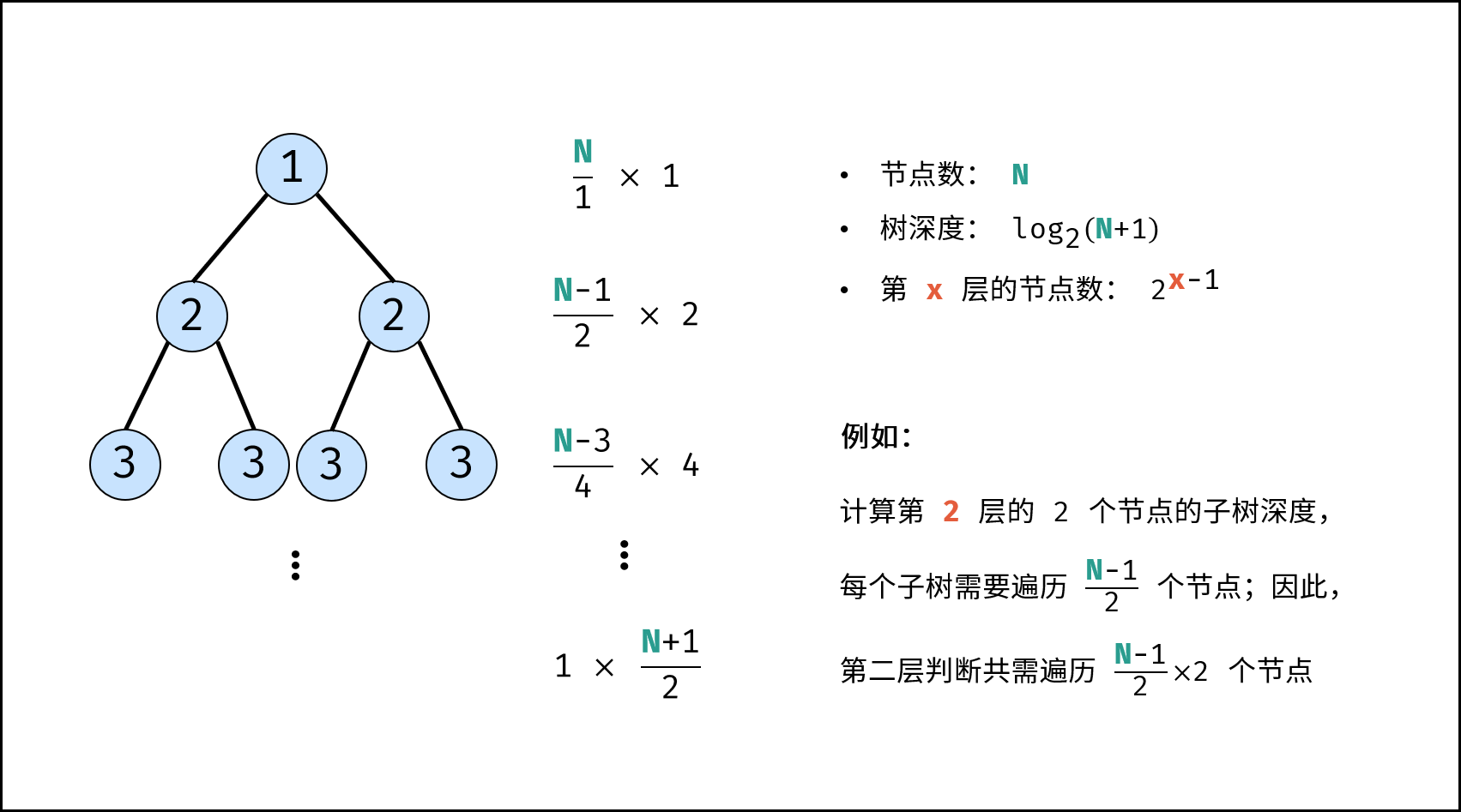
- 时间复杂度 $O(N \log N)$: 最差情况下(为 “满二叉树” 时),
isBalanced(root)遍历树所有节点,判断每个节点的深度depth(root)需要遍历 各子树的所有节点 。- 满二叉树高度的复杂度
O(log N),将满二叉树按层分为log (N+1)层; - 通过调用
depth(root),判断二叉树各层的节点的对应子树的深度,需遍历节点数量为N \times 1, \frac{N-1}{2} \times 2, \frac{N-3}{4} \times 4, \frac{N-7}{8} \times 8, ..., 1 \times \frac{N+1}{2}。因此各层执行depth(root)的时间复杂度为O(N)(每层开始,最多遍历N个节点,最少遍历\frac{N+1}{2}个节点)。
其中,
\frac{N-3}{4} \times 4代表从此层开始总共需遍历N-3个节点,此层共有4个节点,因此每个子树需遍历\frac{N-3}{4}个节点。- 因此,总体时间复杂度
=每层执行复杂度\times层数复杂度 =O(N \times \log N)。
- 满二叉树高度的复杂度
 {:align=center width=550}
- 空间复杂度 $O(N)$: 最差情况下(树退化为链表时),系统递归需要使用
O(N)的栈空间。