mirror of
https://github.com/krahets/LeetCode-Book.git
synced 2026-01-12 00:19:02 +08:00

6.3 KiB
Executable File
6.3 KiB
Executable File
方法一:双指针
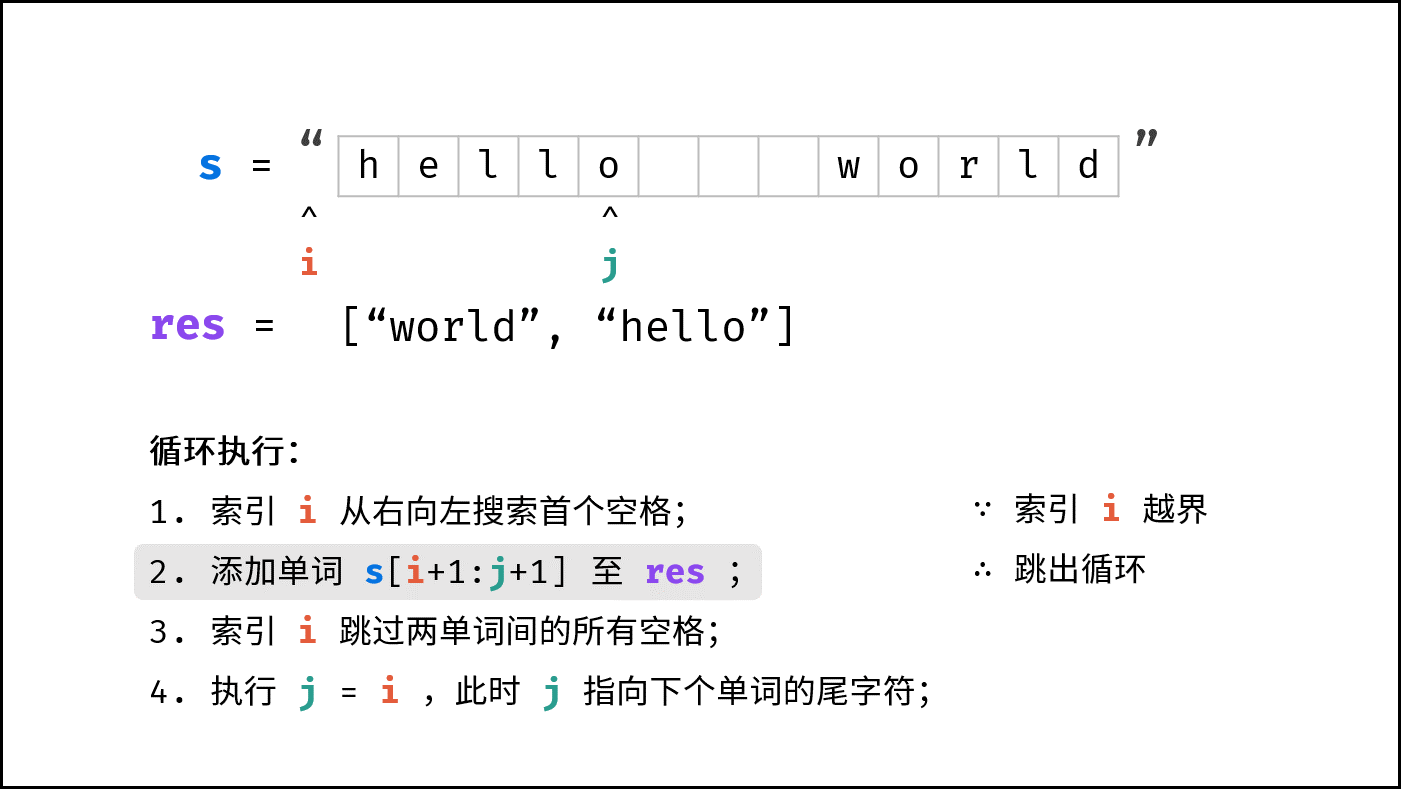
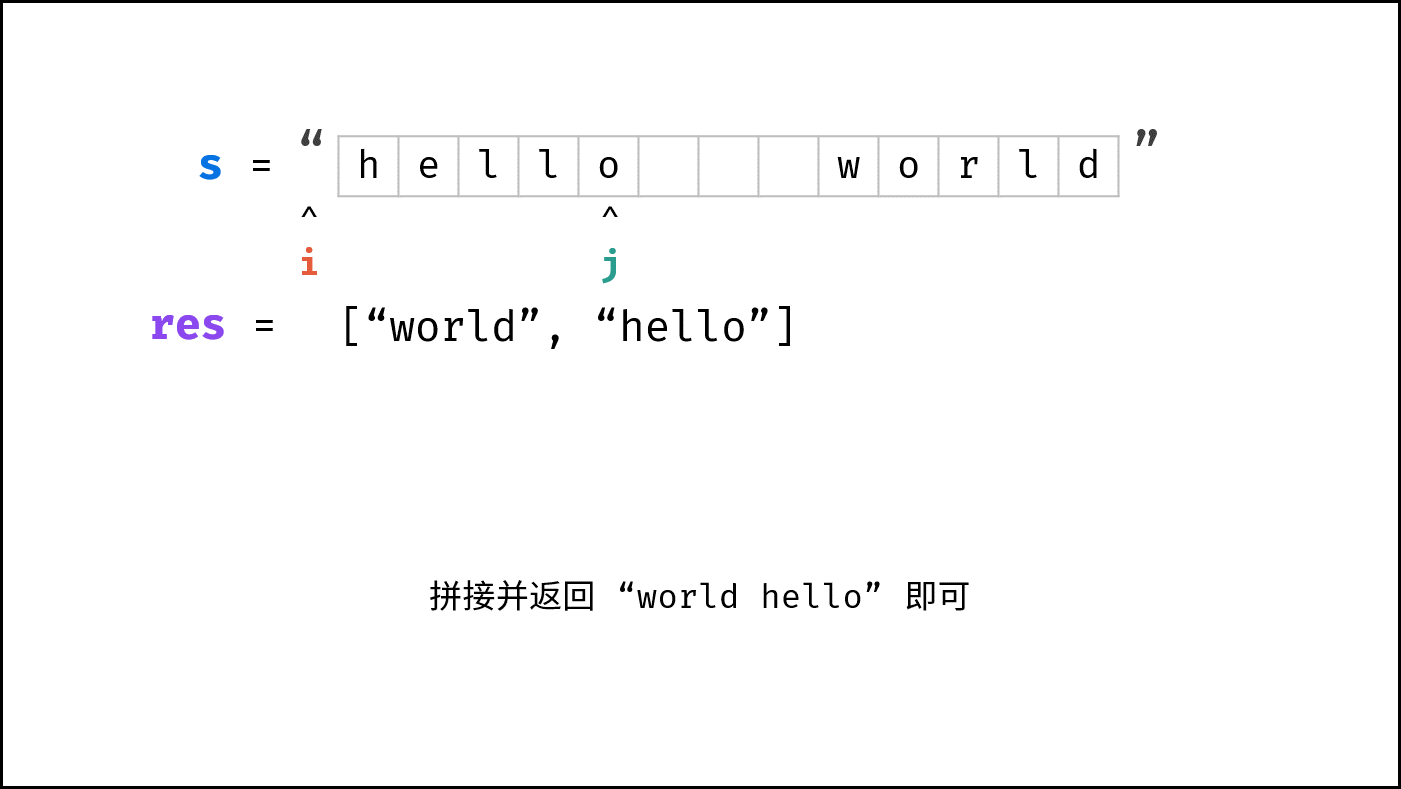
算法解析:
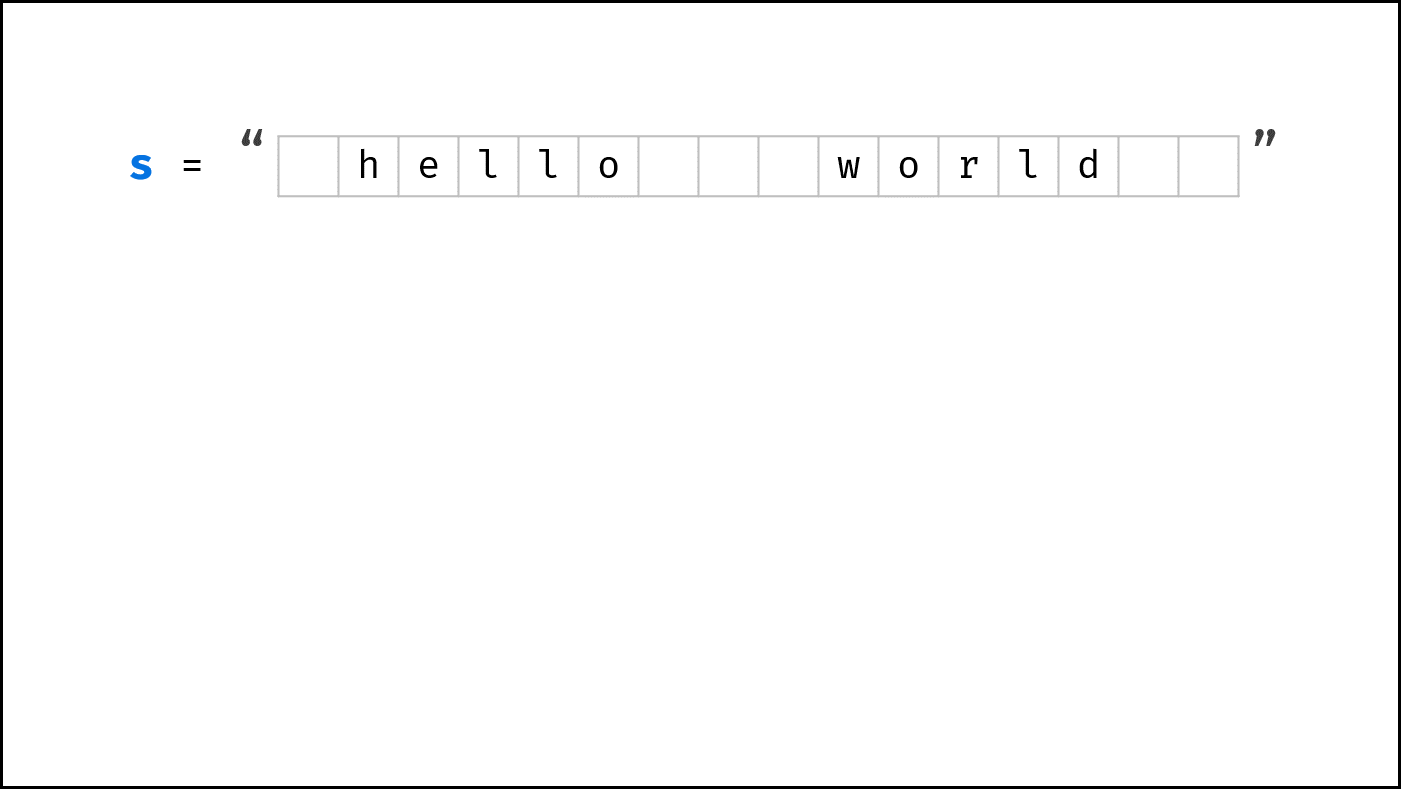
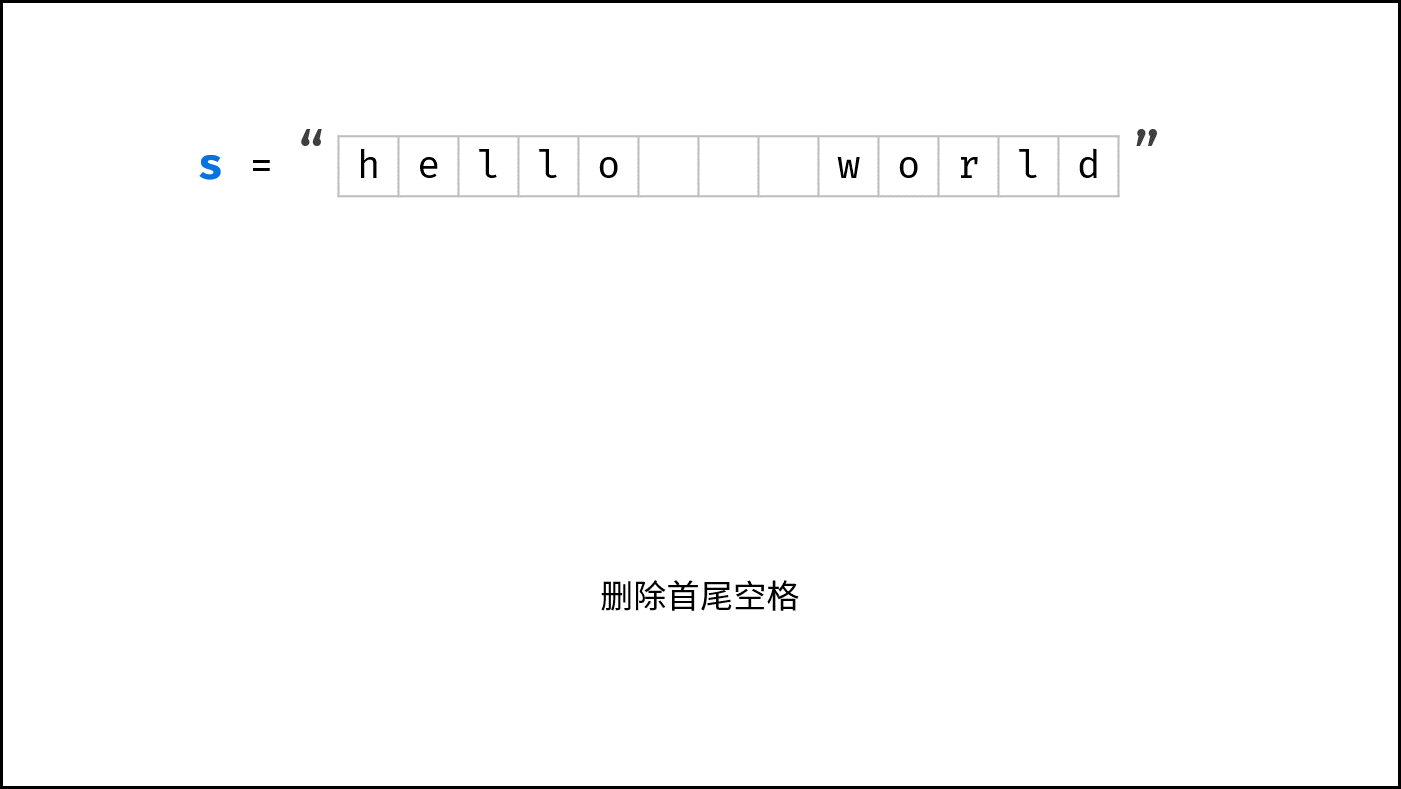
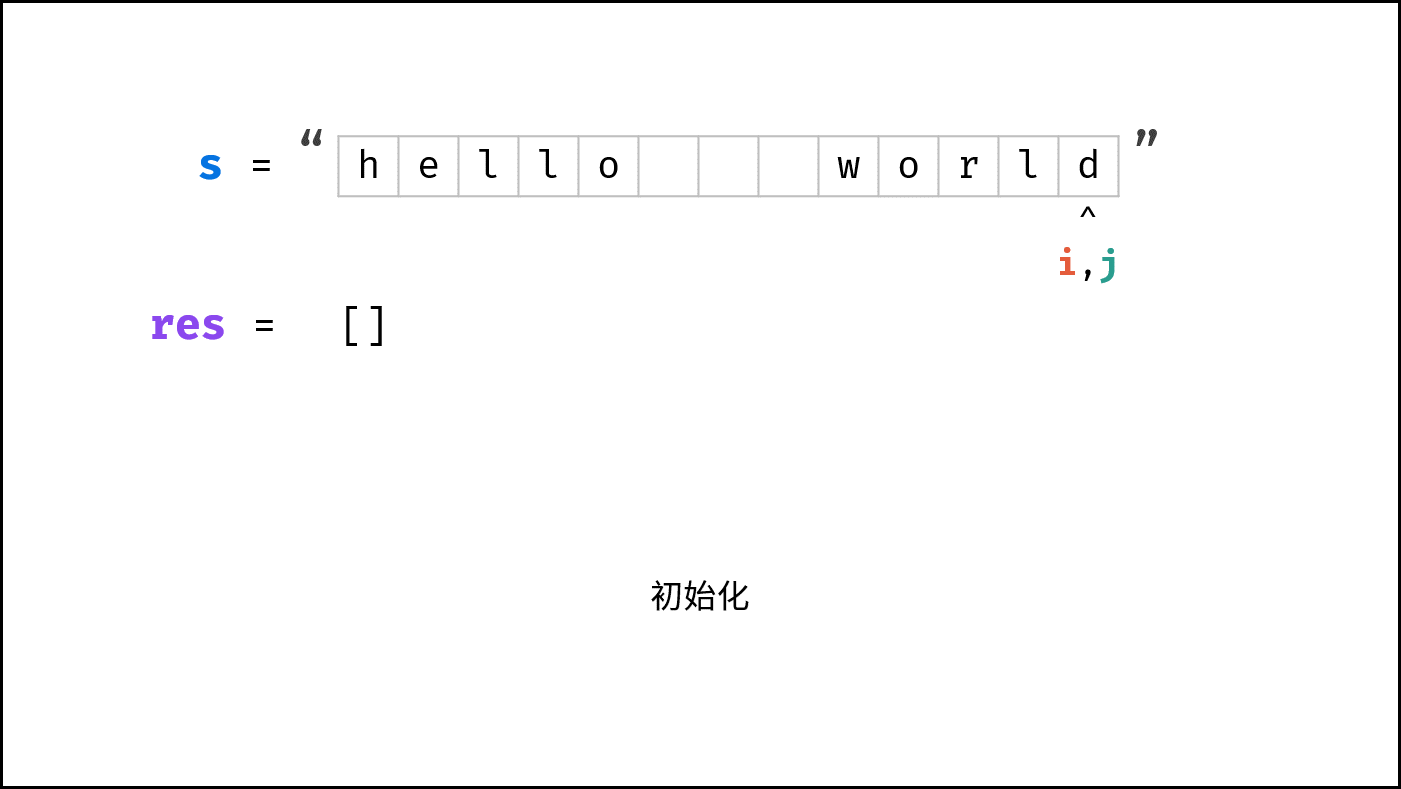
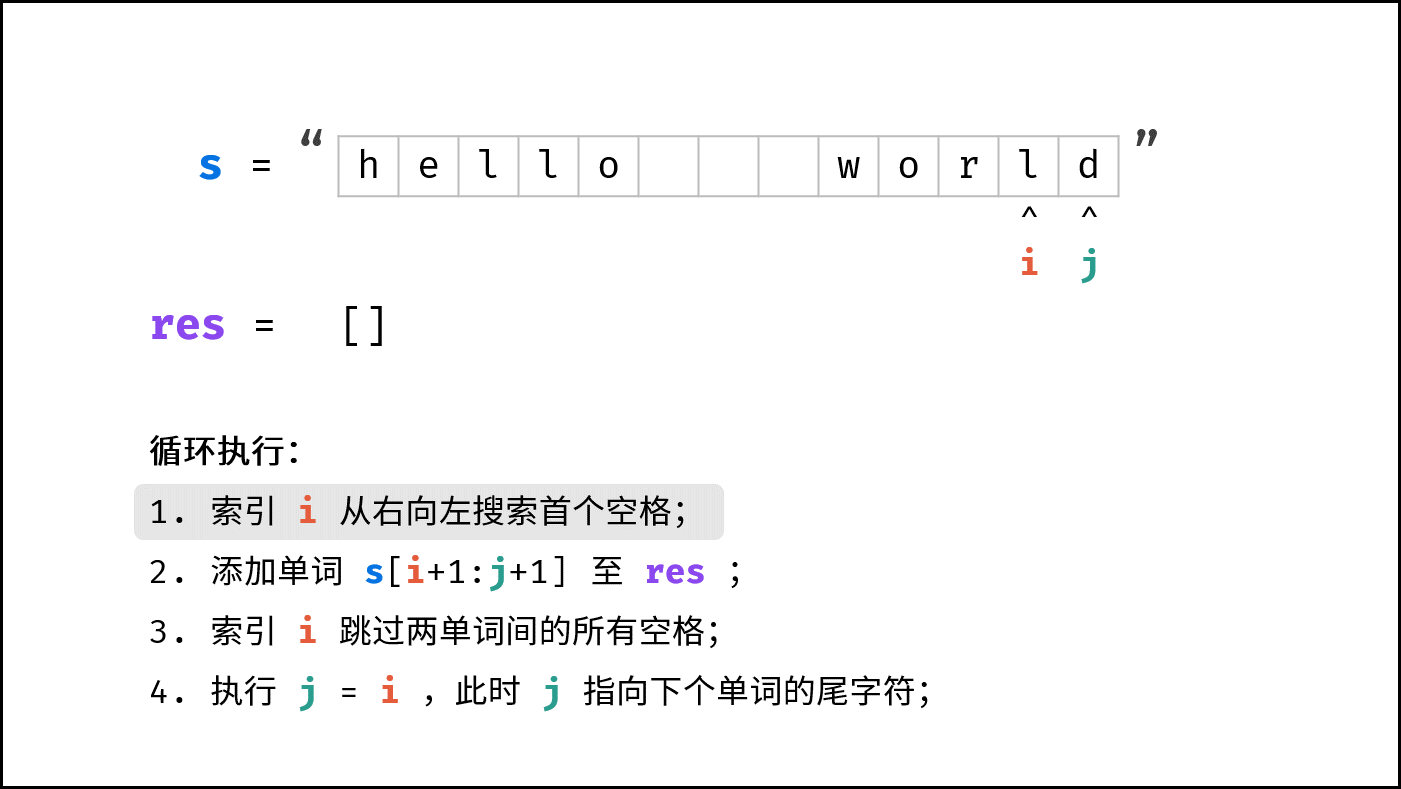
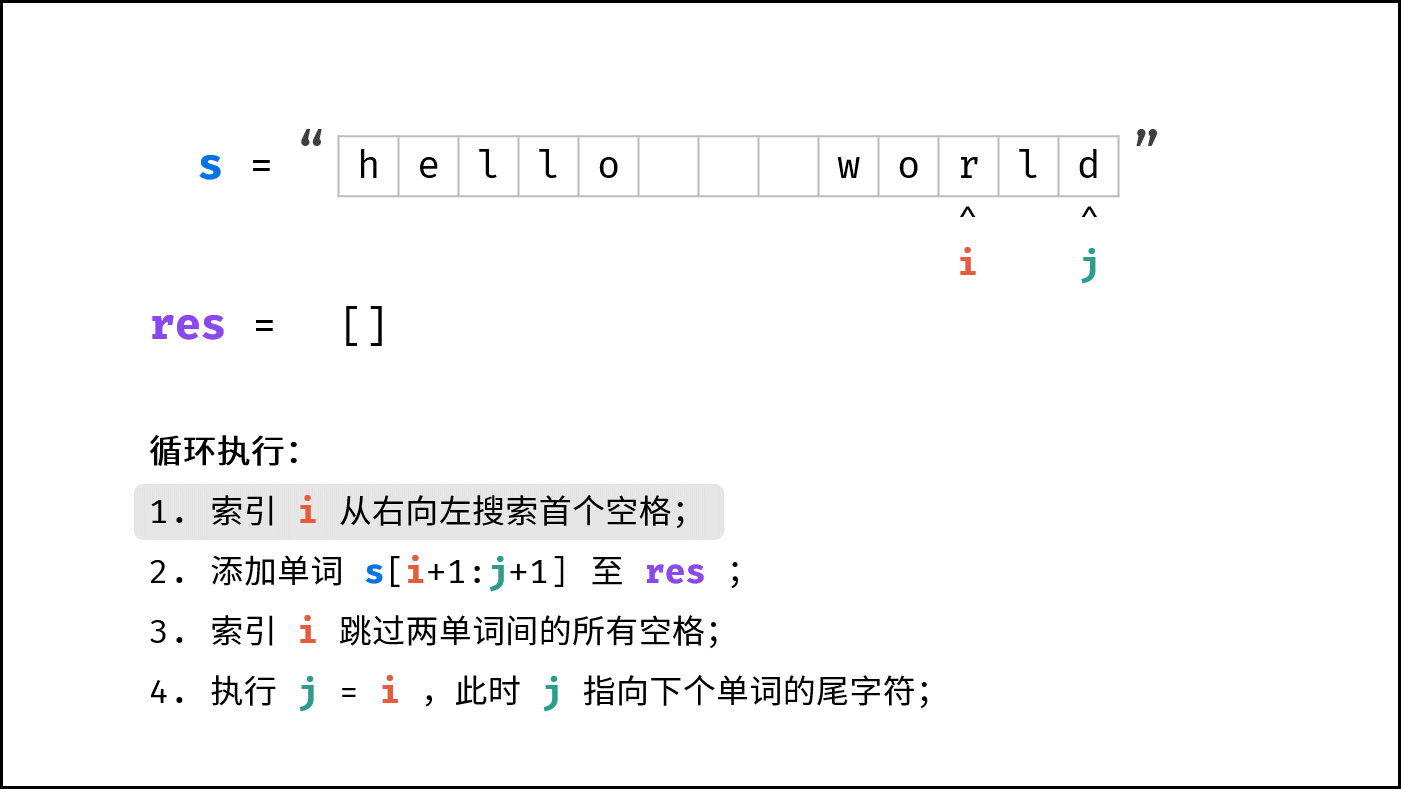
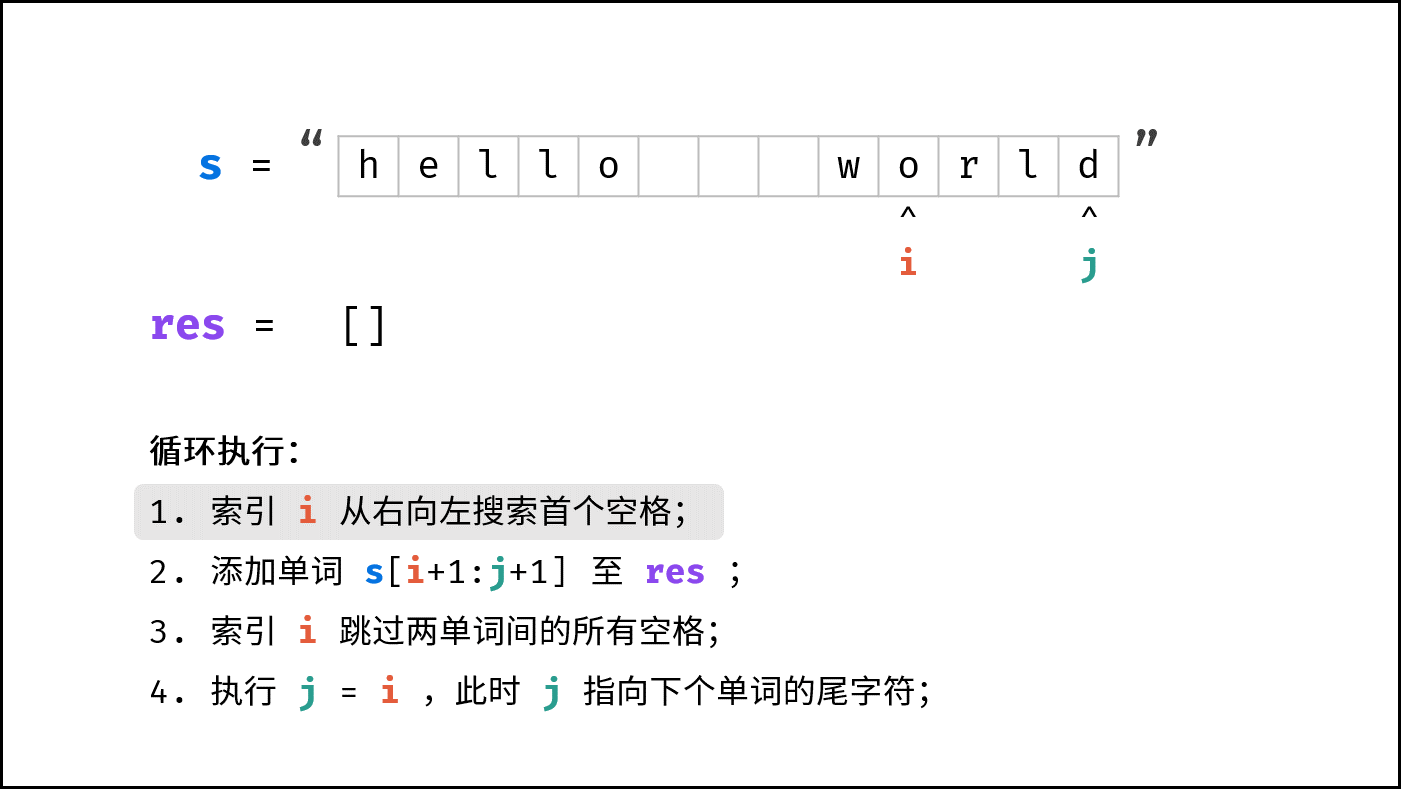
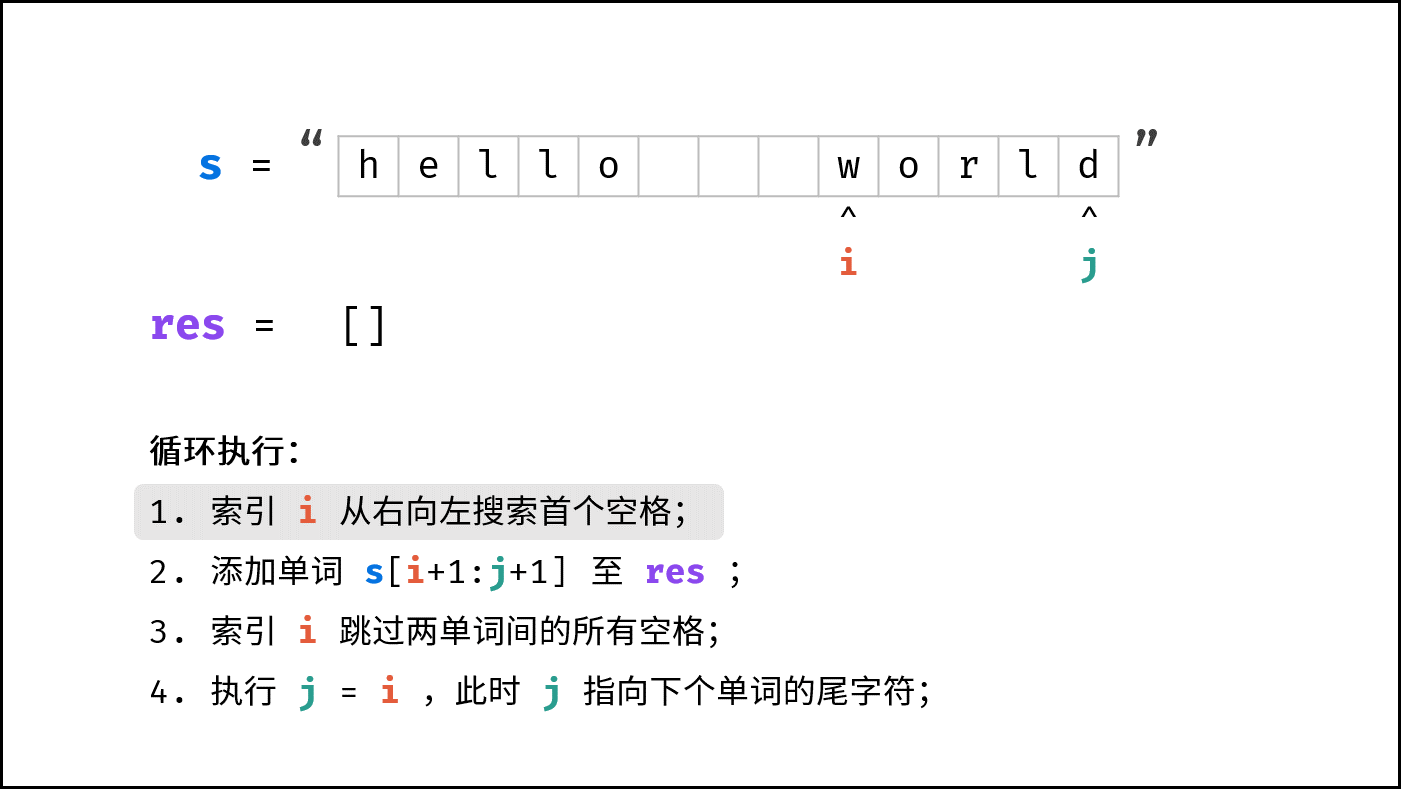
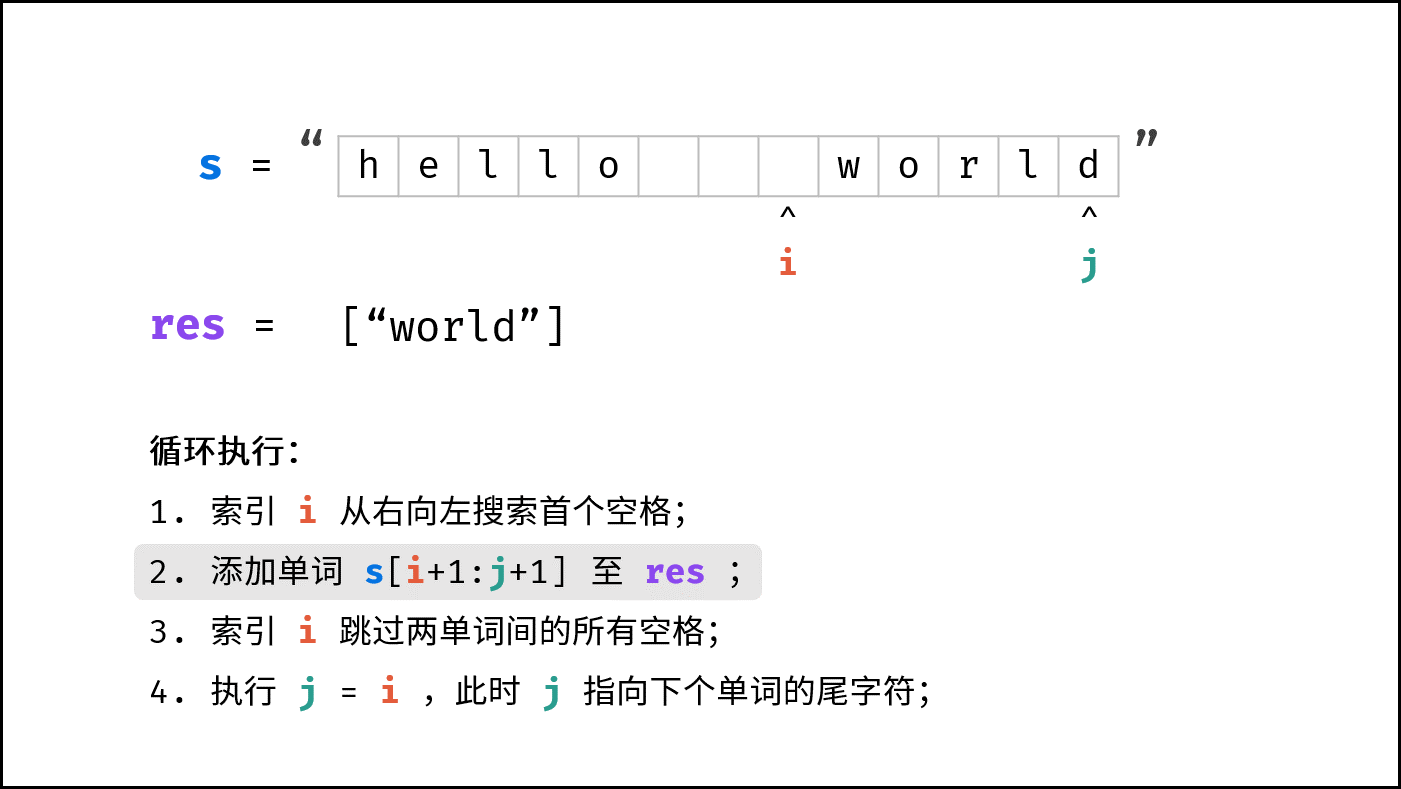
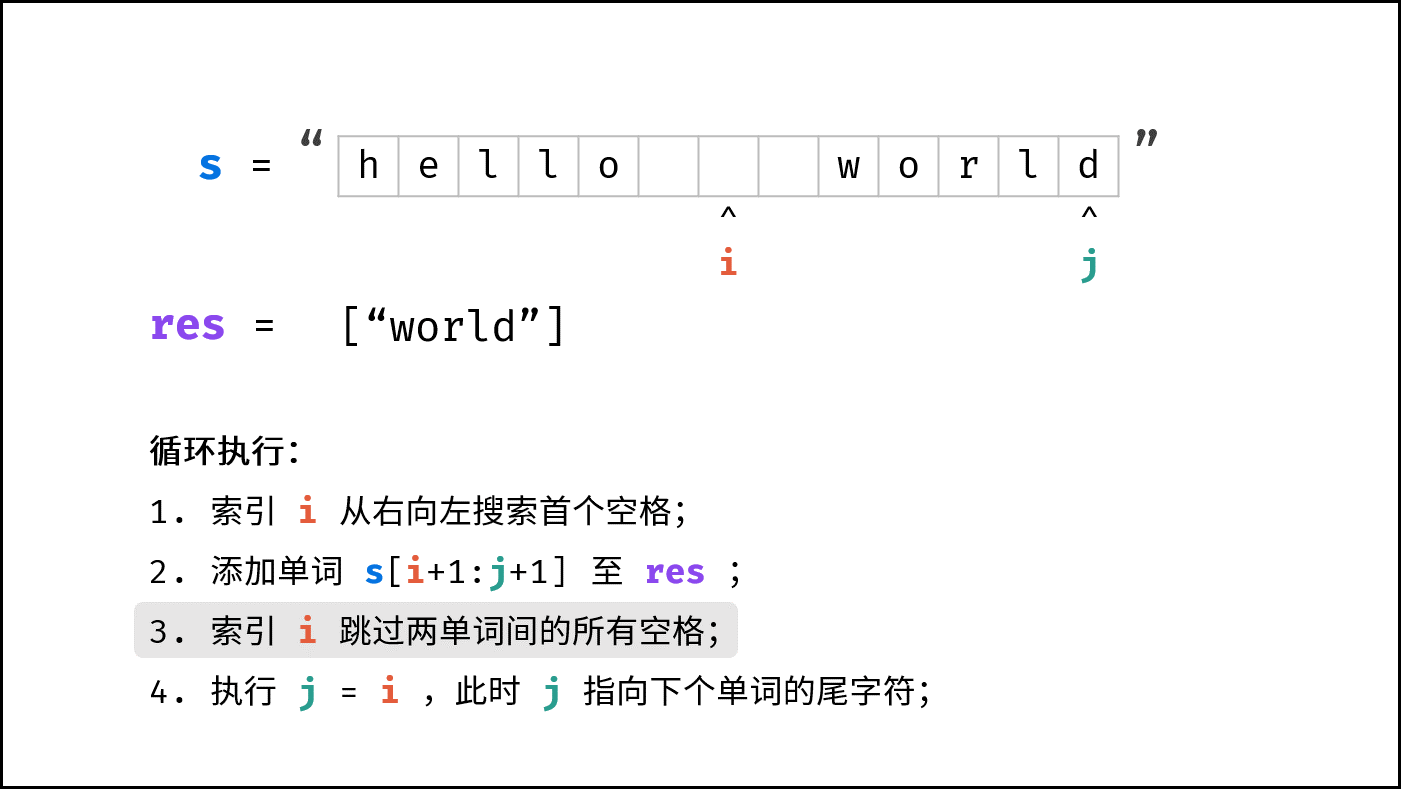
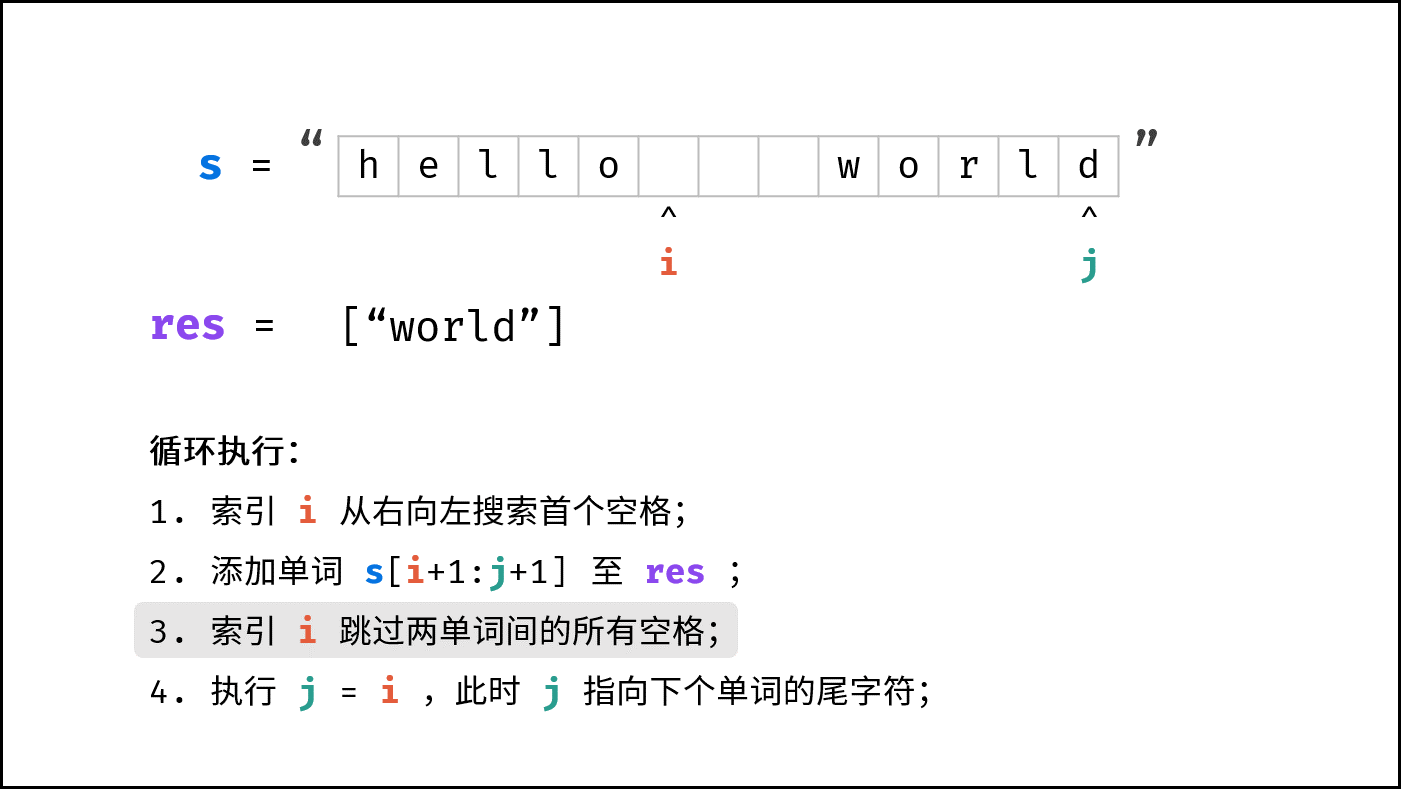
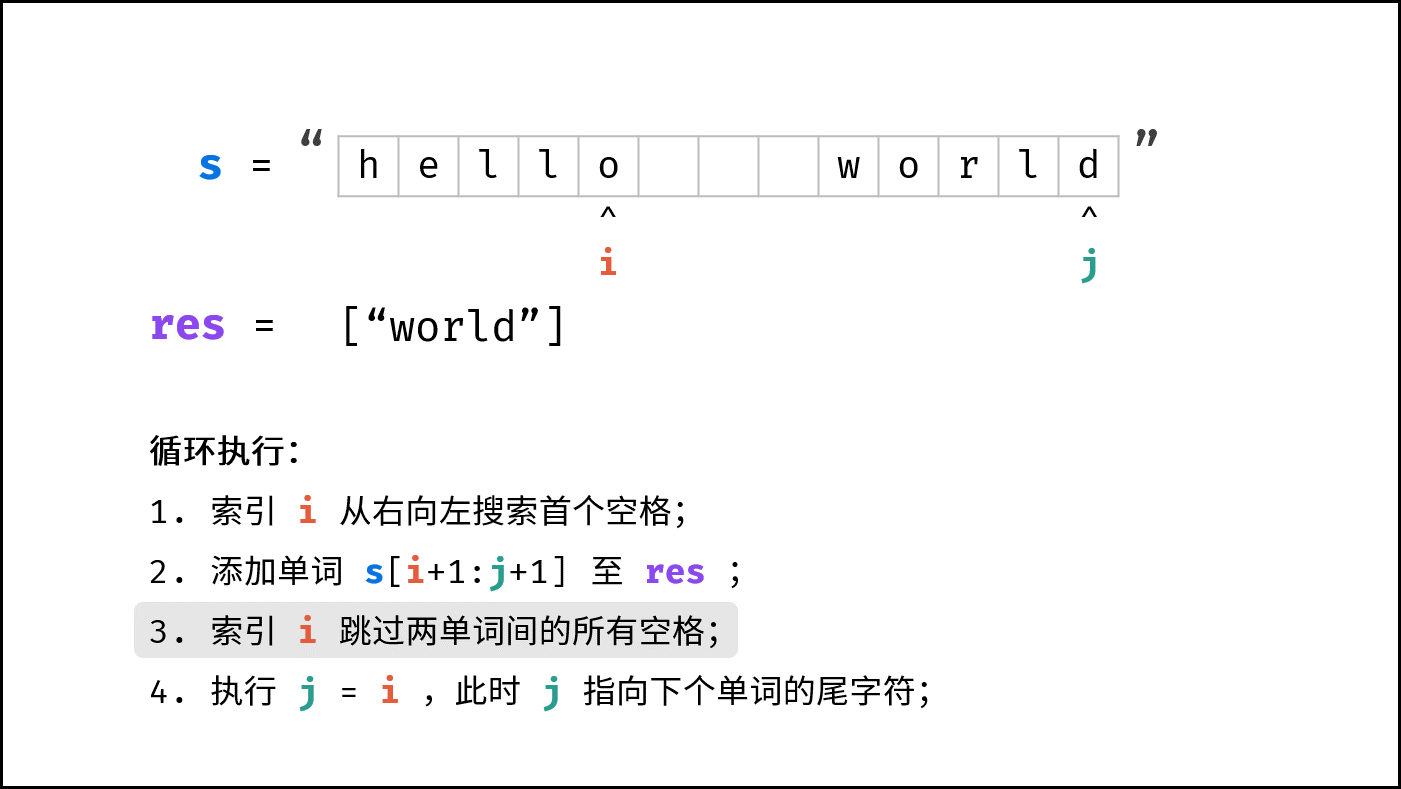
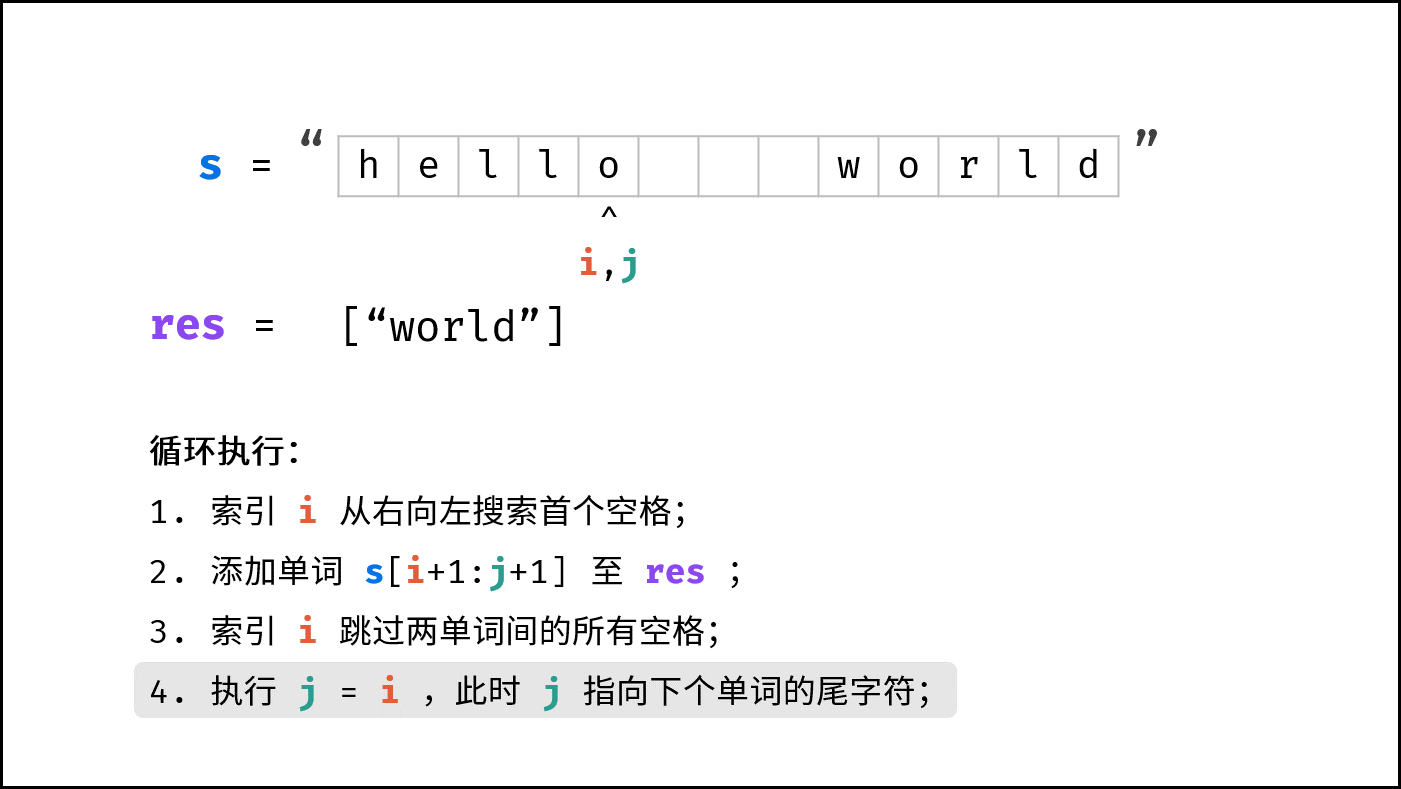
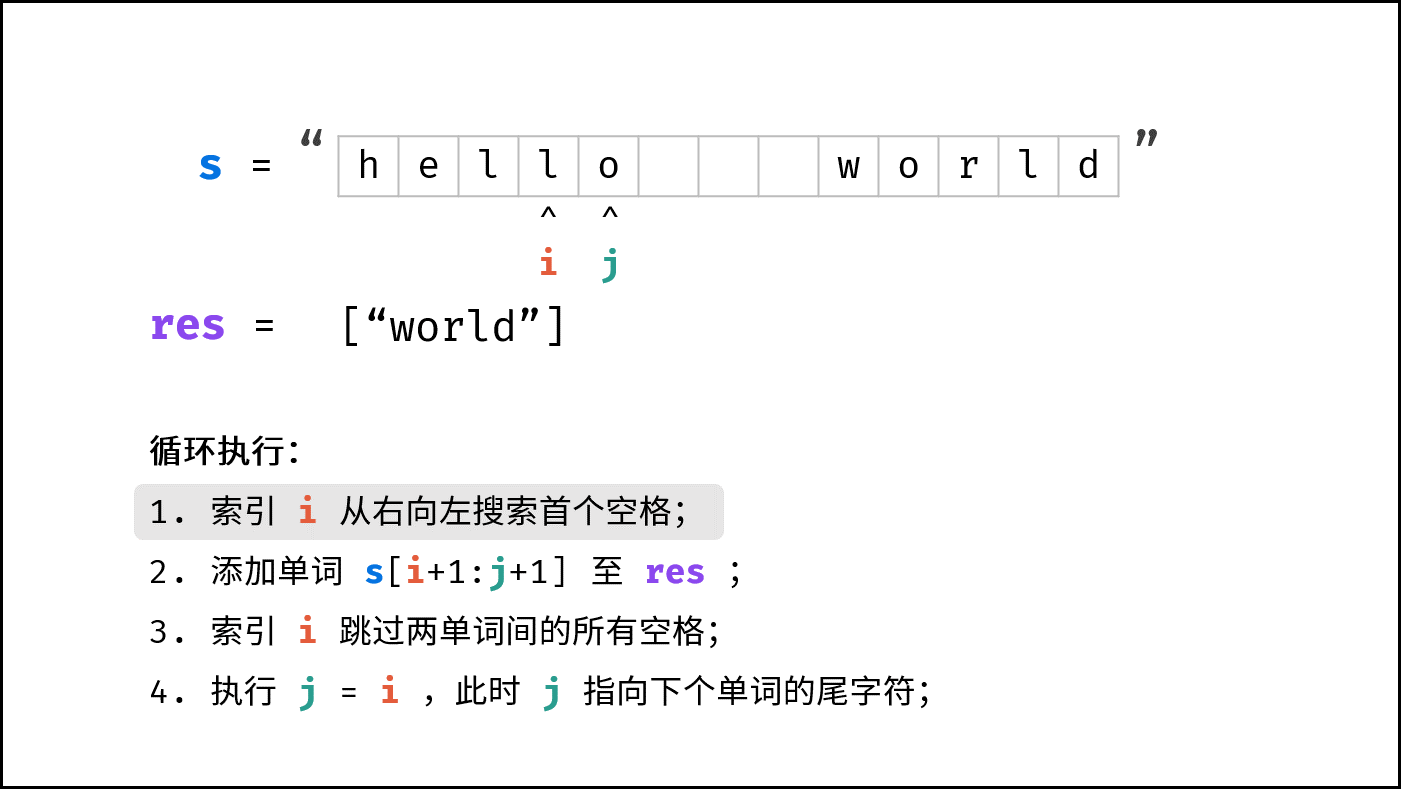
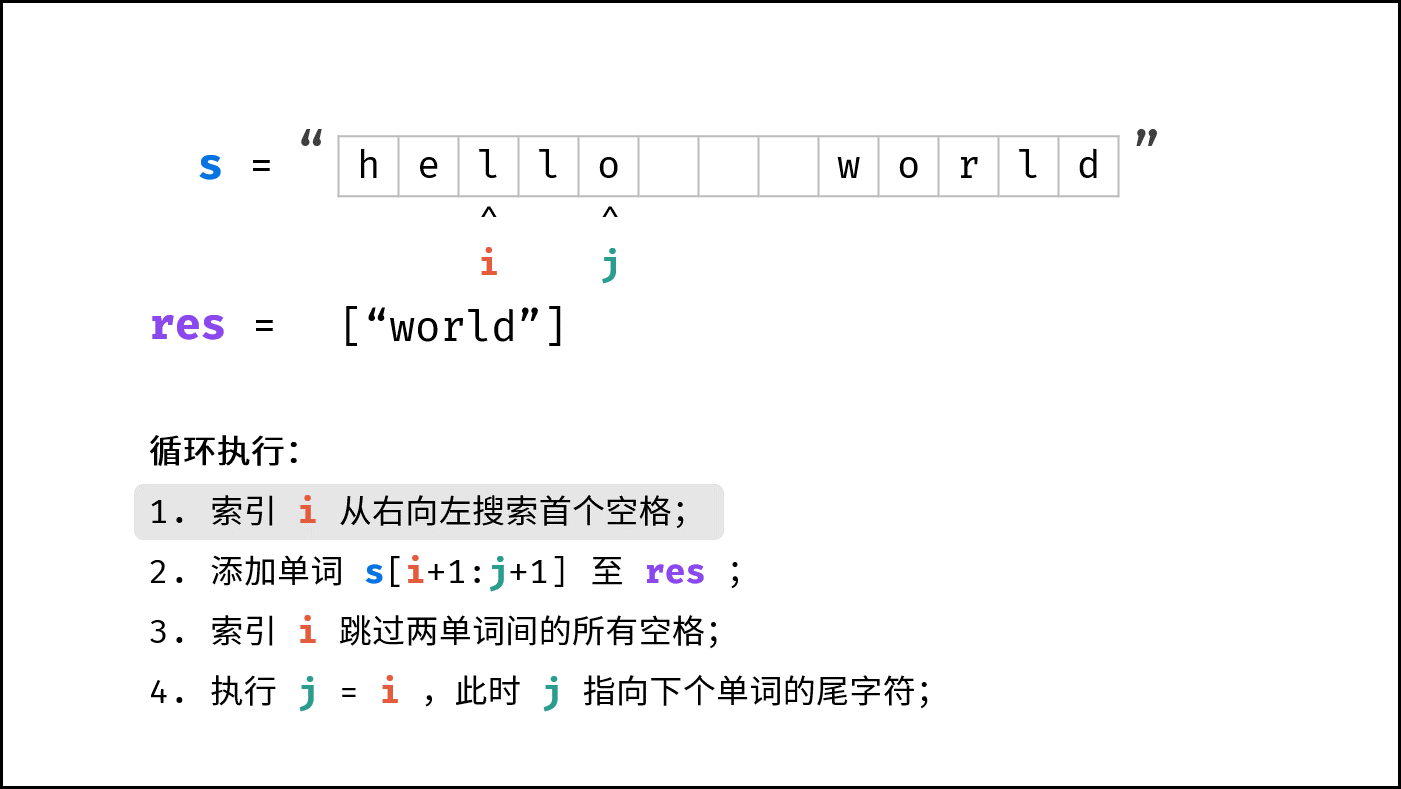
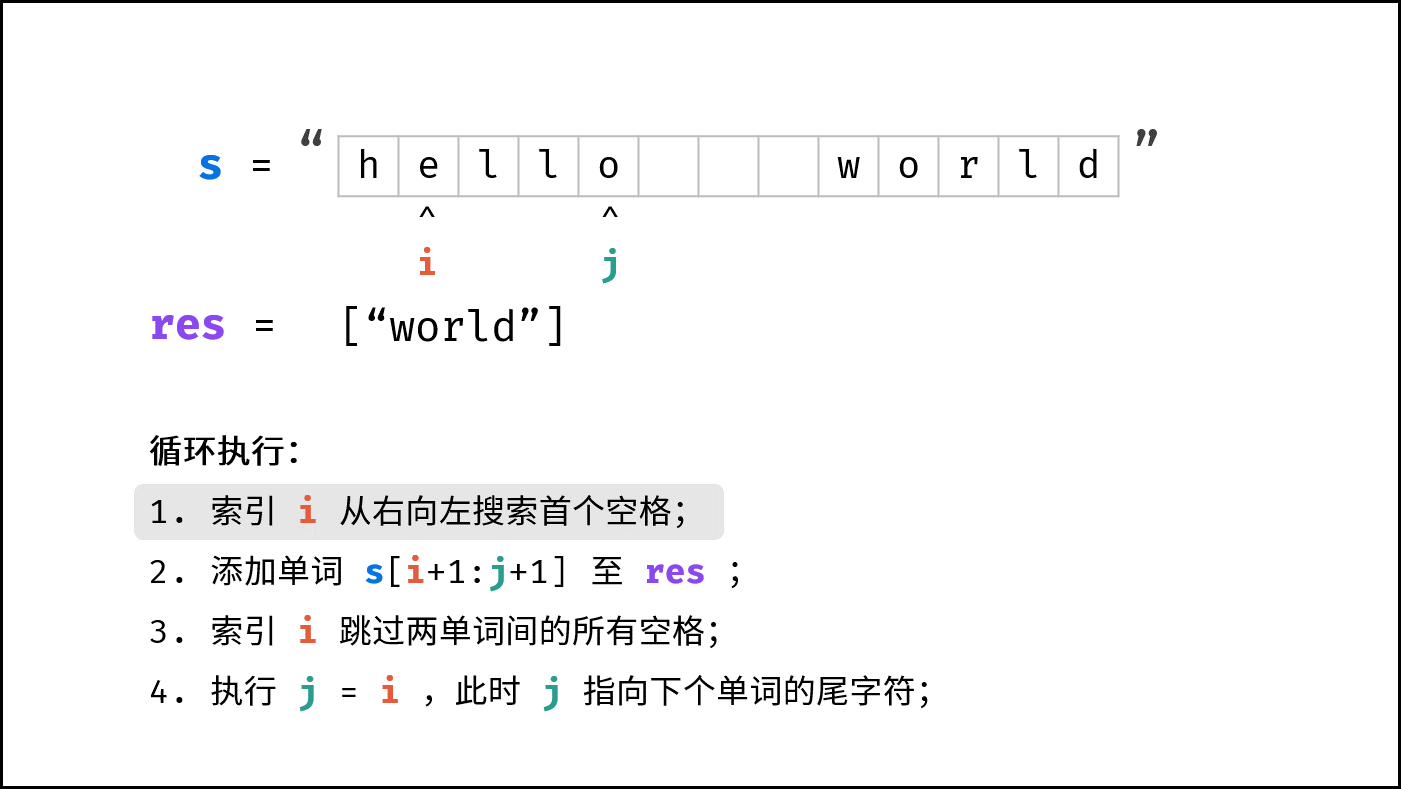
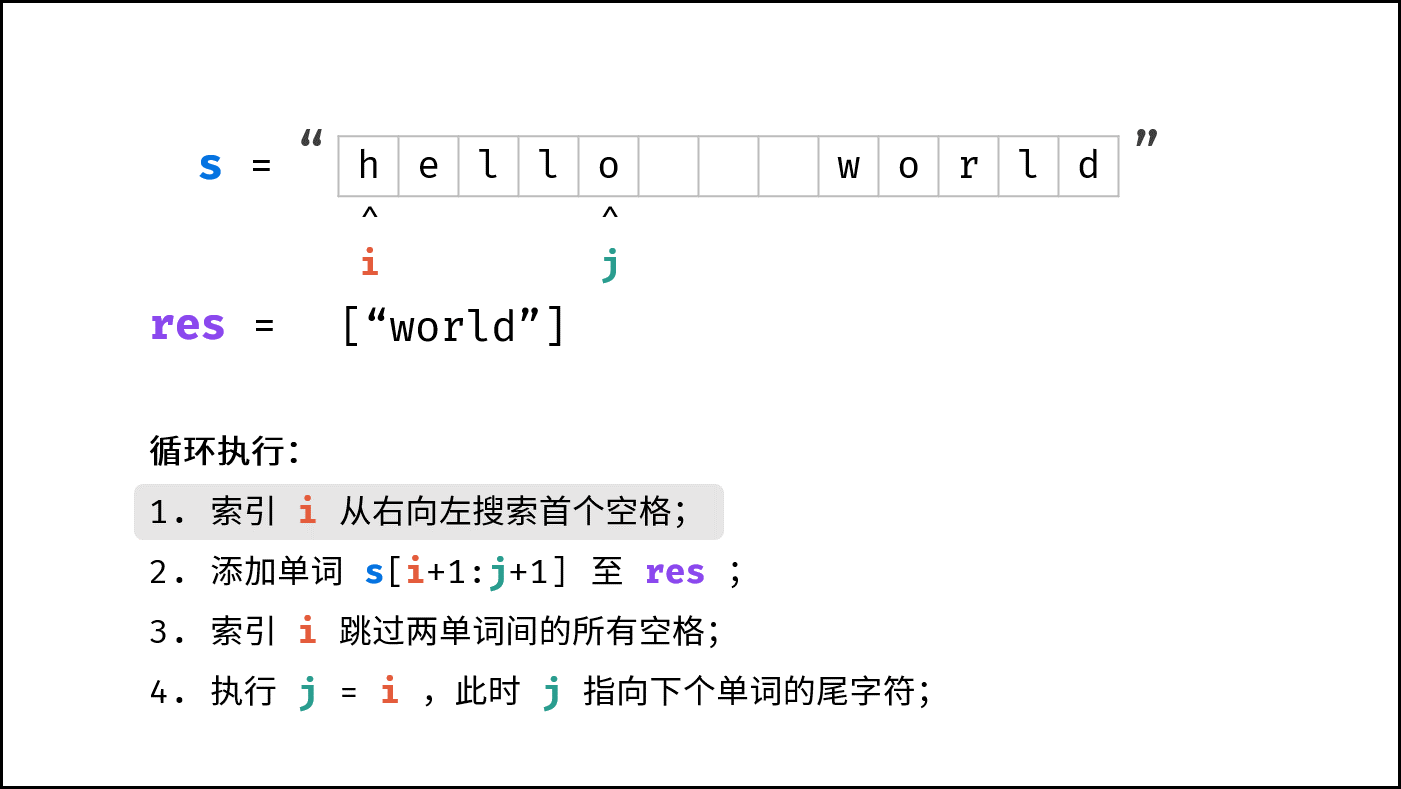
- 倒序遍历字符串
message,记录单词左右索引边界i,j; - 每确定一个单词的边界,则将其添加至单词列表
res; - 最终,将单词列表拼接为字符串,并返回即可。
下图中的
s对应本题的message。
< ,
, ,
, ,
, ,
, ,
, ,
, ,
, ,
, ,
, ,
, ,
, ,
, ,
, ,
, ,
, ,
, ,
, >
>
代码:
class Solution:
    def reverseMessage(self, message: str) -> str:
        message = message.strip()                      # 删除首尾空格
        i = j = len(message) - 1
        res = []
        while i >= 0:
            while i >= 0 and message[i] != ' ': i -= 1 # 搜索首个空格
            res.append(message[i + 1: j + 1])          # 添加单词
            while i >= 0 and message[i] == ' ': i -= 1 # 跳过单词间空格
            j = i                                      # j 指向下个单词的尾字符
        return ' '.join(res)                           # 拼接并返回
class Solution {
    public String reverseMessage(String message) {
        message = message.trim();                               // 删除首尾空格
        int j = message.length() - 1, i = j;
        StringBuilder res = new StringBuilder();
        while (i >= 0) {
            while (i >= 0 && message.charAt(i) != ' ') i--;     // 搜索首个空格
            res.append(message.substring(i + 1, j + 1) + " ");  // 添加单词
            while (i >= 0 && message.charAt(i) == ' ') i--;     // 跳过单词间空格
            j = i;                                              // j 指向下个单词的尾字符
        }
        return res.toString().trim();                           // 转化为字符串并返回
    }
}
复杂度分析:
- 时间复杂度
O(N): 其中N为字符串message的长度,线性遍历字符串。 - 空间复杂度
O(N): 新建的 list(Python) 或 StringBuilder(Java) 中的字符串总长度\leq N,占用O(N)大小的额外空间。
方法二:分割 + 倒序
利用 “字符串分割”、“列表倒序” 的内置函数 (面试时不建议使用) ,可简便地实现本题的字符串翻转要求。
算法解析:
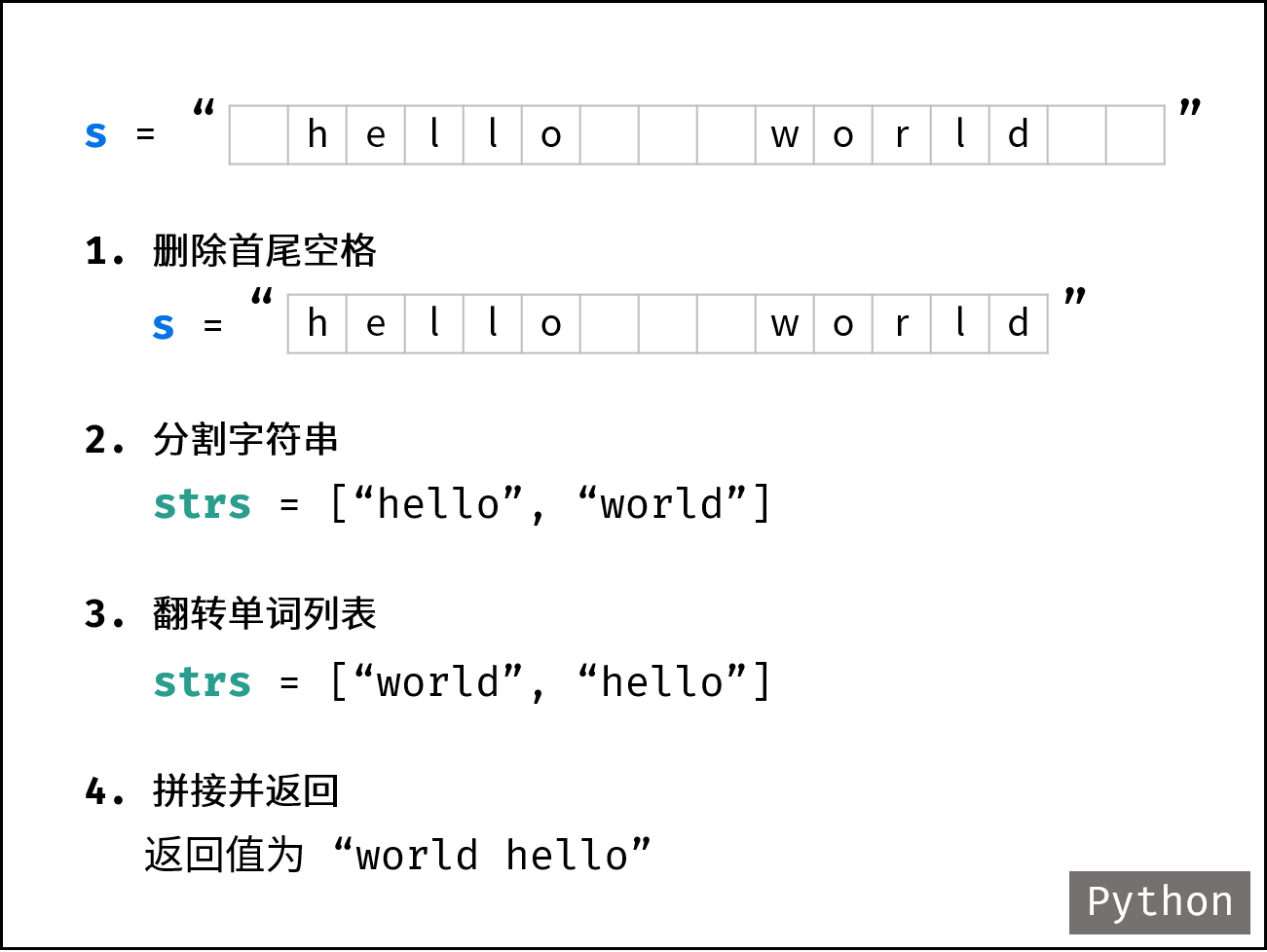
- Python : 由于
split()方法将单词间的 “多个空格看作一个空格” (参考自 split()和split(' ')的区别 ),因此不会出现多余的 “空单词” 。因此,直接利用reverse()方法翻转单词列表strs,拼接为字符串并返回即可。
 {:align=center width=500}
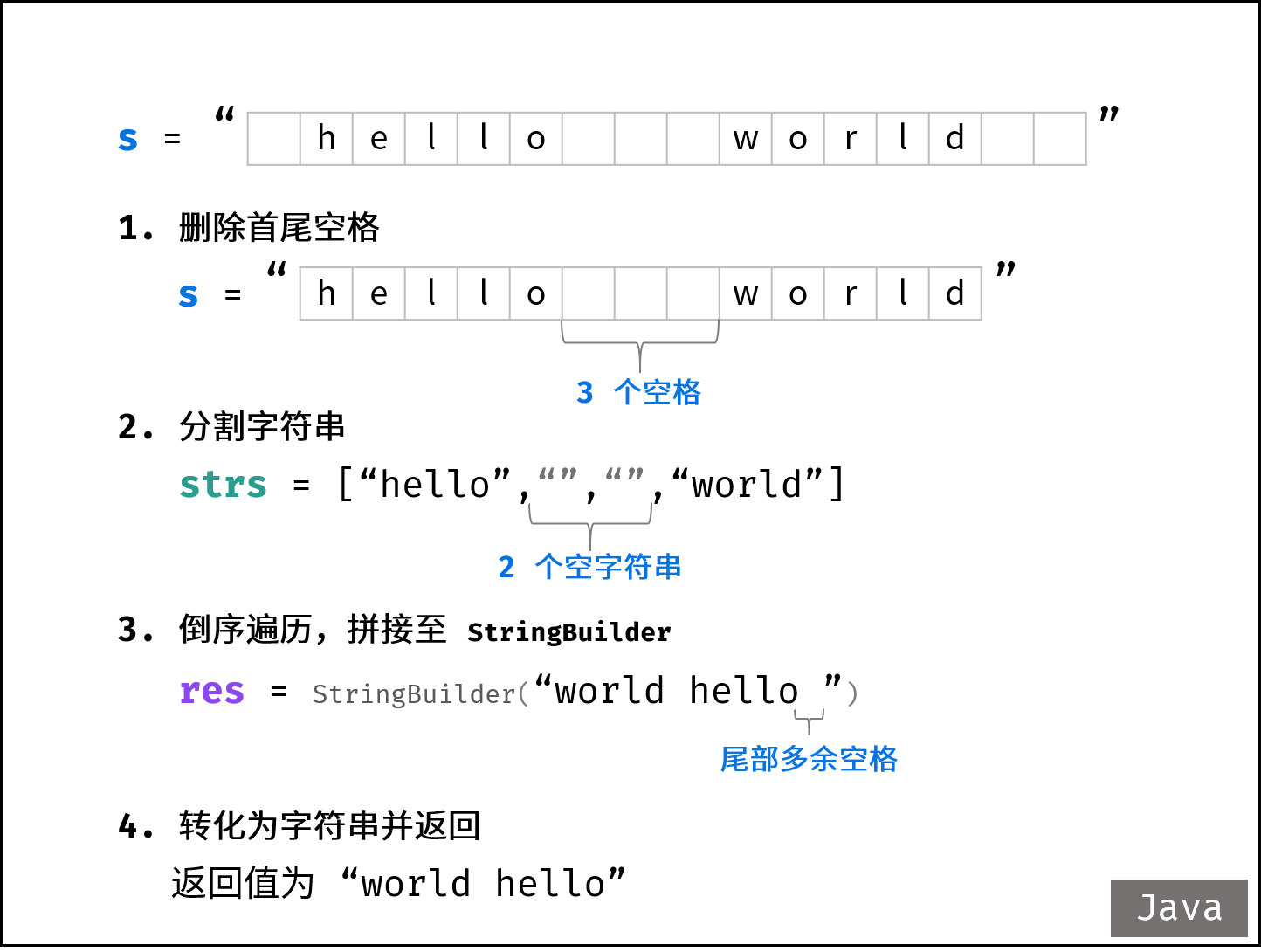
- Java : 以空格为分割符完成字符串分割后,若两单词间有
x > 1个空格,则在单词列表strs中,此两单词间会多出x - 1个 “空单词” (即"")。解决方法:倒序遍历单词列表,并将单词逐个添加至 StringBuilder ,遇到空单词时跳过。
 {:align=center width=500}
代码:
class Solution:
    def reverseMessage(self, message: str) -> str:
        message = message.strip()   # 删除首尾空格
        strs = message.split()      # 分割字符串
        strs.reverse()              # 翻转单词列表
        return ' '.join(strs)       # 拼接为字符串并返回
class Solution {
    public String reverseMessage(String message) {
        String[] strs = message.trim().split(" ");    // 删除首尾空格,分割字符串
        StringBuilder res = new StringBuilder();
        for (int i = strs.length - 1; i >= 0; i--) {  // 倒序遍历单词列表
            if(strs[i].equals("")) continue;          // 遇到空单词则跳过
            res.append(strs[i] + " ");                // 将单词拼接至 StringBuilder
        }
        return res.toString().trim();                 // 转化为字符串,删除尾部空格,并返回
    }
}
Python 可一行实现:
class Solution:
    def reverseMessage(self, message: str) -> str:
        return ' '.join(message.strip().split()[::-1])
复杂度分析:
- 时间复杂度
O(N): 总体为线性时间复杂度,各函数时间复杂度和参考资料链接如下。split()方法: 为O(N);trim()和strip()方法: 最差情况下(当字符串全为空格时),为O(N);join()方法: 为O(N);reverse()方法: 为O(N);
- 空间复杂度
O(N): 单词列表strs占用线性大小的额外空间。